

The verdict is clear: batiks piece with precision, blend across color families, and add a painterly richness that printed quilting cotton rarely matches. When you’re shopping, look for these signals right away:
- 100% cotton fiber content listed on the product page
- Fabric width of 43–45" confirmed in the specs
- Clear, high-resolution photos showing both the full repeat and a close detail shot
- Brand name visible — Hoffman, Moda, and Kaufman are the labels quilters trust most
- Swatch or small-cut availability so you can test color and hand before committing to yardage
- Transparent shipping and return policy for fabric orders
Sewingmachinesplus carries curated batik cotton selections from trusted manufacturers, with product pages that list fiber content, width, and weight so you’re never guessing.
Key Takeaways
Batik quilting cotton excels for precision piecing and blending because its through-dyed, tightly woven construction delivers color depth, minimal fraying, and no wrong side.
| Point | Details |
|---|---|
| Confirm 100% cotton and 43–45" width | These two specs are the baseline quality check before ordering any batik yardage online. |
| Pre-wash dark batiks separately | Use cool water and a color-catcher to remove excess dye before combining with light fabrics. |
| Change needles more often | Batik’s tight weave dulls Microtex/Sharp needles faster than printed cotton; start fresh each project. |
| Match pattern scale to block size | Small all-over batiks suit tight piecing; gradations and open designs work best in larger blocks or backgrounds. |
| Sewingmachinesplus for curated batiks | Shop Hoffman, Moda, and Kaufman batiks with listed specs, swatch options, free shipping over $49, and a price-match guarantee. |
Table of Contents
- What is batik quilting fabric and how is it made?
- What types of batik fabric do quilters use most?
- Why do quilters choose batik cotton for their projects?
- How do you choose the right batik quilting fabric?
- Cutting, sewing, pressing, and care tips for batik cotton
- Where can you buy batik quilting fabric in the U.S.?
- How Sewingmachinesplus selects and supports batik fabric buyers
- Environmental and ethical considerations in batik production
- Common defects and quality issues to watch for in batik cotton
- How does batik compare to other quilting cottons in durability and colorfastness?
- What working with batiks has taught me about fabric choices
- Curated batik cotton at Sewingmachinesplus, with swatches and expert support
- Sources
- FAQ
What is batik quilting fabric and how is it made?
Batik is created through a wax-resist dye process: molten wax is applied to fabric in a pattern, then the fabric is submerged in dye. The wax blocks dye from penetrating the covered areas, and the uncovered fibers absorb color deeply. Because the dye saturates the fiber rather than sitting on the surface, both sides of the fabric typically show the same color — a key difference from printed quilting cotton, where color lives only on the face.
That through-dyed quality has real practical consequences:
- No wrong side. You can use either face, which simplifies fussy-cutting, binding, and folded techniques.
- Tighter weave. The dyeing process and finishing tend to produce a denser cloth that frays less at cut edges.
- Potential for dye bleed. Saturated pigments, especially in dark colorways, can release color in the first wash.
- Slightly greater shrinkage than some surface-printed cottons, particularly before the first wash.
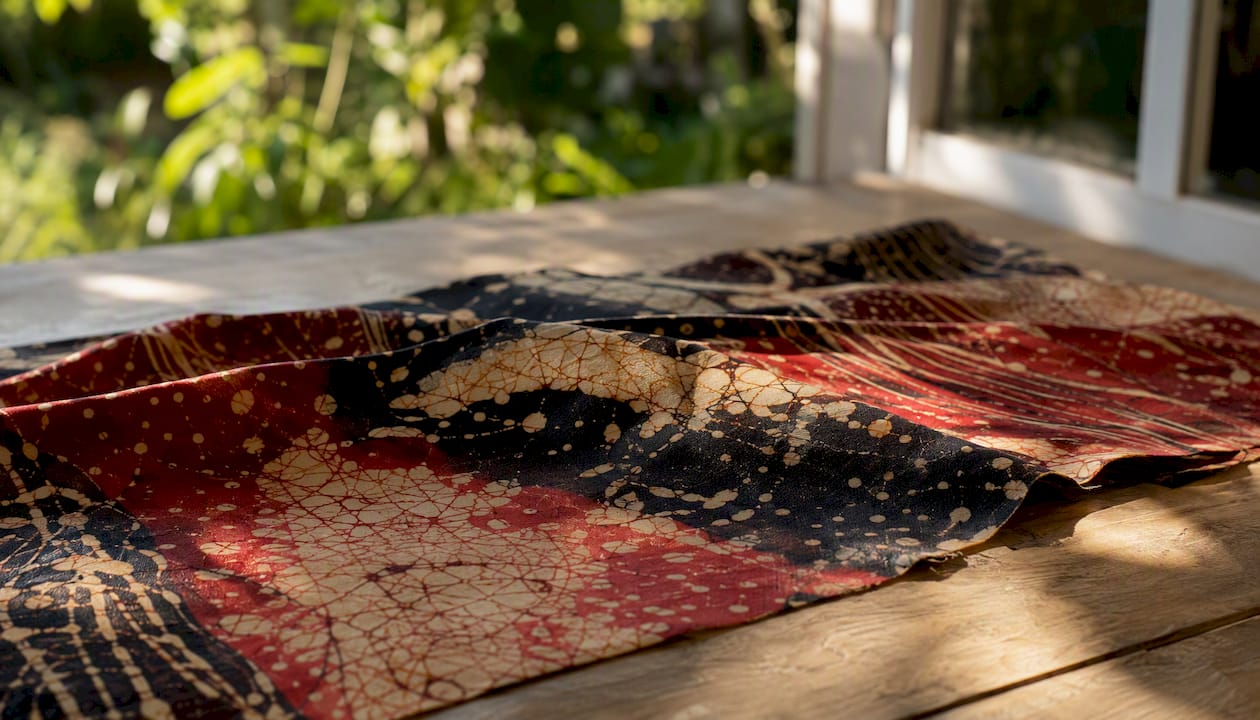
Hand-dyed artisan batiks show irregular wax crackle lines and subtle color shifts — those imperfections are the mark of the craft. Stamped or printed batiks use automated wax application or surface printing to replicate the look at a lower price point, with more consistent repeats.
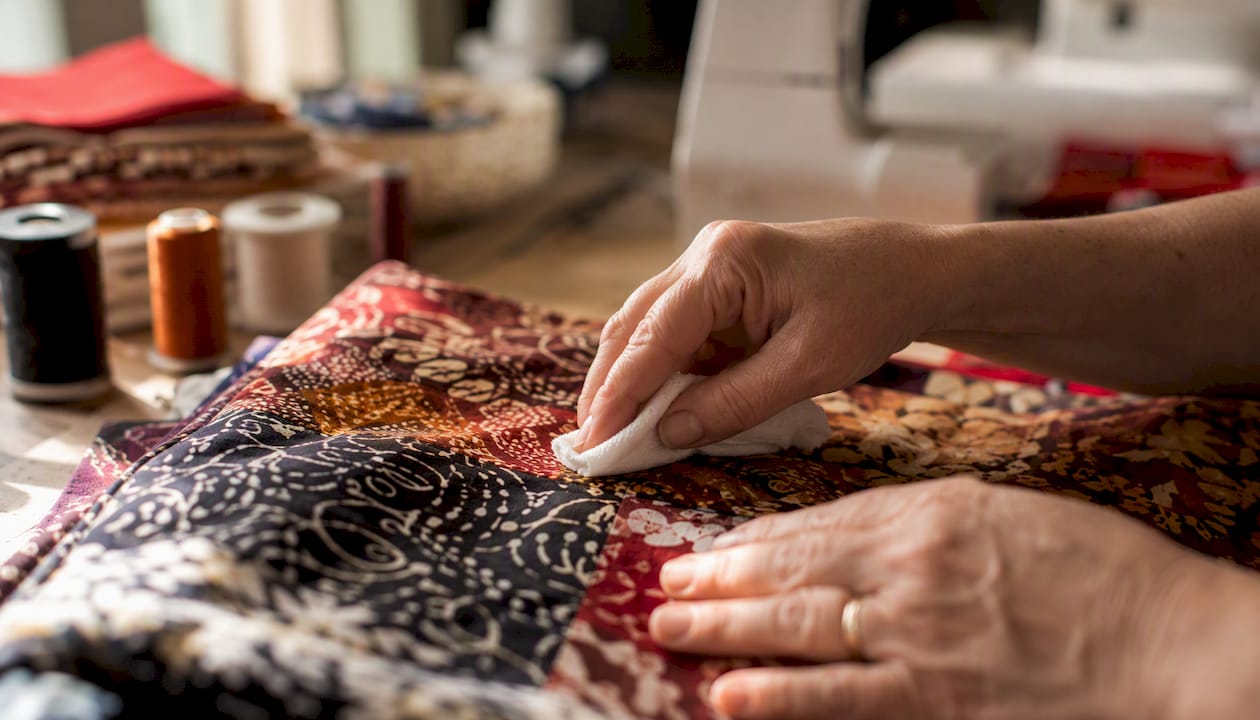
Pro Tip: Before combining a dark batik with light fabrics, rub a damp white cloth firmly against the batik. If color transfers, pre-wash the batik separately with a color-catcher before it goes near anything pale.
What types of batik fabric do quilters use most?
Batik comes in several production styles and formats. Matching the right type to your project saves both money and frustration.
- Hand-dyed artisan batiks: Layered wax and dye applications create subtle color irregularities and one-of-a-kind colorways. These are priced higher and work beautifully in art quilts or as focal fabrics.
- Stamped/printed batiks: Consistent repeat patterns at a more accessible price. Still often through-dyed, so you keep the “no wrong side” benefit.
- Gradations and ombrés: Color shifts smoothly across the yardage. Ideal for backgrounds, sashing, and large areas where you want movement without a busy print.
- Panels and widebacks: Pre-printed scenes or extra-wide backing fabric (often 108"). Always check the listed width and pattern placement before ordering.
Why do quilters choose batik cotton for their projects?
Batik’s non-directional, painterly prints make it a natural blender — fabrics from entirely different collections often read as a cohesive family when batiks are in the mix. That quality is hard to replicate with a conventional printed cotton.
Beyond aesthetics, there are functional reasons batiks show up in so many quilt tops:
- Color depth. Where a printed cotton might read flat from across the room, a batik holds visual texture at every distance.
- No directional constraint. You can rotate pieces freely, which speeds up cutting and reduces waste.
- Sharp piecing. The tighter weave holds crisp seam edges and reduces stretch on the bias.
- Binding that works from every angle. Because there’s no wrong side, batik binding looks correct whether it wraps to the front or the back.
When should you skip batiks? If you’re hand-quilting a large project and prefer a very soft hand, the denser weave can make needle-pulling harder. Very light pastel batiks also carry some bleeding risk when washed with white or cream backgrounds, so test first.
How do you choose the right batik quilting fabric?
Work through this checklist before you buy, whether you’re shopping online or in a local shop.
- Confirm 100% cotton. Blended fabrics behave differently at the iron and in the wash.
- Check the listed width. Standard quilting batik runs 43–45". Anything narrower affects your yardage math.
- Look for fabric weight or grams per yard if the retailer lists it — heavier weights suit structured projects; lighter weights drape better for art quilts.
- Inspect high-resolution photos. You need a full-repeat shot and a close detail shot to judge scale and color accuracy.
- Request a swatch or small cut before ordering multiple yards.
- Read the shipping and return policy for fabric — many retailers do not accept returns on cut yardage.
Choosing pattern scale: Match scale to block size. Small, tight batik patterns work in 2" or 3" blocks without getting lost. Large, open designs read best in bigger blocks or as backgrounds. For blenders, look for low-contrast, all-over textures rather than bold focal prints.
Prewash decisions:
- Mixing batiks with regular quilting cotton? Pre-wash both, separately, in cool water with a color-catcher.
- All-batik quilt? You can skip pre-washing if you’re confident in the brand’s colorfastness — but test a swatch first.
- Dark batiks (navy, black, deep red)? Always pre-wash separately regardless of the rest of your fabric pull.
Pro Tip: Order a fat quarter before committing to full yardage. Press it, run a colorfastness test, and sew a few test seams. That $3–$5 investment can save you from a costly mistake on a 5-yard cut.
Cutting, sewing, pressing, and care tips for batik cotton
Batik’s tighter weave is an asset for precision, but it does ask a little more from your tools and technique.
- Needles: Start with a fresh Microtex/Sharp or quilting needle. The dense weave dulls needles faster than printed cotton, so change your needle more often than you normally would. A size 70/10 or 80/12 is a good starting point for piecing.
- Thread: Use quality 50wt cotton thread for piecing. A thread set with a wide color range means you’ll always have a match for your batik’s dominant tone.
- Rotary cutting: Batik’s tight weave dulls rotary blades faster than loosely woven cloth. Change your blade after every two or three projects, and keep your cutting mat clean. Pair your rotary cutter with sharp quilting snips for clipping threads and trimming points.
- Pressing: Test your iron temperature on a scrap first. Use a pressing cloth to avoid trapping any residual wax on your iron’s sole plate. Steam is useful for setting seams, but test on a swatch before pressing the full piece.
- Hand-quilting: Batik’s density can make hand-quilting physically harder. Consider thinner batting or machine quilting if needle-pulling becomes a struggle.
- Washing: Pre-wash dark batiks separately in cool water with a color-catcher. Dry on low heat or air-dry to minimize shrinkage.
Pro Tip: Load fresh metal bobbins before starting a batik project. Dense fabric puts more tension on the bobbin thread, and a worn or plastic bobbin can cause skipped stitches mid-seam.
Where can you buy batik quilting fabric in the U.S.?
High-quality batik quilting cotton is commonly sold in typical quilting cotton widths and labeled 100% cotton. When you’re evaluating an online retailer, these are the signals that separate a trustworthy source from a risky one.
Green-light signals:
- Clear, high-resolution photos with both full-repeat and close-up detail shots
- Fiber content (100% cotton) and fabric width listed in the product specs
- Brand name visible — Hoffman, Moda, and Kaufman are the labels that carry consistent quality expectations
- Swatch or fat-quarter option available before you commit to yardage
- Visible customer reviews or ratings on the product page
- Clear return and shipping policy for fabric orders
Red flags:
- Blurry or single-angle photos only
- No fiber content or width listed
- No brand or manufacturer name
- Inconsistent width descriptions across similar products
- No return information for cut fabric
Price expectations: Stamped and printed batiks typically run in the mid-range per yard. Artisan hand-dyed pieces cost more because of the labor involved. Gradation and ombré yardage often falls in the mid-range as well. If a price looks unusually low for a “hand-dyed” label, check the product description carefully for origin and production method details.
Spotting authentic batik: Genuine hand-dyed batik shows slight color irregularities, visible wax crackle lines, and a selvage label that names the manufacturer. Printed imitations often have perfectly uniform repeats and no crackle texture. When in doubt, request a swatch.
How Sewingmachinesplus selects and supports batik fabric buyers
Sewingmachinesplus is a 50+ year authorized dealer with over 175,000 positive customer reviews. That track record shapes how batik cotton is selected and presented on the site.
- Curated brand selection: Batik listings feature trusted labels including Hoffman, Moda, and Kaufman — manufacturers with consistent quality standards and clear fiber and width labeling.
- Product page standards: Each batik listing includes fiber content, fabric width, and multiple photos so you can evaluate color accuracy and pattern scale before ordering.
- Swatch and consultation services: Not sure whether a colorway will work in your quilt? Sewingmachinesplus offers personalized consultations and swatch options to help you match batik characteristics to your specific project.
- Price-match guarantee and free shipping over $49: Competitive pricing and a low free-shipping threshold reduce the cost of testing new colorways.
- Purchase support: Customer service can answer questions about fabric weight, width, and colorfastness before you place a large order.
Pro Tip: Use Sewingmachinesplus’s consultation service before ordering more than 3 yards of any new batik colorway. A quick conversation about your project’s color palette and block size can prevent a costly mismatch.
Environmental and ethical considerations in batik production
Traditional batik dyeing uses wax, water, and dye in a process that generates wastewater and chemical byproducts. Artisan workshops in Indonesia, Malaysia, and West Africa — the primary production regions — vary widely in how they manage that waste. Some small workshops use natural dyes and recycle wax; larger commercial operations may use synthetic dyes with less rigorous wastewater treatment.
When buying batik quilting cotton, a few questions are worth asking:
- Does the retailer or brand disclose the production region or workshop?
- Is the fabric certified by a recognized standard such as OEKO-TEX Standard 100, which tests for harmful substances in finished textiles?
- Does the brand support fair-wage practices for the artisans doing the wax work?
Brands like Hoffman California Fabrics have published sourcing information. Choosing a named brand over an unbranded import gives you at least one layer of accountability. For quilters who prioritize sustainability, OEKO-TEX certification on the selvage label is the clearest signal available at the point of purchase.
Common defects and quality issues to watch for in batik cotton
Even from reputable brands, batik fabric can arrive with issues that affect your project. Know what to look for before you cut.
- Uneven dye saturation: Patches where the wax didn’t fully penetrate leave lighter spots. Check the full length of any cut in good light before washing.
- Wax residue: Small hard spots or a slightly stiff hand in places can indicate residual wax. A warm iron with a pressing cloth usually releases it, but test on a scrap first.
- Width inconsistency: Batik yardage can vary slightly from the stated width, especially in artisan pieces. Measure before cutting your pattern pieces.
- Off-grain printing: The pattern may not run perfectly parallel to the selvage. For non-directional batiks this rarely matters; for gradations or stripes, it can affect alignment.
- Color bleeding on arrival: Dark batiks sometimes transfer color to the packaging. If the fabric arrives with color on the fold lines, pre-wash before any other use.
- Pinholes from wax tools: Tiny holes from the tjanting (wax-application tool) are a normal feature of hand-dyed artisan batik, not a defect. In stamped batiks, pinholes are less common and worth flagging to the retailer.
How does batik compare to other quilting cottons in durability and colorfastness?
Regular quilting cotton is printed on the surface; batik dye saturates the fiber so the reverse side shows the same color. That difference in dye depth has direct consequences for long-term performance.
Colorfastness: Batik’s through-dyed construction generally holds color well after the first wash, once any excess dye has been removed. Surface-printed cottons can fade at the print layer over time, especially with repeated hot-water washing. The risk with batik runs in the opposite direction: initial dye bleed in the first wash, particularly with dark or heavily saturated colorways. Pre-washing with a color-catcher addresses this before the quilt is assembled.
Durability: The tighter weave typical of batik cotton tends to resist fraying and holds seam integrity well over years of use and washing. Surface-printed quilting cottons with a looser weave can fray more at cut edges and show wear at seam lines sooner. That said, thread count and finishing quality vary by manufacturer, so brand matters as much as production method.
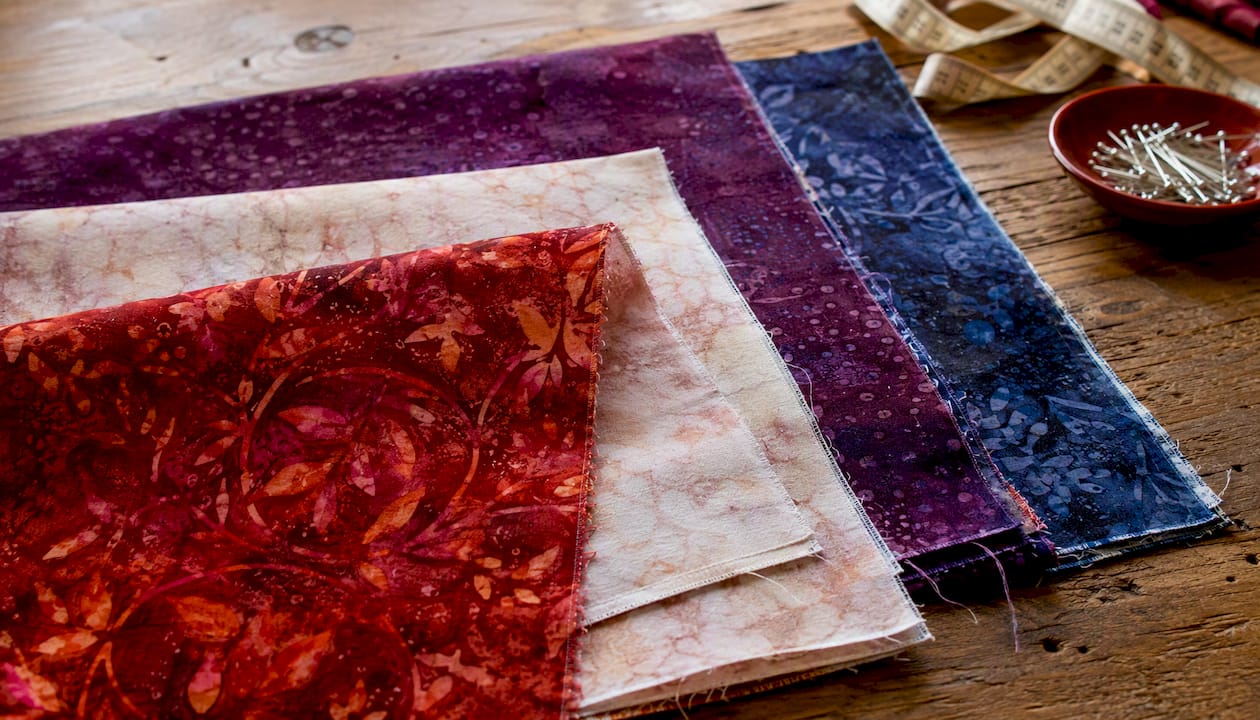
Hand and drape: Batik often feels slightly stiffer than a comparable-weight printed cotton, especially before washing. After pre-washing, the hand softens considerably. Quilters who prefer a very soft drape for wearable projects may find a high-quality printed cotton more comfortable; for bed quilts and wall hangings, batik’s body is an advantage.
What working with batiks has taught me about fabric choices
There’s a tendency in quilting circles to treat batiks as a specialty fabric — something you reach for only when you want a specific look. That framing undersells them. Batiks function as the most reliable blenders in a fabric pull precisely because their non-repeating, all-over texture reads as a neutral even when the color is bold. A deep teal batik can sit next to a geometric print and a floral without competing with either.
The one place I’d push back on conventional batik advice: the instruction to always pre-wash. For an all-batik quilt built from established brands like Hoffman or Kaufman, skipping the pre-wash is a reasonable call if you’ve done a colorfastness test and you’re not mixing in lighter printed cottons. The slight shrinkage that happens in the first wash after quilting can actually improve the texture of a finished quilt top, giving it that characteristic crinkled hand. Pre-washing removes that option permanently. Know what finish you want before you decide.
Curated batik cotton at Sewingmachinesplus, with swatches and expert support
Sewingmachinesplus gives you a shorter path from “I want batik” to “I have the right yardage in hand.” As a 50+ year authorized dealer carrying Hoffman, Moda, and Kaufman batiks, the site lists fiber content, width, and multiple product photos on every fabric page — the exact signals that reduce buyer risk when ordering online.
Free shipping on orders over $49 means you can order a fat quarter or a small cut to test colorfastness and needle behavior without paying extra for the privilege. If you’re planning a larger project, the personalized consultation service helps you match colorways, confirm width requirements, and get the right yardage the first time. A price-match guarantee covers you if you find the same fabric listed lower elsewhere.
Browse batik fabric and request a swatch or consultation at Sewingmachinesplus — and pair your fabric order with the quilting tools and machine supplies you need to start sewing the same day your order arrives.
Sources
FAQ
Is batik fabric good for quilting?
Yes.
Do you need to pre-wash batik fabric before quilting?
Pre-washing is recommended for dark batiks or when mixing batiks with lighter printed cottons — use cool water and a color-catcher. For all-batik quilts built from established brands, you can skip pre-washing if a colorfastness test shows no bleed.
What brands of batik quilting fabric are most trusted?
Hoffman, Moda, and Kaufman are the most recognized batik brands among quilters in the U.S., with consistent quality, clear labeling, and wide retail availability including at Sewingmachinesplus.
How is batik different from regular quilting cotton?
Regular quilting cotton is surface-printed, so color sits on one face only. Batik dye saturates the fiber through the wax-resist process, making both sides usable and producing a tighter weave that frays less and holds seam edges more crisply.
What needle should you use for sewing batik fabric?
Start with a fresh Microtex/Sharp or quilting needle in size 70/10 or 80/12. Batik’s dense weave dulls needles faster than printed cotton, so change your needle more often than you normally would.
