

The best quilting fabric brands are the ones whose bolts meet measurable standards: a stable weave, a thread count in the right range, dye that holds up under water, and a certification you can actually verify. The name printed on the selvage matters less than what’s woven into it.
You’ve probably picked up two bolts that looked identical on a shelf and felt completely different in your hands. One holds a crease from finger pressing. The other springs back and frays at the cut edge before you’ve even gotten it to the machine. That difference isn’t random. It comes down to thread count, weave consistency, fiber quality, and how the fabric was dyed and finished.
This guide walks through what to check before you buy, whether you’re standing in a shop or scrolling a product page. Sewingmachinesplus has spent more than 50 years helping quilters pair machines and materials, and that experience shapes the checklist below.
Before you shop, know what you’re actually evaluating:
- Thread count — the density of the weave, which drives durability and hand
- Weave consistency — how evenly threads are spaced, which affects cutting accuracy
- Fiber and finish — cotton grade, sizing, and how much the fabric will shrink
- Colorfastness — whether dye bleeds when wet
- Certifications — OEKO-TEX or GOTS labels that confirm safety testing
- Supplier transparency — swatch access, lot consistency, and return policies
Key Takeaways
The best quilting fabric brands earn that reputation through measurable traits: thread count, weave consistency, dye stability, and verified certifications, not marketing language.
| Point | Details |
|---|---|
| Check thread count first | Aim for 60 to 75 for standard cotton, up to 200 for high-quality, and 200 to 220 for batiks. |
| Test before you commit | Run a wet-bleed test and a wash-shrink test on a scrap before cutting into yardage. |
| Verify certifications | Look for OEKO-TEX or GOTS labels rather than trusting “eco-friendly” marketing claims. |
| Match fabric to project | Batiks and high-count cottons suit heavy use; fine cottons like Tana Lawn suit detail work. |
| Buy from a transparent supplier | Sewingmachinesplus offers swatches, consultations, price match guarantees, and free shipping over $49 to reduce buying risk. |
Table of Contents
- What Makes Quilting Fabric High Quality
- How To Evaluate A Brand Or Bolt Before You Buy
- Matching Fabric Type To Your Project
- Where To Buy And What A Reliable Supplier Should Offer
- Why Trust This Guide: Author And Publisher Proof
- Top Reputable Brands Known For High-Quality Quilting Fabrics
- Price Range And Value Comparison Among Top Quilting Fabric Brands
- Sustainability Practices Of Popular Quilting Fabric Brands
- User Reviews And Expert Opinions On Durability And Color Retention By Brand
- What Actually Separates A Good Fabric From A Great One
- Fabric And Machine Support From Sewingmachinesplus
- Sources
- FAQ
What Makes Quilting Fabric High Quality
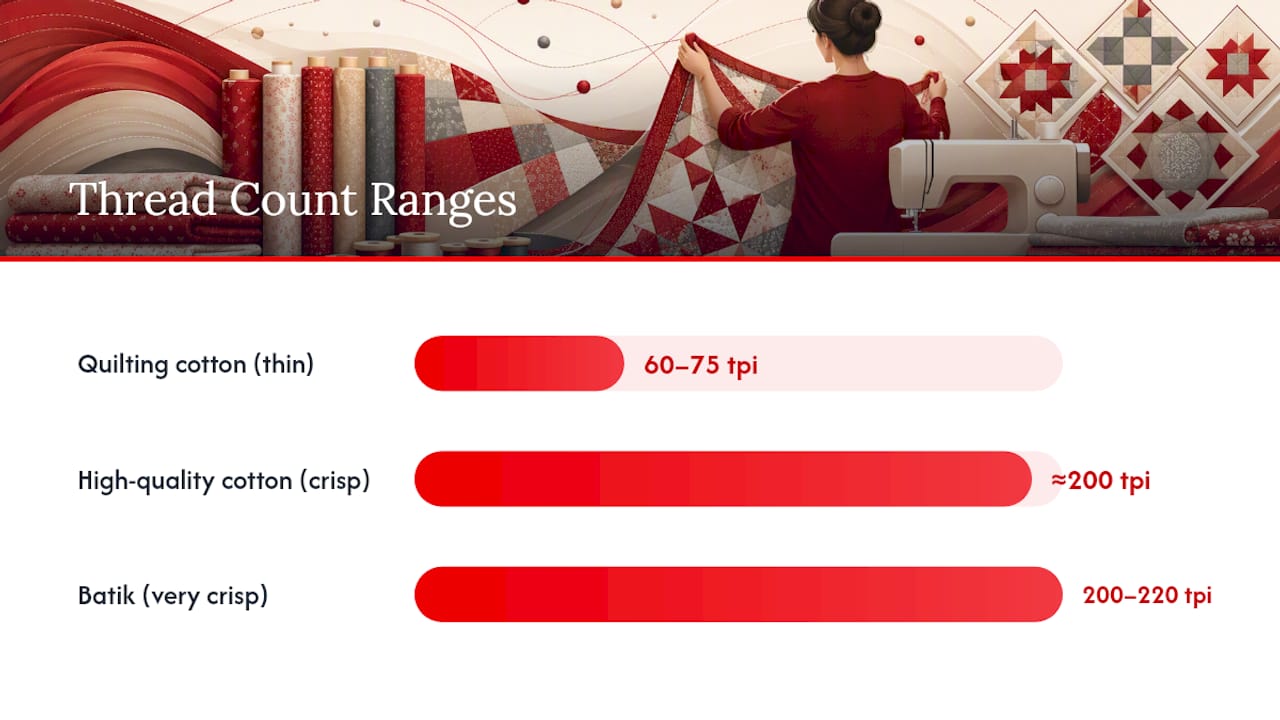
Thread count is the first number worth learning. Good-quality quilting cotton typically runs 60 to 75 threads per inch, while high-quality cottons climb toward 200, and batiks often land between 200 and 220. That’s not a small gap. A 60 count fabric feels thin and drapes loosely; a 200 count batik feels almost like paper, with a crispness that holds a fold line and resists fraying at the edges.
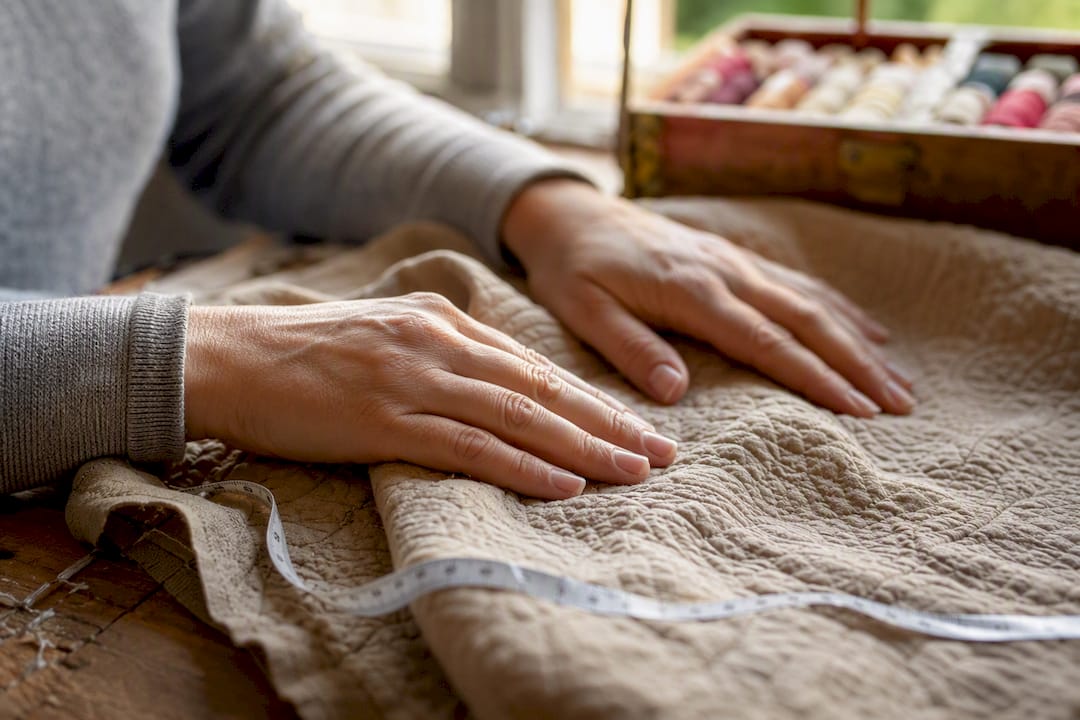
Weave consistency is the trait that shows up the moment you start cutting. If the threads aren’t evenly spaced, your ruler edge won’t sit flush, and a “quarter inch” seam allowance can drift by a sixteenth of an inch across a single block. Multiply that across forty blocks and your quilt stops squaring up. Run your fingers across the fabric on the diagonal; if you feel bumps or slack spots, the weave is inconsistent.
Fiber quality separates pima cotton from standard quilting cotton. Pima has a longer staple length, which means fewer loose fibers pilling off the surface and a smoother hand overall. Weight matters too. Heavier fabric holds its shape under a walking foot; lighter fabric shifts and puckers unless you’re careful with your feed.
Sizing is the finish applied during manufacturing to give fabric body on the bolt. It’s why new fabric often feels stiffer than fabric you’ve already quilted with. Here’s the part most beginners miss:
- Heavily sized fabric can shrink more dramatically on its first wash than fabric with light sizing.
- Sizing residue can cause needle skipping and thread shredding if you skip a wash before piecing with delicate cottons.
- Mixing a heavily sized fabric with a soft, unsized one in the same quilt top risks differential shrinkage and puckering after the final wash.
Pro Tip: Cut a two-inch square from every new fabric before you commit to a project. Wash it, dry it, and compare it to the uncut piece. You’ll see shrinkage, color shift, and fraying in five minutes flat.
Dye quality is the last piece, and it’s the one that fails silently. Some fabrics look vibrant on the bolt but bleed the moment they touch water. Manufacturers using dip dye techniques and higher thread counts tend to produce more even color saturation, which is part of why batiks (dyed in multiple passes) often show richer, more consistent color than a standard printed cotton.
How To Evaluate A Brand Or Bolt Before You Buy
You don’t need a lab to test a fabric’s real quality. You need a few minutes and a sink.
Start with a visual inspection. Check the selvage for the manufacturer’s name, color reference dots, and copyright date; a bolt missing this information is harder to trace if you ever need to reorder. Look at print registration, meaning whether the colors on a multi-color print line up cleanly or show ghosting at the edges. Flip the fabric over. A back that’s nearly as vibrant as the front usually signals a better dye process than a back that’s washed out and gray.
At home, run three quick checks:
- Wet-bleed test: press a damp white cotton scrap against a corner of the fabric for 30 seconds; any color transfer means the dye isn’t fully set.
- Wash and shrink test: launder a fat quarter on your normal cycle and measure it before and after; anything beyond a few percentage points changes how you plan cutting.
- Drape and tug test: hold the fabric up and let it fall, then tug the bias; quilting cotton should have some give without stretching out of shape.
On shrinkage specifically, don’t guess. Riley Blake’s own FAQ states its quilting cottons are 100% cotton and typically shrink 3 to 5 percent when washed, which lines up with what most quilters see across mainstream quilting cotton brands. If a fabric shrinks well beyond that, sizing or fiber quality is usually the reason.
Certification labels are worth learning to read rather than trust blindly. OEKO-TEX certification confirms a fabric has been tested for harmful substances, which matters most when you’re making a quilt for a baby or someone with sensitive skin. GOTS goes further, covering organic fiber sourcing and processing standards. Neither label guarantees a better hand or drape, but both give you a verifiable baseline instead of a marketing claim.
When you’re buying from a retailer, ask direct questions: Does this bolt match the swatch you’ve seen online? Is the dye lot consistent across the roll? What’s the return policy if the color doesn’t match what’s pictured? A supplier who answers these without hesitation is usually one whose stock you can trust sight unseen.
Price tends to track real production cost. Higher thread count, tighter weave control, and multi-pass dyeing all cost more to manufacture, so a $14 per yard batik isn’t overpriced. It’s paying for the process. Where you should be skeptical is a bargain-bin cotton priced like a premium fabric with none of the weave consistency to back it up.
Matching Fabric Type To Your Project
Brand reputation only tells you so much. The fabric type you choose should be dictated by what you’re making, then narrowed down by brand within that category.
- Batiks bring high thread counts and tight weaves, which make them excellent for quilts that will see heavy use and for fussy cutting where pattern placement has to stay crisp after washing.
- Solids and blenders rely heavily on dye consistency; because they have no print to hide unevenness, a slight thread count difference between two “matching” solids can show up as a visible shade mismatch once pieced.
- Fine cottons like Tana Lawn carry high thread counts and an exceptionally soft hand, which suits detail work, garment sewing, and quilts meant to be handled often rather than heavy-use bedding.
- Widebacks need enough width to avoid piecing a backing, plus print repeats and colorfastness that hold up to years of laundering.
- Match fabric hand to your technique: crisp batiks and cottons suit precision piecing, while softer fabrics like Tana Lawn suit hand quilting and applique where flexibility matters more than structure.
Learning how fiber and weave construction affect comfort and handling gives you a useful mental model here: the same principles that make a garment fabric comfortable against skin are what make a quilting cotton behave predictably under a needle.
Where To Buy And What A Reliable Supplier Should Offer
Buying fabric online removes your ability to touch it before purchase, which raises the stakes on supplier transparency. Color and hand are hard to judge from a screen, so the retailer’s practices matter almost as much as the fabric itself.
A reliable supplier should offer:
- Swatches or a clear photo-to-product disclaimer so you know screen color may vary slightly from the bolt
- Lot information so you can order matching yardage later without a visible seam of mismatched color
- A straightforward return or exchange policy if the fabric doesn’t match expectations
- Knowledgeable staff who can answer fiber, weight, and care questions before you commit to yardage
Sewingmachinesplus builds its service model around exactly this kind of pre-purchase confidence. Personalized consultations let you talk through fiber weight and hand before buying yardage for a specific project, and a price match guarantee means you’re not gambling on cost when you commit to a higher-thread-count fabric. Orders over $49 ship free, which matters when you’re building out a full quilt top from multiple fat quarters or yardage cuts. Financing options also make it realistic to invest in premium fabric alongside a machine upgrade rather than choosing one or the other.
Before buying a full quilt’s worth of yardage from a bolt you haven’t handled, call or message the retailer and ask for a swatch or a close-up photo under natural light. It’s a five-minute step that prevents a costly mismatch.
Why Trust This Guide: Author And Publisher Proof
This guide was written by Chris, drawing on Sewingmachinesplus’s decades of retail experience helping quilters select machines and materials suited to their projects.
Sewingmachinesplus backs that experience with concrete signals:
- A 50+ year history as an authorized dealer of major sewing and quilting brands
- More than 175,000 positive customer reviews reflecting consistent service quality
- A price match guarantee on machines, fabric, and accessories
- Free shipping on orders over $49
- Personalized consultations to pair fabric choices with the right machine setup
Readers can use these services directly: request a consultation before buying yardage, ask for swatches on fabric you’re considering, and lean on staff expertise when a bolt’s fiber content or weight isn’t listed clearly online.
Top Reputable Brands Known For High-Quality Quilting Fabrics
A handful of names consistently show up in quilters’ fabric stashes for good reason, though the underlying traits (thread count, dye consistency, weave) are what actually earn that reputation.
Riley Blake has built trust partly through transparency; its public FAQ openly states shrinkage expectations and fiber content, which gives buyers a documented baseline rather than a guess. Art Gallery Fabrics has developed a strong following for its solids, largely due to dip-dye processes that produce more even color saturation than single-pass dyeing. Liberty of London remains the reference point for fine cottons like Tana Lawn, prized for a thread count and hand that suit garment work and detail piecing more than heavy-use quilts.
Beyond these three, most established quilting cotton lines fall into a similar quality tier once you check thread count and weave consistency directly rather than relying on brand recognition alone. A newer or smaller brand that discloses its thread count and shrinkage rate upfront deserves the same consideration as a legacy name that doesn’t.
The practical takeaway: treat brand reputation as a starting point for research, not a substitute for checking the fabric’s actual specs. A brand’s overall track record tells you the odds are in your favor. It doesn’t guarantee the specific bolt in front of you matches that track record.
Price Range And Value Comparison Among Top Quilting Fabric Brands
Quilting cotton pricing generally falls into three tiers, and understanding what drives each tier helps you spend where it counts.
Budget quilting cottons, often found in big-box craft stores, sit at the low end. These typically have lower thread counts, closer to the 60 to 75 range, and looser sizing that can lead to more visible shrinkage and fraying. They’re reasonable for practice blocks, muslin tests, or low-stakes projects where longevity isn’t the priority.
Mid-range designer cottons from established quilting brands cost more per yard because they invest in tighter weave control and better dye consistency. This is where most quilters land for everyday projects, since the jump in durability and color accuracy over budget cotton is noticeable without hitting premium pricing.
Premium fabrics, including high-thread-count batiks and fine cottons like Tana Lawn, command the highest prices. That cost reflects genuine production differences: multiple dye passes, tighter weaves, and higher-grade fiber all add manufacturing steps that budget cotton skips entirely.
Value isn’t just about price per yard. A $16 batik that shrinks 1 to 2 percent and resists fraying can outlast three cuts of a $6 budget cotton that frays before you finish piecing it. When you’re choosing where to spend more, prioritize the fabrics that will see the most wear: quilt tops and bindings over low-visibility backing fabric, for instance.
Sustainability Practices Of Popular Quilting Fabric Brands
Sustainability in quilting fabric shows up in two main forms: certified organic sourcing and safer chemical processing.
GOTS certification addresses the organic side, covering how cotton is grown and processed from fiber to finished bolt. Fewer quilting cotton brands carry full GOTS certification compared to OEKO-TEX, largely because organic cotton farming and certified processing chains cost more to maintain end to end.
OEKO-TEX certification is the more common sustainability and safety signal in mainstream quilting cottons. It confirms a fabric has been tested for harmful substances at various processing stages, which speaks to chemical safety more than farming practices. Brands like Art Gallery Fabrics have highlighted OEKO-TEX certification for specific solid fabric lines, giving buyers a documented reason to trust the finishing process.
For quilters prioritizing sustainability, the practical approach is checking for a certification label rather than assuming a brand’s marketing language means anything specific. “Eco-friendly” printed on packaging isn’t a certification. A GOTS or OEKO-TEX logo, verifiable through the certifying body’s own registry, is.
If sustainability matters most for a specific project, like a baby quilt where you also want assurance against harmful chemical residue, OEKO-TEX certification solves both concerns at once. It’s a narrower promise than full organic certification, but it’s one you can verify in minutes.
User Reviews And Expert Opinions On Durability And Color Retention By Brand
Across quilting forums and product reviews, two complaints repeat more than any others: color bleeding after the first wash and fraying along cut edges before a project is even finished. Both trace back to the fabric traits covered earlier, not bad luck.
Reviewers consistently praise batiks for color retention, and that tracks with the dyeing process: batiks are dyed in multiple stages, which tends to lock color in more thoroughly than a single-pass print. Fabrics with a higher thread count, generally in the 150 to 220 range, also draw fewer durability complaints, since a tighter weave resists fraying better under repeated washing and handling.
Where reviews get genuinely useful is when they mention specifics: shrinkage percentage after a first wash, whether color bled into a white background fabric, or whether a print’s registration held up after quilting. A review that just says “great quality” tells you nothing actionable. One that says “shrank about 4 percent and no bleeding after three washes” gives you a data point you can compare against your own wash test.
Experienced quilters and industry voices alike tend to agree on one point: weave consistency and thread density predict how a fabric performs under a presser foot more reliably than brand name alone. That’s the same conclusion this guide has built toward from the start, and it’s worth trusting over a five-star average with no detail behind it.
What Actually Separates A Good Fabric From A Great One
The conventional advice tells quilters to build brand loyalty: find a label you trust and stick with it. That advice isn’t wrong, exactly, but it skips the more useful skill, which is learning to read a bolt yourself. Brand reputation is a average of thousands of past bolts. It tells you nothing about the specific yard in front of you today.
What gets overlooked most is how much sizing and dye process explain the frustrating stuff: puckering after a wash, color that looked richer on the bolt than in the finished block, seams that won’t lie flat. Those aren’t mysteries. They’re the direct result of thread count and finishing choices you can check in under five minutes with a wet scrap and a tape measure.
If you take one thing from this guide, make it the wash test. Not the brand name. Not the price tag. A fabric that passes a wet-bleed and shrink test on your own kitchen counter will behave the same way in your finished quilt, regardless of whose name is on the selvage.
Fabric And Machine Support From Sewingmachinesplus
Sewingmachinesplus gives you something most fabric-only retailers can’t: staff who understand how a specific fabric hand behaves under a specific machine setup, because they sell both. If you’re pairing a high-thread-count batik with a walking foot for the first time, or wondering whether your machine’s tension settings will handle a finer cotton like Tana Lawn, a personalized consultation solves that before you’ve cut a single piece.
That guidance comes backed by real buying protection: a price match guarantee, free shipping on orders over $49, and financing options if you’re upgrading fabric and equipment together. With more than 175,000 positive customer reviews, the track record speaks to consistency, not just selection.
Start by browsing Sewingmachinesplus’s full catalog of machines, fabrics, and accessories, or reach out for a consultation before committing to yardage on your next quilt.
Sources
These sources back the technical claims in this guide:
- The Cotton Question | National Quilters Circle
- GOTS vs. OEKO-TEX explained: a guide for eco-minded quilters | The Crafty Quilter
- Your comprehensive guide to high quality fabrics | Simply Sewing
- Hello makers: Not all solid fabrics are created equal | Art Gallery Fabrics (AGF blog)
- FAQ | Riley Blake Designs
FAQ
Which brand has the best quality fabric?
No single brand wins across every category. Batik specialists tend to lead on thread count and colorfastness, while brands like Liberty excel in fine cottons, so match the brand to your specific project rather than picking one default.
What are the best quilt brands?
Reputable names like Riley Blake and Art Gallery Fabrics consistently disclose fiber content, shrinkage, and dye processes, which is a stronger signal than sales volume alone.
Is Riley Blake fabric good quality?
Riley Blake produces 100% cotton quilting fabric with a documented shrinkage rate of 3 to 5 percent, which falls within normal range for mainstream quilting cotton and reflects transparent manufacturer disclosure.
Who are some of the best quilt fabric designers?
Fabric designers work with manufacturers like Art Gallery Fabrics and Riley Blake to create print collections, and the best ones consistently pair strong pattern design with the thread count and dye quality standards covered throughout this guide.
How do I know if a fabric will shrink too much?
Cut a small swatch, wash and dry it under normal conditions, then measure it against an unwashed piece; anything shrinking well beyond a few percentage points signals heavy sizing or lower fiber quality.
