

The three most common bobbin classes for domestic sewing machines are Class 15 (A-style), L-style, and M-style. Before buying a replacement, check your owner’s manual or measure a bobbin you already own, comparing diameter and height in millimeters. A size chart and step-by-step identification method follow below.
- Class 15 (A-style): the most widely used bobbin in home and computerized machines
- L-style: common in many mid-range computerized machines
- M-style: larger diameter, used for heavier work and some longarm or quilting machines
Key Takeaways
Matching your machine’s exact bobbin class and material prevents tension problems, jamming, and premature wear, while a quick measurement check confirms compatibility in minutes.
| Point | Details |
|---|---|
| Three main classes | Class 15 (A-style), L-style, and M-style cover most domestic machines. |
| Measure before buying | Diameter and height in millimeters, checked with calipers, confirm your exact bobbin class. |
| Never mix classes casually | Class 15, 15J, and Class 66 look similar but are not interchangeable without manual approval. |
| Watch material weight | Metal versus plastic bobbins can unbalance a case tuned for the other. |
| Buy matched packs from Sewingmachinesplus | Sewingmachinesplus stocks class-specific bobbins like Class 15 metal and Class 66 packs, plus compatibility support. |
Table of Contents
- What Are the Main Bobbin Types for Sewing Machines?
- How Do I Identify My Bobbin’s Style?
- Can I Substitute One Bobbin Type for Another?
- Bobbin Size Chart: Dimensions by Class
- What Should I Check Before Buying Replacement Bobbins?
- What a Sewing Machine Technician Wants You to Know
- Where to Buy the Right Bobbin for Your Machine
- Sources
- FAQ
What Are the Main Bobbin Types for Sewing Machines?
Class 15, sometimes labeled “A-style,” shows up in more home and embroidery machines than any other bobbin. It has a flat top and bottom, a moderate diameter, and works in both metal and plastic versions depending on the machine’s bobbin case. If you own a mainstream computerized model from the last two decades, there’s a good chance this is your bobbin.
L-style bobbins turn up frequently in computerized home machines from several major brands. They’re similar in profile to Class 15 but not interchangeable in every case, which trips up a lot of shoppers who assume “close enough” is good enough.
M-style bobbins have a noticeably larger diameter. Manufacturers build them for heavier fabric work, and you’ll find them in some longarm and quilting setups where thread demand per seam is higher.
Beyond the big three, several notable variants deserve attention. Class 15J has curved sides instead of flat ones, a small but critical difference that Singer documents carefully, along with dimensions for several other Singer-specific bobbin styles. Class 66 is another Singer-specific style found on select vintage and modern machines. Bernina’s jumbo bobbin holds roughly 70 to 80 percent more thread than a standard home machine bobbin, according to Sewfeet’s breakdown of bobbin capacity, which matters if you sew long embroidery runs and hate stopping mid-design to rewind. Singer’s Centaur II and Futura lines use their own wind-in-place bobbin styles that don’t cross over to other machines.
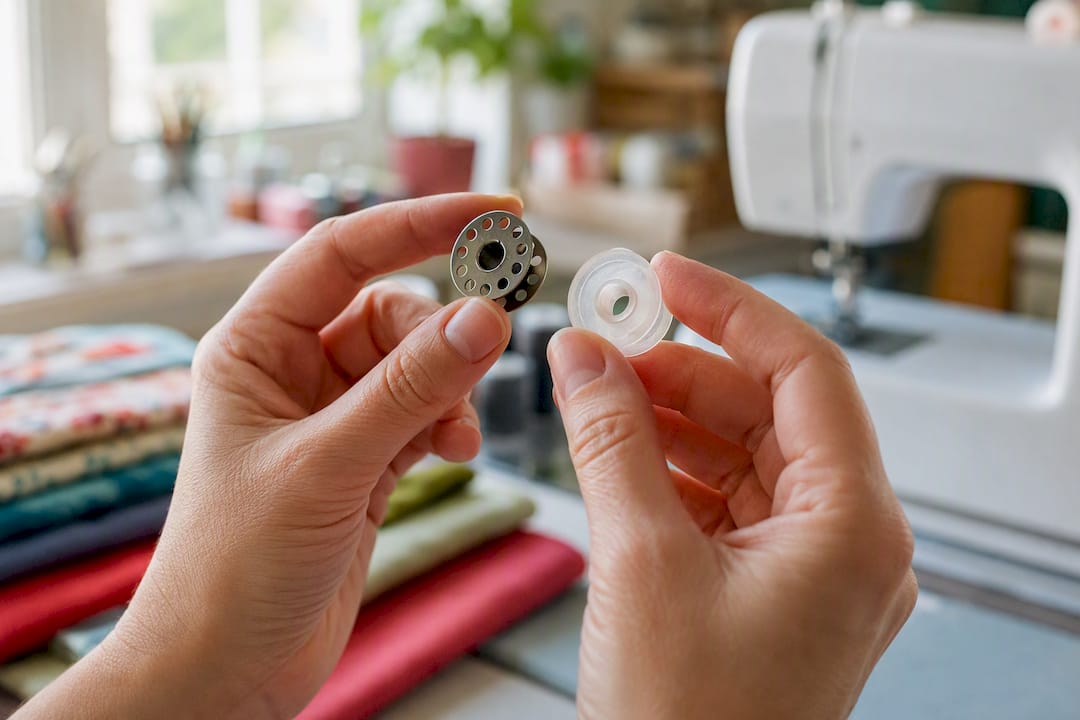
Material matters too; learn more about fabric choices for your sewing projects at Fabric-Fabric’s guide to bag fabric types. Plastic bobbins are standard on most home machines and weigh less, which keeps rotation smooth at everyday speeds. Metal bobbins show up where a machine’s bobbin case is calibrated for that extra weight and rigidity, often on older Singer models or machines built for heavier fabrics.
Pro Tip: Always match both the bobbin style and the material to what shipped with your machine. Swapping plastic for metal, or vice versa, can throw off the balance your bobbin case was tuned for.
How Do I Identify My Bobbin’s Style?
Guessing wastes money on the wrong pack. Work through this order instead:
- Check the manual or compatibility list first. Your owner’s manual or a manufacturer compatibility PDF is the fastest way to confirm your exact bobbin style.
- Compare a bobbin you already own. If your machine came with a spare, use it as your reference sample.
- Measure diameter and height. Record both in inches and millimeters. Singer’s Class 15 measures 13/16 inch (21 mm) in diameter and 7/16 inch (12 mm) in height, a useful benchmark for comparison, per Singer’s own bobbin guide.
- Inspect the shape. Flat sides point to Class 15 or L-style; curved sides suggest Class 15J.
- Look for markings. Some bobbins stamp the class or model directly on the side.
WBC Industries recommends overlaying an unused bobbin on a printed style drawing or using calipers for a precise read.
Pro Tip: Use calipers rather than a fabric tape measure. If you’re still unsure, photograph the bobbin next to a ruler along with your machine’s model number and send both to support.
Can I Substitute One Bobbin Type for Another?
No, not safely, and this is where a lot of home sewers get burned. A machine is engineered around one specific bobbin style, and swapping in a different class without explicit manufacturer approval risks real damage.
Using the wrong bobbin can cause tension inconsistencies, skipped or looped stitches, thread jams under the plate, and faster wear on the bobbin case itself. DIY Melon’s guide to bobbin interchangeability confirms that dimension and material mismatches, not just class labels, drive most of these problems.
A few specific traps to watch for:
- Class 15 vs. 15J vs. Class 66: these look similar at a glance, but the curved sides on 15J and the distinct profile of Class 66 mean they are not drop-in replacements for each other.
- Metal vs. plastic weight: substituting a heavier metal bobbin into a case tuned for plastic can unbalance the assembly enough to shift tension mid-seam, a risk confirmed by sewing machine maintenance research.
- Prewound bobbins: not every machine accepts them, especially for embroidery or extended runs, so confirm compatibility before loading one in.
Bernina’s jumbo bobbin holds up to 70 to 80 percent more thread than a standard bobbin, which sounds like a pure upgrade until you realize it physically will not fit a case sized for Class 15. Bigger isn’t better if it doesn’t fit the slot it’s going into.
Bobbin Size Chart: Dimensions by Class
Here’s a compact reference for the classes and variants covered above. Always confirm against your owner’s manual before ordering, since manufacturers occasionally adjust tolerances across production runs.
| Bobbin Class | Diameter | Height | Notes |
|---|---|---|---|
| Class 15 (A-style) | 13/16 in (21 mm) | 7/16 in (12 mm) | Flat sides; most common in home and embroidery machines |
| Class 15J | ~13/16 in (21 mm) | ~7/16 in (12 mm) | Curved sides; not interchangeable with standard Class 15 |
| L-style | Slightly smaller than Class 15 | Comparable to Class 15 | Common in computerized home machines |
| M-style | Larger than Class 15 | Comparable to Class 15 | Used in heavier-duty and some longarm machines |
| Class 66 | Smaller, narrower profile | Shorter than Class 15 | Singer-specific; found on select vintage and modern models |
| Bernina jumbo | Larger than standard | Taller than standard | Holds roughly 70 to 80 percent more thread |
| Singer Centaur/Futura | Model-specific | Model-specific | Wind-in-place styles; not compatible with other machines |
A few notes worth keeping in mind:
- Dimensions for L-style, M-style, and Class 66 vary slightly by manufacturer, so treat the table as a starting comparison point, not a replacement for direct measurement.
- Singer publishes exact figures for its own Class 15 and specialty styles, which is why that row carries hard numbers while others stay relative.
- When in doubt, measure your own bobbin with calipers and match it against the closest row.
What Should I Check Before Buying Replacement Bobbins?
Confirm your bobbin’s class, its material (metal or plastic), the pack count, and whether prewound bobbins are listed as compatible with your exact model before adding anything to your cart.
- Active hobbyists generally do well keeping 6 to 12 empty bobbins on hand plus a handful of neutral-colored prewounds for quick color changes.
- Finer threads pack more yardage per bobbin; jumbo bobbins hold substantially more thread, useful for long embroidery runs where stopping to rewind breaks your rhythm.
What a Sewing Machine Technician Wants You to Know
The most common mistake at the counter is a customer buying the wrong class, or mixing metal and plastic bobbins without realizing the weight difference matters. Bring a sample bobbin and a photo of your machine’s model number. It cuts matching time down to almost nothing, and it saves you a return trip.
Where to Buy the Right Bobbin for Your Machine
Once you know your class, whether that’s Class 15, L-style, M-style, or a Singer specialty like Centaur or Futura, Sewingmachinesplus stocks the matching pack instead of leaving you to guess from a generic multi-style bag. If you sew regularly, the Singer Class 15 metal bobbins are a solid staple for machines calibrated for metal, and readers running vintage or specialty Singer models can find Class 66 metal bobbins or Centaur-style bobbins sized correctly rather than approximated. Not sure which class your machine takes? Reach out through Sewingmachinesplus for model-specific compatibility help before you order, so you buy the right bobbin the first time instead of the second.
Sources
- How do I choose the right Singer® bobbin?
- Prewound Bobbin Style Guide (WBC Industries)
- Six Questions (and Answers) about Bobbins - Sewfeet
- Are Sewing Machine Bobbins Universal or Interchangeable?
FAQ
How Do I Know if My Bobbin Is Class 15?
Measure it: Class 15 bobbins run 13/16 inch (21 mm) in diameter and 7/16 inch (12 mm) in height with flat sides, per Singer’s specifications. If your bobbin has curved sides instead, it’s likely Class 15J, not standard Class 15.
What Are the Different Types of Bobbins?
The most common types are Class 15 (A-style), L-style, and M-style, along with variants like Class 15J, Class 66, Bernina’s jumbo bobbin, and Singer’s Centaur and Futura wind-in-place styles.
How Do I Identify My Bobbins?
Check your owner’s manual first, then compare against a spare bobbin from your machine, and measure diameter and height with calipers if you’re still unsure. Photographing the bobbin alongside your machine’s model number speeds up support if you need help matching it.
Do Different Sewing Machines Use Different Bobbins?
Yes. Bobbin style and dimensions vary by manufacturer and often by model line, and substituting the wrong class can cause tension problems or damage, according to research on bobbin interchangeability.
Can I Use Prewound Bobbins in Any Machine?
Not always. Prewound bobbins come in standard styles like Class 15, L, and M, but you need to confirm your machine accepts prewounds before relying on them for embroidery or long sewing runs.
