

For most quilts, cotton thread and cotton batting suit traditional piecing and heirloom hand quilting, while polyester or cottonized-poly thread and polyester batting hold up better for high-speed machine quilting, longarm work, and quilts headed for heavy use. Blends split the difference when you want durability without giving up cotton’s familiar feel. The details below explain exactly when each choice earns its place on your machine.
TL;DR:
- Polyester thread and batting are best for high-speed machine quilting, longarm projects, and frequent washes due to their strength, resilience, and shape retention.
- Cotton thread, especially 50wt, works well for piecing and hand quilting, while cotton batting provides a softer, antique look ideal for heirloom and show quilts.
- Blended battings like 80/20 cotton/poly offer a middle ground with better drape and less shrinkage, making them suitable for versatile or mixed-use quilts.
- Polyester batting resists shrinkage and maintains loft over many washes, making it ideal for daily-use, outdoor, or heavily laundered quilts, whereas cotton batting develops a soft crinkle with washing.
- Choosing the right combination depends on project purpose, laundering frequency, desired appearance, and insulation needs, with quality supplies available from specialized vendors.
Table of Contents
- Cotton vs Polyester for Quilts: A Quick Comparison
- How Do Cotton and Polyester Thread Perform Differently?
- What Should You Know About Cotton vs Polyester Batting?
- How Do You Choose Thread and Batting for Your Project?
- What Care and Washing Rules Keep Quilts Looking Right?
- What Thread and Batting Pairings Actually Work?
- Which Fabric Breathes Better, Cotton or Polyester?
- Is Cotton or Polyester the More Sustainable Quilt Material?
- Is Cotton or Polyester Cheaper for Quilting Supplies?
- Does Cotton or Polyester Cause More Skin Irritation?
- How Do Cotton and Polyester Quilts Differ in Look and Feel?
- Author’s Perspective: What I’ve Learned Comparing Fiber Choices
- Where to Find Quilting-Grade Thread, Batting, and Machines
- Sources
- FAQ
Cotton vs Polyester for Quilts: A Quick Comparison
Before you dig into the mechanics, here’s the shorthand version quilters actually use at the cutting table.
Thread, at a glance:
- Cotton: matte finish, low stretch, slight first-wash shrinkage, ideal for piecing 100% cotton fabric
- Polyester: higher tensile strength, lower lint, holds up through dense or high-speed stitching
- Cottonized polyester: a poly core wrapped in cotton, giving you strength with a cotton-like matte look
Batting, at a glance:
- Cotton: lower loft, flatter drape, develops the crinkled “antique” texture after washing
- Polyester: higher loft, resists shrinkage, keeps its shape wash after wash
Default recommendation: cotton thread for piecing, cotton or cottonized-poly for hand quilting, and polyester thread for machine or longarm quilting where speed and stitch consistency matter. Reach for a cotton/poly blend batting when you want some drape without babying the quilt through every wash cycle.
How Do Cotton and Polyester Thread Perform Differently?
Thread choice comes down to four measurable properties: strength, shrinkage, lint, and weight. Get these right and your seams lie flat, your bobbin case stays clean, and your quilting stitches read the way you intended.
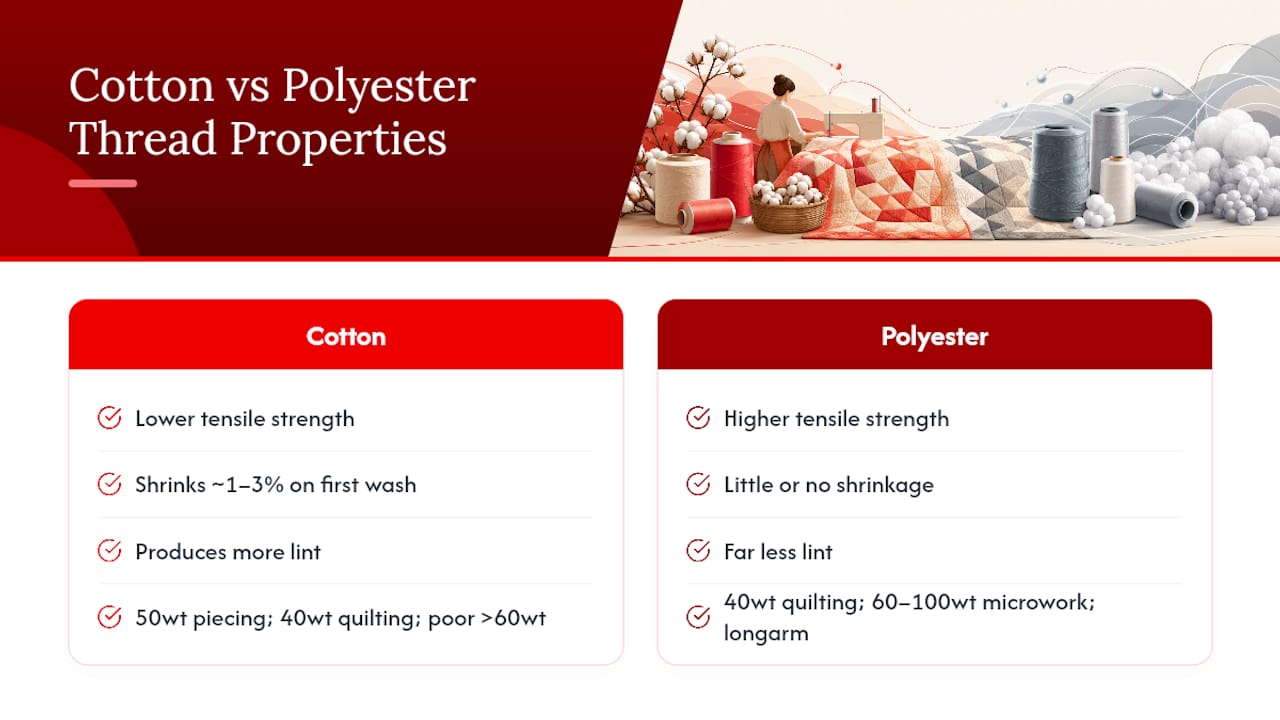
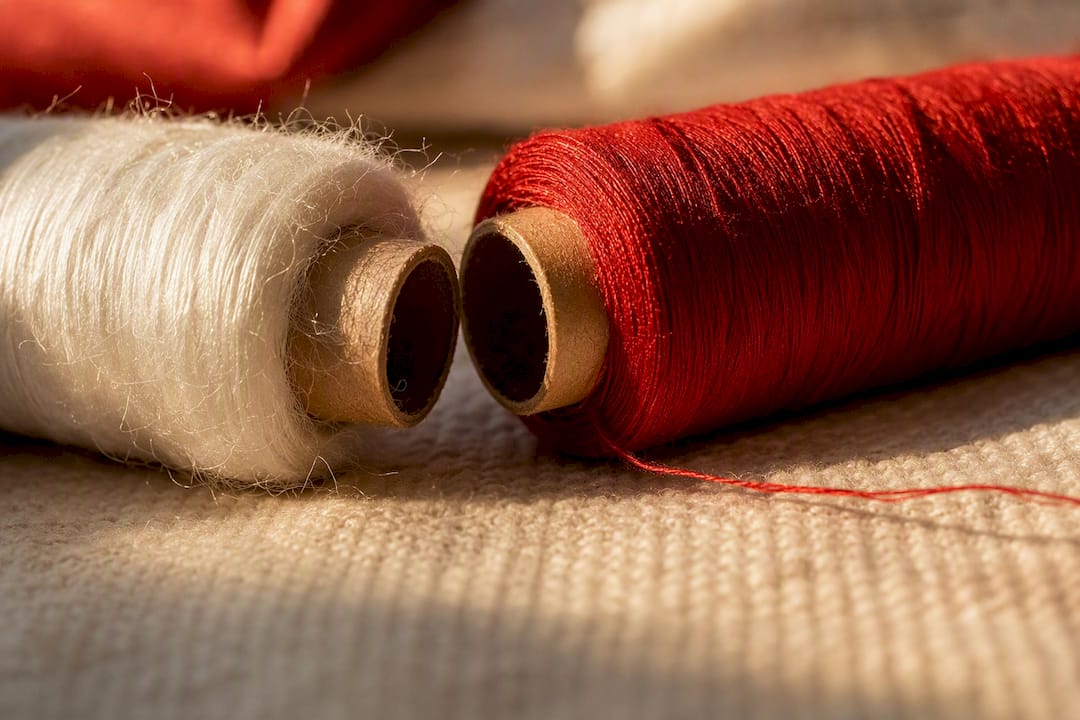
Strength and elongation separate the two fibers most clearly. Polyester fiber has greater tensile strength and produces far less lint than cotton, which is exactly why longarm quilters lean on it for marathon quilting sessions. A longarm machine can run for hours at high speed, and a thread that snaps or sheds lint into the bobbin race turns a straightforward job into a maintenance headache.
Cotton thread’s advantage is subtler. Quality cotton thread shrinks slightly, roughly 1 to 3 percent, on its first wash, which lets the stitches settle into 100% cotton fabric instead of sitting rigid on top of it. That’s the “shrinkage harmony” traditional quilters chase, and it’s a big part of why cotton still dominates hand piecing and heirloom applique.
Weight matters as much as fiber. Industry practice recommends 50wt cotton thread for piecing, since it creates flat, low-bulk seams that won’t add bulk where four or eight seams intersect. For visible machine quilting, 40wt in either fiber gives you strong stitch definition. Push into 60wt to 100wt territory for micro-quilting, thread painting, or embroidery detail, and you’re almost always looking at polyester or a fine core-spun thread because cotton at that weight tends to break under tension.
Many experienced quilters split the difference with a two-thread workflow: cotton for piecing seams, polyester or core-spun for the actual quilting. It’s not indecision. It’s matching the fiber to the job.
Pro Tip: Keep a lint brush and a can of compressed air next to your machine regardless of thread choice, but if you’re running polyester on a longarm, clean the bobbin area every two to three bobbins instead of waiting for a jam.
What Should You Know About Cotton vs Polyester Batting?
Batting is where the “feel” of a finished quilt gets decided, more than fabric choice or thread weight. Fiber content controls loft, drape, warmth, and how the quilt behaves after its first trip through the wash.
Cotton batting produces a flat, drapey hand and develops the soft, crinkled texture that reads as “antique” the moment it comes out of the dryer. That crinkle isn’t a flaw. Quilters chasing a heirloom look for a bed quilt or a show entry often prewash the batting specifically to bring it out faster.
Polyester batting takes the opposite approach: it holds loft and resists shrinkage across repeated washes, so a polyester-batted quilt looks the same on wash number twenty as it did on wash number one. That stability is why polyester dominates:
- Quilts meant for heavy, frequent laundering (kid quilts, pet blankets, donation quilts)
- Projects where warmth-to-weight ratio matters, like winter bed quilts
- Longarm production runs, where consistent loft feeds evenly through the machine
Longarm-focused comparisons generally recommend polyester or blend batting for high-volume or charity work because it feeds through the machine predictably at speed, while cotton stays the pick for show quilts where the antique crinkle is the whole point.
Blends earn their keep here. An 80/20 cotton/poly batting gives you noticeably better drape than pure polyester while resisting shrinkage far better than pure cotton, a reasonable middle ground if you’re not ready to commit to either extreme. Domestic machine quilters often prefer these blends because they handle predictably without the stiffness some pure poly battings can have straight off the bolt.
How Do You Choose Thread and Batting for Your Project?
Run through this short checklist before you thread the machine:
- What’s the quilt’s job? A daily-use lap quilt needs different materials than a wedding heirloom headed for a cedar chest.
- How will it be quilted? Hand quilting favors cotton’s softer hand; machine and longarm work favor polyester’s strength and consistency.
- How often will it be washed? Frequent washing points toward polyester batting and thread for shape retention.
- Does drape or loft matter more? Cotton drapes flatter; polyester holds volume and warmth.
Scenario pairings:
- Baby quilt: cotton thread throughout, cotton or cotton/poly blend batting. Frequent gentle washing, soft hand against skin.
- Heirloom or show quilt: cotton thread for piecing and hand quilting, cotton batting for that classic crinkled drape.
- Everyday bed quilt: cottonized poly or polyester thread for machine quilting, polyester batting for durability through weekly washing.
- Donation or charity quilt: polyester thread and batting end to end. It survives industrial laundering without losing shape.
- Outdoor or picnic quilt: polyester thread and batting, since it resists moisture retention and dries faster after exposure.
What Care and Washing Rules Keep Quilts Looking Right?
Fiber-specific laundering prevents the two most common complaints quilters have after a first wash: puckering and pilling.
- Cotton batting and thread: wash in cool to warm water, tumble dry low or line dry. Prewashing your cotton fabric before piecing cuts down on the same 1 to 3 percent shrinkage rate that affects cotton thread, which keeps seams and fabric shrinking at the same pace instead of puckering against each other.
- Polyester batting and thread: tolerates warm water and standard drying without shrinkage risk, though very high heat can occasionally cause polyester fibers to glaze or fuse, so stick to medium settings.
- Storage: fold quilts loosely and refold periodically rather than leaving permanent creases, and store away from direct sunlight to protect color in both fibers.
- Repair: pilling on polyester batting can be trimmed carefully with fabric scissors; thinning cotton batting in high-wear spots usually calls for a patch rather than a repair stitch.
Statistic Callout: Quality cotton thread shrinks roughly 1 to 3 percent on its first wash, which is precisely why prewashing cotton fabric before piecing matters so much for quilts that will see regular laundering.
What Thread and Batting Pairings Actually Work?
Some combinations just work better together, and skipping the trial-and error saves you a seam ripper session.
- 50wt cotton thread + low-loft cotton batting: the classic hand-piecing and hand-quilting combination, ideal for heirloom work.
- 40wt polyester thread + medium-loft polyester batting: the standard for domestic machine quilting on quilts that will see regular use.
- Cottonized poly thread + cotton/poly blend batting: a practical middle ground for quilters who want strength without a shiny finish.
Match your needle to the thread weight, not just the fabric. A universal needle in a fine size handles 50wt cotton well, but jump up to a size 90/14 or topstitch needle for 40wt polyester to avoid skipped stitches. If you’re quilting through a thicker polyester batting, an even-feed or walking foot keeps the layers moving together instead of shifting.
Pro Tip: If you love cotton’s matte look but keep breaking thread on dense machine quilting designs, switch to a cottonized polyester before giving up on the technique entirely. You get the visual finish without the tension headaches.
Which Fabric Breathes Better, Cotton or Polyester?
Cotton wins on breathability by a wide margin. Its fiber structure absorbs and releases moisture, which is why cotton quilts feel cooler against skin in warm rooms and why cotton batting is the traditional choice for summer-weight quilts. Polyester is hydrophobic. It doesn’t absorb moisture the way cotton does, so a polyester-batted quilt tends to trap body heat rather than wick it away.
That difference matters more for the quilt top and batting than for thread, since thread makes up a tiny fraction of total fabric surface area. If you’re making a quilt meant for hot climates or summer use, a lightweight cotton batting or a blend leaning heavily cotton will sleep noticeably cooler than a pure polyester option. A 65% cotton and 35% polyester blend fabric is a reasonable middle ground for summer projects. It breathes better than pure polyester while resisting wrinkling better than pure cotton, though it won’t match 100% cotton’s cooling effect. For a quilt that needs to perform in humid or warm conditions, prioritize cotton or cotton-heavy blends in the batting and top fabric, and save pure polyester for pieces where warmth retention is the goal.
Is Cotton or Polyester the More Sustainable Quilt Material?
Cotton is a renewable, biodegradable natural fiber, but conventional cotton farming is water and pesticide intensive. Organic cotton and better cotton programs reduce some of that footprint, though they typically cost more per yard. Polyester is a petroleum-derived synthetic that doesn’t biodegrade at any meaningful rate, meaning a polyester-batted quilt that eventually wears out will persist in a landfill far longer than a cotton one.
On the flip side, polyester batting is frequently made from recycled plastic bottles, which gives it a genuine second-life story that pure cotton can’t claim. Many major batting brands now offer recycled-polyester options specifically marketed on that point.
Neither fiber is a clean sustainability winner across the board. If biodegradability and natural sourcing matter most to you, cotton is the stronger pick, especially organic cotton. If diverting plastic waste from landfills matters more, recycled polyester batting has a real case. The most sustainable choice, honestly, is whichever quilt gets finished, used for years, and passed down rather than one that sits half done in a project bin because the “perfect” eco-fiber wasn’t available.
Is Cotton or Polyester Cheaper for Quilting Supplies?
Cotton batting and thread generally cost more per yard than polyester equivalents, largely because of the raw material and processing costs behind natural fiber production. A quilt-sized cotton batt typically runs higher than a comparable polyester batt of the same dimensions, and premium long-staple cotton thread carries a similar price premium over standard polyester spools.
Value for money depends on what you’re optimizing for. Polyester batting’s durability through repeated washing means you’re not replacing a worn-out quilt as often, which can offset the lower upfront thread and fabric costs of some cotton projects over the quilt’s lifespan. Cotton’s advantage shows up in longevity of look rather than structural durability: a well-cared-for cotton quilt develops character over decades rather than showing wear.
For budget-conscious projects like donation quilts or kids’ quilts that will see rough treatment, polyester often delivers better value simply because it survives more wash cycles without replacement. For heirloom pieces meant to be preserved rather than laundered weekly, the higher cost of quality cotton is easier to justify since the piece won’t face the same wear-and-tear economics.
Does Cotton or Polyester Cause More Skin Irritation?
Cotton is the more hypoallergenic choice for people with sensitive skin, eczema, or contact allergies. Its natural fiber structure doesn’t trap heat and moisture against skin the way synthetic fibers can, and it lacks the chemical processing residues sometimes present in polyester manufacturing. Dermatologists commonly recommend natural fibers like cotton for bedding used by people with skin sensitivities or young children.
Polyester itself rarely causes a true allergic reaction, but its poor breathability can aggravate existing skin conditions by trapping heat and sweat against the body overnight, creating conditions where irritation or breakouts are more likely. For baby quilts, quilts intended for people with known skin sensitivities, or anyone who tends to run warm at night, cotton batting and a cotton-heavy top fabric are the safer default. If you need durability for a heavily used quilt but want to minimize skin contact issues, consider a cotton top and back with a polyester or blend batting sandwiched in between. The skin never actually touches the batting directly, which sidesteps most of the irritation concern while keeping the durability benefit.
How Do Cotton and Polyester Quilts Differ in Look and Feel?
Cotton has a soft, matte finish that ages into a lived-in look quilters specifically chase for heirloom and vintage-style projects. Colors on quality cotton fabric tend to hold their saturation well over years of use, though repeated washing and sun exposure will eventually mute even good quality dyes. The texture softens noticeably with each wash, which is part of why well-loved cotton quilts feel so different from a brand-new one.
Polyester brings a slight sheen that some quilters use deliberately. Decorative machine quilting can lean into that sheen as an artistic choice rather than treating it as a drawback, especially on quilts with dense decorative stitching where the light catches the thread. Polyester fabric and batting also resist wrinkling far better than cotton, so a polyester-heavy quilt looks crisp longer between washes, but it won’t develop the same soft, broken-in hand that makes an old cotton quilt so recognizable by touch alone.
Color planning matters regardless of fiber choice. The 60/30/10 rule, using a dominant fabric for roughly 60% of the quilt, a supporting color for 30%, and an accent for the remaining 10%, gives a visually balanced result whether you’re working in cotton, polyester, or a mix of both.
Author’s Perspective: What I’ve Learned Comparing Fiber Choices
Chris covers sewing machines, quilting supplies, and textile fundamentals for Sewingmachinesplus, translating fiber science into practical buying decisions for quilters.
Most quilters overthink this decision because they’re looking for a single winner. There isn’t one, and the two-thread workflow, cotton for piecing, polyester for quilting, isn’t a compromise. It’s the correct answer for anyone who sews both by hand and by machine. What people underestimate is how much thread weight affects the outcome more than fiber alone; a poorly matched 40wt thread on delicate piecing will cause more problems than a well-chosen polyester spool ever would. Buy quality thread from a known source, match the weight to the job, and the fiber debate mostly resolves itself.
— Chris
Where to Find Quilting-Grade Thread, Batting, and Machines
Once you know which fiber fits your project, the harder part is finding thread weights, batting lofts, and needles that actually match what quilting guides recommend, instead of guessing from a wall of similar-looking spools. Sewingmachinesplus stocks cotton and polyester threads across the weight ranges covered here, along with battings, needles, and the machines built to handle them, backed by free shipping on orders over $49 and a price match guarantee. If you’re setting up for heavier machine quilting work, the Juki DDL-8700 industrial machine handles dense stitching loads that would bog down a lighter domestic machine. Browse the full quilting supplies selection or book a personalized consultation to match thread, batting, and machine to your next project before you buy a single spool.
Sources
- Polyester thread vs Cotton thread: Which One Should You Actually Use? — SewingBible
- Cotton vs Polyester Batting: Which One Is Right for Your Project — Mrs. Quilty
- A Quilter’s Guide to Choosing the Best Quilting Thread — FabricCompany
FAQ
Is Cotton or Polyester Better for Quilting?
Neither wins outright. Cotton suits piecing and hand quilting for its shrinkage harmony and soft finish, while polyester suits machine and longarm quilting for its strength and low lint.
What Is the 60/30/10 Rule for Quilting?
It’s a color-planning guideline where the dominant fabric covers roughly 60% of the quilt, a supporting fabric covers 30%, and an accent fabric covers the remaining 10 percent, creating visual balance regardless of fiber choice.
Is Cotton or Polyester Better for a Quilt Cover?
Cotton is generally preferred for quilt covers because it breathes better and feels softer against skin, though polyester covers resist wrinkling and hold color longer between washes.
Is 65% Cotton and 35% Polyester Good for Summer Quilts?
A 65/35 cotton poly blend is a workable summer option. It breathes better than pure polyester while resisting wrinkles more than pure cotton, though it won’t cool quite as well as 100% cotton.
Does Sewingmachinesplus Sell Both Cotton and Polyester Quilting Supplies?
Yes, Sewingmachinesplus carries cotton and polyester threads, battings, and needles across the weight and loft ranges quilters need for piecing, hand quilting, and machine work.
