

Use sewing thread for structural seams and embroidery thread for visible decorative stitches. Here’s the quick-reference version before you dive deeper:
- Structural seams (apparel, bags, quilting blocks): All-purpose polyester or cotton-wrapped polyester sewing thread
- Machine embroidery top thread: 40wt polyester or rayon embroidery thread (40wt is the industry standard)
- Decorative topstitching: 30–40wt embroidery or topstitch thread with a 75/11 or 90/14 needle
- Hand embroidery: Stranded cotton floss (6-ply, separate to your desired strand count)
- Bobbin thread: 60wt fine bobbin thread, not standard sewing thread
Sewingmachinesplus carries the needles, thread sets, and bobbins you need for every one of these scenarios — from beginner kits to specialty supplies.
Key Takeaways
Embroidery thread is for visible decoration; sewing thread is for structural seams. Matching fiber, weight, and needle to your project prevents breakage, fading, and machine problems before they start.
| Point | Details |
|---|---|
| Thread purpose is non-interchangeable | Use sewing thread for seams; use embroidery thread for decorative surface stitching. |
| 40wt is the machine embroidery standard | Most digitized designs assume a 40wt top thread paired with a 60wt bobbin thread. |
| Fiber determines washability | Polyester stays colorfast through repeated washing; rayon is best for display pieces. |
| Needle and tension must match the thread | Switch to a 75/11 or 90/14 embroidery needle and lower tension when using decorative threads. |
| Sewingmachinesplus supplies the full setup | The Madeira thread box, Schmetz needles, Gingher scissors, and bobbins are all available with free shipping over $49. |
Table of Contents
- How does embroidery thread differ from sewing thread?
- What thread materials and finishes actually mean for your project
- Thread weight explained: what 40wt, 30wt, and 60wt mean in practice
- Machine compatibility: bobbins, needles, tension, and breakage
- Can you use sewing thread for embroidery, or embroidery thread for sewing?
- Which thread should you use for each project?
- Colorfastness, washing, and storing your thread
- Expert picks: the right tools and threads for hobbyists
- What experience actually teaches you about thread choice
- Thread and supplies from Sewingmachinesplus
- Sources
- FAQ
How does embroidery thread differ from sewing thread?
At their core, these two threads are engineered for completely different jobs. Sewing thread is built for strength inside a seam, where it takes stress, friction, and repeated washing without being seen. Embroidery thread is built for the surface, where it catches light, holds color, and creates visual texture.
| Dimension | Embroidery Thread | Sewing Thread |
|---|---|---|
| Intended use | Visible decoration, surface stitching | Structural seams, garment construction |
| Common materials | Rayon, polyester, silk, metallic, cotton floss | Polyester, cotton, cotton-wrapped polyester |
| Sheen/finish | High sheen (rayon/silk) to moderate (polyester) | Matte to low sheen |
| Strength/durability | Moderate (rayon) to high (polyester) | High; engineered for seam stress |
| Thread weight | typically 40wt; heavier threads available; finer down to 60wt | typically in the 50wt–60wt range; heavy-duty threads also available |
| Machine compatibility | Top thread in embroidery/sewing machine; NOT for bobbins | Top thread and bobbin; not ideal for embroidery bobbins |
Where overlap is acceptable:
- Embroidery thread works as a top thread for decorative topstitching on a regular sewing machine, with needle and tension adjustments
- A 40wt cotton embroidery thread can substitute for quilting thread on low-stress decorative quilting lines
Common pitfalls to avoid:
- Never load standard sewing thread into an embroidery bobbin. It’s too thick and creates bulk under dense designs
- Avoid rayon embroidery thread on items that get washed frequently. Its sheen fades faster than polyester under repeated laundering
- Don’t use delicate metallic thread for any seam, decorative or structural. It’s too brittle for seam stress
What thread materials and finishes actually mean for your project
The fiber content of your thread determines how it looks, how long it lasts, and how it behaves in the wash. Getting this right matters more than most hobbyists realize.
Polyester is the workhorse of both categories. For embroidery, polyester handles friction and tension better than rayon, making it the go-to for washable garments, towels, and anything that sees regular use. For sewing, all-purpose polyester thread is the default for most apparel and bag construction because it stretches slightly with the fabric and resists breakage.
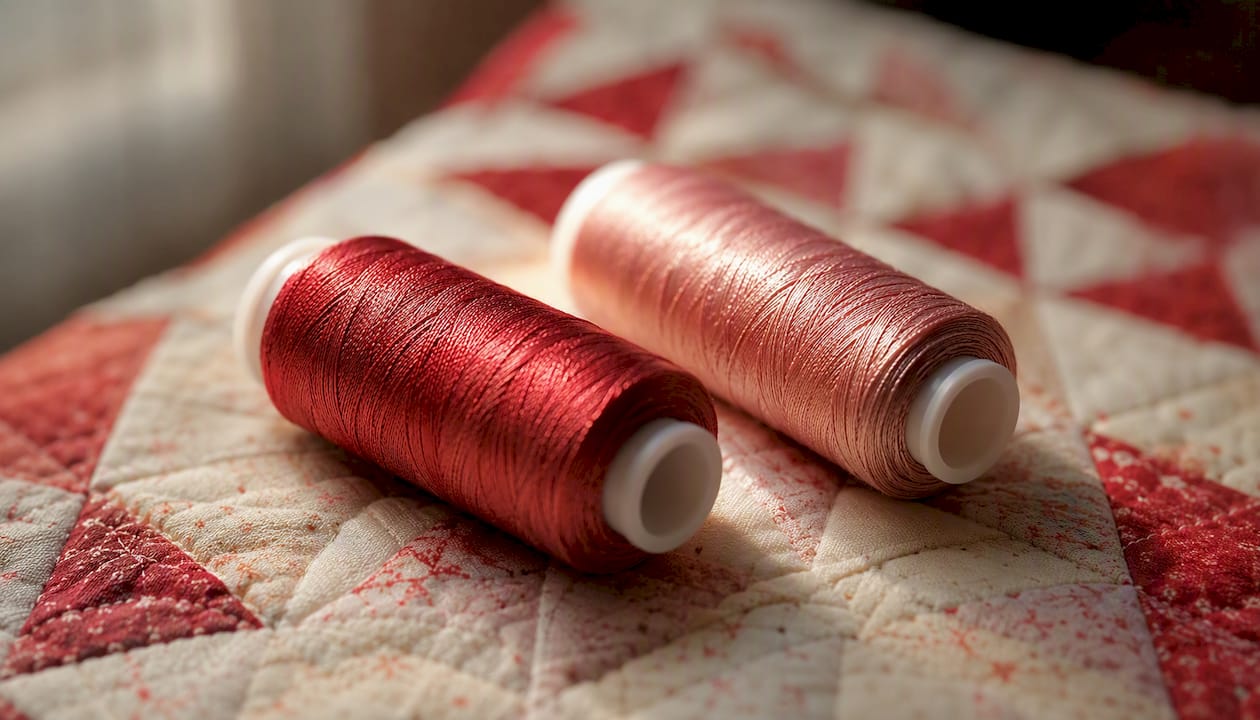
Rayon gives you that rich, almost silky sheen that makes embroidery designs pop on display pieces. The trade-off is durability. Rayon is softer and slightly less resistant to repeated washing and UV exposure than polyester. Save it for framed pieces, decorative pillows, or garments that won’t be laundered weekly.
Cotton sits in the middle. It has a natural matte finish that suits heirloom embroidery, quilting, and any project where you want the thread to blend rather than shine. Cotton sewing thread is the standard choice for quilting because it behaves predictably under a quilt’s repeated washing and pressing.
Silk is the luxury option. It has a subtle, refined sheen that rayon can’t quite match, and it’s the traditional choice for heirloom hand embroidery. Silk thread is also finer, which makes it ideal for detailed surface work on delicate fabrics.
Metallic and variegated threads are specialty tools, not everyday choices. Metallics require a metallic needle, slower machine speed, and sometimes a thread net to control tension. Variegated threads, which shift through multiple colors along the strand, work beautifully for hand embroidery and free-motion machine work.
- Polyester embroidery thread: best for washable, high-wear items
- Rayon embroidery thread: best for display pieces and decorative work
- Cotton: quilting, heirloom hand embroidery, matte-finish projects
- Silk: heirloom and fine hand embroidery
- Metallic/variegated: specialty decorative work only, with appropriate needles
Pro Tip: If your finished piece will go through the washing machine more than a dozen times a year, choose polyester embroidery thread over rayon. The color stays truer and the thread holds its structure through repeated cycles.
Thread weight explained: what 40wt, 30wt, and 60wt mean in practice
Thread weight labels like “wt” often indicate thickness inversely: lower numbers generally correspond to thicker threads, with common weights including 30wt, 40wt, and 60wt Thread-weight systems like wt, denier, and tex each describe coverage and strength differently, but the wt system is what most embroidery manufacturers use on consumer spools.
| Weight | Thickness | Best use |
|---|---|---|
| 30wt | Heavy | Bold topstitching, satin stitch with high coverage |
| 40wt | Standard | Machine embroidery top thread (industry standard) |
| 60wt | Fine | Bobbin thread, dense designs, delicate fabrics |
For machine embroidery, 40wt polyester is the industry-standard top thread because it balances stitch coverage with smooth feeding at high speeds. Most digitized embroidery designs are built around a 40wt top thread. When you switch to 30wt, designs can look overfilled and stitches may pile up. Drop to 60wt and you get a lighter, more delicate result that works well on fine fabrics.
For dense designs specifically, pair a 40wt top thread with a 60wt bobbin thread. The finer bobbin thread lets the top stitching lay flat without adding bulk underneath. Many digitized designs assume exactly this combination.
Hand embroidery uses a different system entirely. Stranded cotton floss comes in 6-ply skeins, and you separate the strands to control coverage. Two strands give a fine, delicate line. Six strands give bold, filled coverage. The ply count you choose depends on your fabric count and the look you’re after, not a weight label.
Key figure: 40wt is the thread weight most embroidery machine manufacturers and digitizers treat as the baseline. Designs stitched with a different weight may need re-digitizing or density adjustments to look right.
Machine compatibility: bobbins, needles, tension, and breakage
This is where most hobbyists run into trouble. Thread type and machine setup are inseparable. Use the wrong combination and you’ll spend more time rethreading than stitching.
Bobbin rules:
- Standard all-purpose sewing thread is generally not recommended for embroidery bobbins due to thickness, which can cause tension issues and bulk
- Using a finer bobbin thread designed for machine embroidery helps ensure smooth feeding and balanced tension
- Singer Class 15 metal bobbins wound with 60wt thread are a reliable setup for most home embroidery machines
Needle selection:
- Embroidery and topstitch needles have larger eyes and specially shaped scars that accommodate filament threads and reduce shredding
- For standard 40wt embroidery thread, a 75/11 embroidery needle works well on lighter fabrics; move to a 90/14 for heavier materials like denim or canvas
- Change your needle every 8–10 hours of stitching. A dull needle is one of the most common causes of thread breakage and skipped stitches
- The Schmetz Double Embroidery Needle in size 2.0/75/11 is a practical choice for twin-needle decorative work and parallel topstitching
Tension and speed:
- Start with tension at mid-low for embroidery thread and test on a scrap of your actual project fabric
- Slow your machine speed when using specialty threads, especially metallics. High speed generates friction that shreds fine filament threads
- Clean lint from the bobbin area regularly. Embroidery thread sheds more than all-purpose thread and lint buildup affects tension consistency
Pro Tip: Before starting any embroidery project on a new fabric, run a test swatch at your planned stitch density. Adjust tension in small increments, not large jumps, and note the settings that work. A sticky note on your machine saves time on the next project.
Can you use sewing thread for embroidery, or embroidery thread for sewing?
The short answer: sometimes, with the right adjustments. Here’s where the line falls.
Safe substitutions:
- Embroidery thread as top thread for decorative topstitching on a regular sewing machine. Change to an embroidery or topstitch needle, lower tension slightly, slow your stitch speed, and test on scrap fabric first
- 40wt cotton embroidery thread for decorative quilting lines where strength is secondary to appearance
- All-purpose polyester sewing thread for hand embroidery when you need durability and don’t need high sheen (it works; it just won’t look as polished as floss)
Substitutions to avoid:
- Do not use embroidery thread as the primary seam thread on high-stress areas like armholes, waistbands, or bag handles. Embroidery thread isn’t engineered for seam stress and may break under tension
- Do not use standard all-purpose sewing thread in an embroidery machine bobbin. The thickness throws off tension and can damage the machine over time
- Avoid metallic embroidery thread for any seam, even decorative ones. It’s brittle and will crack at stress points
Troubleshooting common substitution problems:
- Puckering: Usually a tension issue. Lower the top tension and test again
- Thread breaks: Check needle size first. A needle with too small an eye shreds filament thread. Then check speed
- Dull-looking designs: You may have used matte sewing thread where shiny embroidery thread was needed. Switch to rayon or polyester embroidery thread
- Skipped stitches: Change the needle. A worn or wrong-size needle is the most frequent cause
Pro Tip: When you need visible topstitching that’s both strong and attractive, cotton-wrapped polyester topstitch thread is the best of both worlds. It has more sheen than all-purpose thread and more strength than rayon embroidery thread.
Which thread should you use for each project?
Match the thread to the job, not just the machine. Here’s how that breaks down across common projects:
- Apparel seams: All-purpose polyester or cotton-wrapped polyester sewing thread, 50wt. It handles stress, stretches slightly with knit fabrics, and survives repeated washing
- Durable topstitching: 30–40wt polyester topstitch or embroidery thread with a topstitch needle. This gives you visibility and enough strength for decorative seams on jeans or jackets
- Quilting: Cotton quilting thread or quilting-weight polyester. Cotton is traditional and presses beautifully; polyester is more colorfast over time
- Towels and household linens: Polyester embroidery thread. Hobbyist and forum experience consistently points to polyester for items that get laundered often because it holds color and structure through repeated cycles
- Appliqué: 40wt thread in a matching or contrasting color for machine appliqué; specialty wool thread for a textured, hand-stitched look
- Hand embroidery: Stranded cotton floss separated to 2–4 strands for most fabric counts; silk thread for heirloom pieces on fine linen or silk fabric
- Machine embroidery designs: 40wt polyester top thread with 60wt bobbin thread as the baseline setup
When shopping, look for “40wt” on the label for machine embroidery top thread and confirm the bobbin thread is 60wt or finer. The Madeira Incredible Threadable Embroidery Box gives you 80 colors on 220-yard smart spools, which is a practical starting point for building a machine embroidery thread collection.
Colorfastness, washing, and storing your thread
Thread care matters as much as fabric care, and it’s easy to overlook until a project fades in the first wash.
Colorfastness by material:
- Polyester is the most colorfast option across both embroidery and sewing threads. It resists fading under UV exposure and repeated washing better than any other common fiber
- Rayon fades faster, especially with hot water and direct sunlight. Always wash rayon-embroidered items on a gentle cycle in cold water
- Metallics can tarnish or shed with aggressive washing. Hand wash or use a mesh laundry bag
- Cotton thread is generally stable but can shrink slightly if pre-washing wasn’t done before stitching
Washing guidance:
- Test colorfastness on a scrap before washing a finished piece for the first time
- Use gentle cycles and cold water for rayon-embroidered items
- For polyester-embroidered household items like towels, standard machine washing is fine
- Avoid high-heat drying for any embroidered piece. Heat can distort stitches and weaken thread over time
Storage tips:
- Store thread in a cool, dry location away from direct sunlight. UV exposure degrades both color and fiber strength over months
- Avoid humid basements or garages. Moisture weakens thread and can cause mildew on natural fibers like cotton and silk
- Keep spools in a covered organizer or drawer to prevent dust accumulation, which increases friction during stitching
Expert picks: the right tools and threads for hobbyists
Getting the thread right is only half the equation. The tools you pair with it determine whether the project goes smoothly or becomes a troubleshooting session.
Thread picks by project:
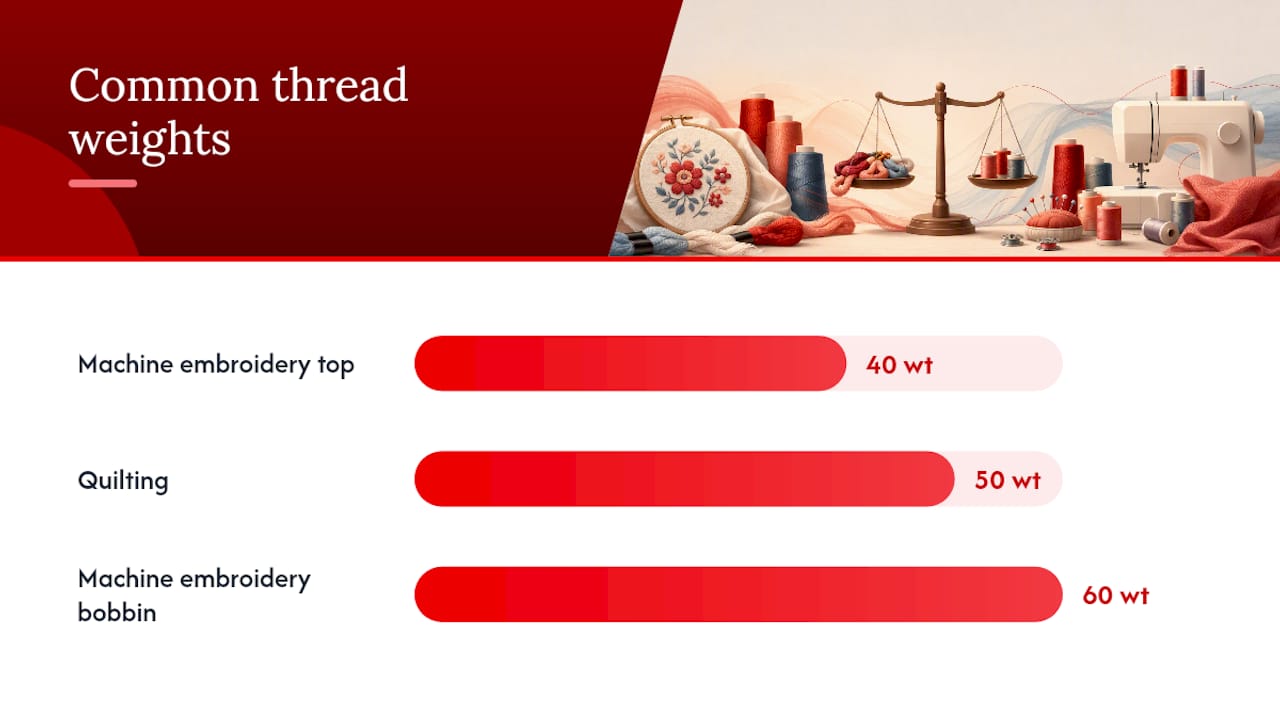
- Machine embroidery top thread: 40wt polyester (Madeira, Isacord, or similar quality brands)
- Machine embroidery bobbin: 60wt fine bobbin thread or pre-wound bobbins in white or black
- Quilting: 50wt cotton or quilting-weight polyester
- Hand embroidery: DMC or Anchor 6-strand stranded cotton floss, separated to the desired ply count
Essential tools:
- Schmetz Double Embroidery Needle, size 2.0/75/11: The larger eye and embroidery-specific shaping reduce shredding with filament threads. The double configuration lets you stitch two parallel decorative lines in one pass, which is useful for topstitching and pintuck effects
- Gingher 6 inch Double-Curved Machine Embroidery Scissors: The curved blade lets you trim jump threads and appliqué edges close to the fabric surface without lifting the hoop or distorting the design. A straight scissor does the same job less precisely
- Madeira Incredible Threadable Embroidery Box: 80 colors on 220-yard smart spools with two 1,650-yard bobbinfil spools included. The threadable spool design makes loading faster and reduces tangles, which matters when you’re switching colors frequently
Specialty thread pointers:
- Metallic thread: use a metallic needle (Schmetz Metafil or equivalent), slow to half speed, and consider a thread net over the spool to control unwinding
- Variegated thread: works best on simple stitch patterns where the color shifts can read clearly. Dense fill stitches muddy the color transitions
- Wool thread: adds texture and a hand-stitched look to appliqué. Not suitable for machine embroidery at speed, but excellent for hand work and slow decorative machine stitching
What experience actually teaches you about thread choice
Most hobbyists spend too much time worrying about brand and not enough time thinking about fiber and weight. The brand matters less than whether the thread is the right weight for your design and the right fiber for how the finished piece will be used.
The heuristic that holds up across projects: if it needs to survive a weekly wash, choose polyester. If it’s a display piece or a gift that won’t see a washing machine often, rayon or silk gives you a finish that polyester can’t match. That single question, “Will this be washed regularly?”, eliminates most thread-choice uncertainty before you even open a spool.
The other habit worth building is keeping a small sample card for each project. Cut a 2-inch strip of your project fabric, stitch a test swatch with your chosen thread, needle, and tension settings, and staple it to a card with the settings written on the back. After a few projects, you’ll have a reference library that makes setup faster every time.
Thread and supplies from Sewingmachinesplus
Sewingmachinesplus has been an authorized dealer for over 50 years, which means the thread, needles, and accessories on the site are sourced directly from manufacturers, not gray-market distributors. The selection covers everything from 40wt machine embroidery thread sets to specialty bobbin thread, Schmetz needles in every size, and Gingher cutting tools.
For readers ready to build or restock a thread collection, the Madeira Incredible Threadable Embroidery Box is a strong starting point: 80 colors, smart spools, and two bobbinfil spools included. Pair it with a pack of Singer Class 15 metal bobbins wound with 60wt thread and a set of Schmetz embroidery needles, and you have a complete machine embroidery setup. Orders over $49 ship free, and Sewingmachinesplus matches competitor prices. Browse the full thread and accessories selection at Sewingmachinesplus to find what your next project needs.
Sources
These are the primary references used to build this article. Each one is worth bookmarking if you want to go deeper on a specific topic.
- Best Thread for Machine Embroidery (2026 Complete Guide) | Embroidize
- Everything to Know About Machine Embroidery Thread - Ricoma Blog
- Can you use embroidery thread in a sewing machine? Yes—with these tips | The Littlest Thistle
- ServiceThread blog — needle and thread compatibility (needle guidance excerpt)
- Embroidery thread weight explained - Printful glossary
FAQ
Is embroidery thread the same as sewing thread?
No. Embroidery thread is engineered for surface visibility, sheen, and high-speed decorative stitching. Sewing thread is engineered for seam strength and structural integrity. They share some materials but serve different mechanical purposes.
Can sewing thread be used for embroidery?
You can use all-purpose sewing thread for hand embroidery in a pinch, but it lacks the sheen and coverage of embroidery floss or machine thread. For machine embroidery, sewing thread is not recommended as a top thread because it’s too heavy and matte for most digitized designs.
What are the disadvantages of embroidery thread?
Embroidery thread, particularly rayon, is less durable under seam stress and fades faster with repeated washing than all-purpose sewing thread. It also requires needle and tension adjustments when used in a regular sewing machine, and metallic varieties need slower speeds and special needles to prevent shredding.
Is embroidery thread thicker than regular thread?
It depends on the weight. Standard 40wt embroidery thread is similar in thickness to 40wt sewing thread, but all-purpose sewing thread is typically sold at 50wt or 60wt, making it finer. A 30wt embroidery thread is noticeably thicker than standard all-purpose thread, while 60wt bobbin thread is finer than both.
