

For most quilt tops, choose medium-weight quilting cotton in the 110 to 150 GSM range (about 3.2 to 4.4 oz/yd²). That range gives you the best balance of durability, drape, and easy piecing that quilting has relied on for decades. It presses flat, holds a crisp seam, and moves through your machine without fighting the feed dogs.
Quilting cotton is your all-purpose answer. Reach for something lighter, like voile, on a wall hanging where drape matters more than structure. Reach for something heavier, like canvas or duck, only for bags, floor mats, or a quilt that needs to survive rough use.
- Standard range: 110 to 150 GSM (3.2 to 4.4 oz/yd²) for quilt tops
- Go lighter: for baby quilts, heirloom piecing, or anything with many small pieces
- Go heavier: for utility quilts, bags, or projects needing structure over softness
- Always prewash your fabric and match your needle and thread to the weight before you cut a single piece
Key Takeaways
Medium-weight quilting cotton at 110 to 150 GSM (3.2 to 4.4 oz/yd²) remains the most reliable fabric choice for quilt tops because it balances durability, drape, and ease of piecing.
| Point | Details |
|---|---|
| Standard weight range | Choose 110 to 150 GSM (3.2 to 4.4 oz/yd²) quilting cotton for most quilt tops. |
| Convert units with one formula | Divide GSM by 33.906 to get oz/yd², or multiply oz/yd² by 33.906 to get GSM. |
| Match needle and thread to weight | Use an 80/12 needle with 50 wt thread for standard cotton, sizing up for heavier fabric. |
| Prewash before cutting | Wash and test for shrinkage and colorfastness to prevent mismatched shrinkage later. |
| Match pattern density to weight | Save dense quilting motifs for medium and heavy fabrics; keep lighter fabric to simpler patterns. |
Table of Contents
- What Fabric Weight Means and How to Convert GSM to Ounces
- Common Quilting Fabrics and Their Typical Weight Ranges
- How Fabric Weight Affects Handling, Needles, and Thread
- Choosing Fabric Weight by Project Type
- Prepping Fabric of Different Weights Before You Cut
- GSM to Ounces Conversion Table for Quilters
- How Fabric Weight Shapes a Quilt’s Durability
- How Fabric Weight Shapes Your Quilting Design Choices
- Recommendations for Stitching Techniques by Fabric Weight
- A Retailer’s View on Getting Fabric Weight Right
- Sources
- FAQ
What Fabric Weight Means and How to Convert GSM to Ounces
Fabric weight tells you how much a square meter or square yard of material weighs, and it’s measured two different ways depending on where the fabric was made. GSM (grams per square meter) is the metric standard used by most Asian and European mills. Ounces per square yard (oz/yd²) is the imperial measurement American fabric houses tend to list.
You’ll run into both numbers constantly if you shop fabric from multiple sources, so converting between them matters more than it sounds like it should.
- Multiply oz/yd² by 33.906 to get GSM. A 4 oz/yd² fabric equals about 136 GSM.
- Divide GSM by 33.906 to get oz/yd². A 130 GSM fabric equals about 3.83 oz/yd².
- Use either number to compare fabrics from different manufacturers, even when their spec sheets use different units.
Quick math: 130 GSM ÷ 33.906 = 3.83 oz/yd². That’s just under the 4 oz mark, but it’s still squarely in the usable range for a quilt top, and it explains why many bolts labeled “quilting weight” feel slightly lighter than you’d expect.
Weight translates directly to feel. A fabric near 110 GSM drapes softly and folds easily over your hand. Something closer to 150 GSM has more body and holds a crease when pressed, which is exactly why quilters lean on that range for pieced tops.
Common Quilting Fabrics and Their Typical Weight Ranges
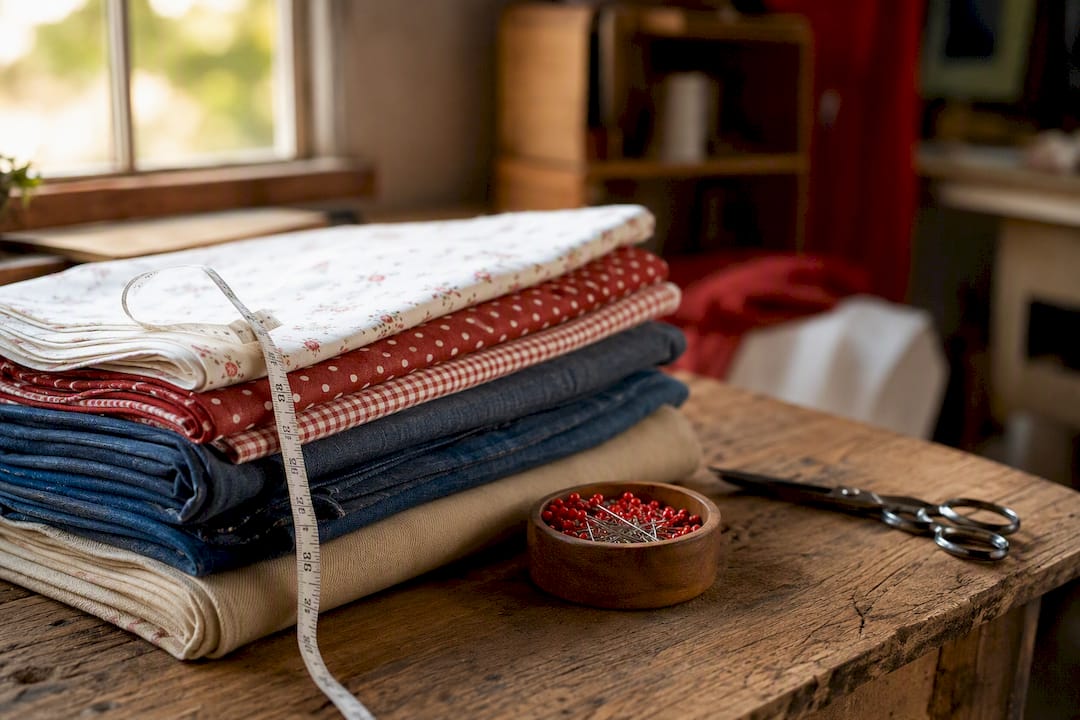
Not every cotton on the bolt wall behaves the same way, and knowing the rough weight class of a fabric before you buy saves you from a mismatched project.
- Quilting cotton: 110 to 150 GSM (3.2 to 4.4 oz/yd²), the default choice for tops, borders, and most piecing.
- Flannel: roughly 150 to 250 GSM, brushed for softness and warmth, common in baby quilts and rag quilts.
- Linen blends: weight varies widely by blend ratio, but most land in a medium range with more texture and less stretch than pure cotton.
- Canvas and duck: heavy at 6 to 10 oz/yd², built for bags, floor mats, and quilts meant to take a beating.
- Voile: a lightweight option around 2 to 4 oz/yd², best for delicate piecing, sheer accents, or garments rather than everyday quilts.
Origin affects weight more than most quilters realize. American brands like Kona Cotton and Moda Bella commonly list weights around 130 GSM, while Japanese quilting cottons often run lighter, in the 110 to 120 GSM band. That difference shows up at the ironing board. Lighter Japanese cottons press with less bulk at seam intersections, which is one reason quilters piecing intricate blocks with dozens of small pieces often prefer them over heavier American bolts.
For backing, a medium weight matching or slightly heavier than your top keeps the quilt balanced. For binding, a slightly firmer fabric holds its fold better over years of washing. Decorative wall quilts can lean lighter across the board since they don’t need to survive daily wear.
How Fabric Weight Affects Handling, Needles, and Thread
Heavier fabric changes how your machine behaves, not just how your quilt feels. A standard universal 80/12 needle handles typical quilting cotton without complaint, but push into canvas or duck territory and you’ll want a 90/14 or a denim needle to avoid skipped stitches and snapped tips.
Thread weight follows an inverse naming convention that trips up a lot of beginners: a higher number means a finer thread, not a thicker one. 50 wt thread is the standard choice for piecing because it’s strong without adding bulk to seams. Bump up to 40 wt when you want quilting stitches to show as a design element on top of the fabric. Drop to 60 wt for bobbin work or fine blending where you want the stitch to disappear.
- Light fabric (under 4 oz/yd²): finer needle (75/11), 50 or 60 wt thread
- Medium quilting cotton (110 to 150 GSM): universal 80/12 needle, 50 wt thread for piecing
- Heavy fabric (6 oz/yd² and up): denim or topstitch needle (90/14 to 100/16), heavier thread if visible
Seam bulk builds fast at block intersections, especially with four or more seams meeting in one spot. Press seams open on bulky joins instead of to one side, and consider clipping corners on heavier fabric before pressing.
Pro Tip: Pair a 50 wt top thread with a 60 wt bobbin thread when piecing heavier fabric. The finer bobbin thread cuts down on back-side bulk without weakening the seam.
Hand quilting favors lighter to medium weights since heavy canvas resists a needle passing through multiple layers. Machine quilting handles heavier fabric more easily, but you’ll want to slow your stitching speed and increase presser foot pressure slightly to keep stitches even.
Choosing Fabric Weight by Project Type
Different quilts ask different things of their fabric. Here’s how to match weight to purpose without overthinking it.
- Bed quilts: stick with standard quilting cotton at 110 to 150 GSM. It balances warmth, drape over a mattress, and enough durability to survive regular washing.
- Baby quilts: lean lighter, closer to 110 GSM, or add flannel for softness against skin. Babies don’t need structure; they need comfort.
- Wall hangings: almost any weight works since there’s no wear and tear, but lighter fabric hangs flatter against a wall without sagging.
- Backing: match or slightly exceed the top’s weight so the quilt doesn’t feel front-heavy or flimsy on the back.
- Binding: choose a firmer, slightly heavier fabric than the top. Binding takes the most physical abuse of any part of the quilt.
Mixing weights intentionally works fine if you compensate. Pair a lighter top with a slightly denser batting, or loosen your quilting density so heavier fabric doesn’t pucker under tight stitching. Cotton batting suits lighter to medium tops well, while wool or heavier polyester batting can support a quilt built from mixed or heavier fabrics.
Prepping Fabric of Different Weights Before You Cut
Prewashing removes sizing and shrinks fabric before it becomes a problem inside a finished quilt. Wash quilting cotton in cool water with mild detergent, then either line dry or tumble on low. Flannel shrinks more than standard cotton, so give it extra room in your fabric estimate. Canvas rarely needs prewashing unless you’re combining it with lighter fabric in the same project.
- Test shrinkage on a small square before committing a full yard, especially with flannel or unfamiliar blends.
- Check colorfastness by washing dark or saturated fabrics separately the first time.
- Press seams flat immediately after sewing, using a lower heat setting on lightweight fabric to avoid scorching.
- Trim bulky seams at intersections before adding a border or binding.
Mixing a prewashed lightweight cotton with an unwashed heavier fabric is a common mistake. The two will shrink at different rates once the finished quilt hits the wash, leaving puckers exactly where you least want them.
GSM to Ounces Conversion Table for Quilters
| GSM | oz/yd² | Weight Class |
|---|---|---|
| 100 | 2.95 | Light |
| 110 | 3.24 | Light to medium |
| 130 | 3.83 | Medium (standard quilting cotton) |
| 150 | 4.42 | Medium to heavy |
| 200 | 5.90 | Heavy |
A 130 GSM fabric works out to roughly 3.83 oz/yd², placing it firmly in standard quilting cotton territory even though it sits just under the 4 oz mark many shoppers expect from that classification.
How Fabric Weight Shapes a Quilt’s Durability
Weight and durability aren’t the same thing, but they’re closely linked. A heavier fabric generally resists abrasion and repeated washing better than a lightweight one, which is why utility quilts and bags lean toward canvas or duck rather than voile.
That said, heavier isn’t always better for longevity in a bed quilt. Fabric that’s too dense stresses your stitching at every seam, and over years of washing, that stress can pull threads loose faster than a well-matched medium weight would. Standard quilting cotton in the 110 to 150 GSM range has earned its place as the default precisely because it holds up to decades of use without overtaxing your seams or your machine.
Batting choice compounds this effect. A lightweight top paired with a dense batting creates uneven stress across the quilt as it’s used and washed, since the outer fabric wears differently than the inner layer. Matching batting loft to fabric weight extends the life of the finished piece more than choosing the heaviest fabric available.
Thread weight plays a supporting role too. A quilt pieced with thread too fine for its fabric weight will show seam strain years before the fabric itself wears out. That’s part of why the standard 50 wt piecing recommendation exists. It’s strong enough to outlast the fabric’s own lifespan in most cases, rather than becoming the weak point in the construction.
Fading and color loss also connect to weight indirectly. Tightly woven, medium-weight cottons tend to hold dye better through repeated washing than very lightweight, loosely woven fabrics, which lose color faster simply because there’s less fiber holding each dye molecule in place.
How Fabric Weight Shapes Your Quilting Design Choices
Fabric weight limits or opens up your quilting pattern options more than most beginners expect. Dense, elaborate quilting patterns, the kind with tight stippling or closely spaced feathers, work beautifully on medium-weight quilting cotton because the fabric has enough body to hold the texture without puckering.
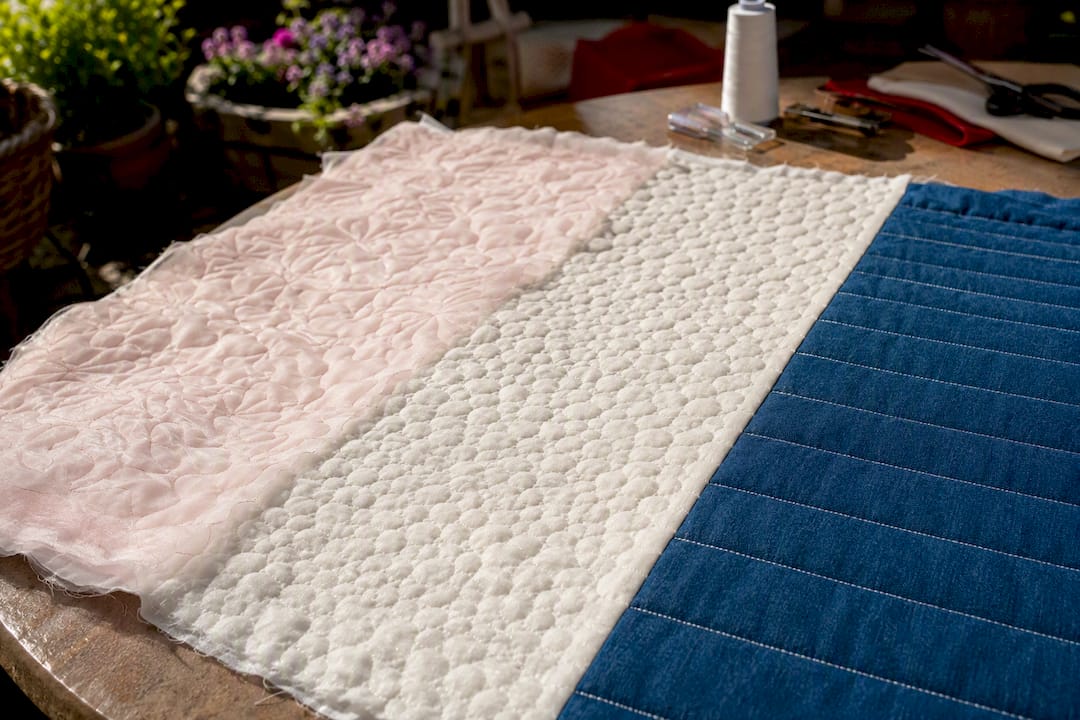
Push that same dense pattern onto a lightweight voile top and you’ll likely see the fabric pucker and distort, since there’s not enough structure to absorb the stitching without shifting. Lighter fabrics generally do better with simpler, more open quilting patterns, like a gentle meander or widely spaced straight lines, that don’t fight the fabric’s natural drape.
Heavier fabrics like canvas or duck can handle dense quilting patterns from a structural standpoint, but the added bulk means your machine works harder, and hand quilting becomes genuinely difficult past a certain thickness. Heavier fabric often calls for simpler quilting motifs, not because the fabric can’t take detail, but because getting a needle through it repeatedly is far more labor-intensive.
Flannel’s brushed texture also changes how quilting stitches read visually. Because the surface has more loft and softness, fine detail work tends to blur slightly compared to how the same pattern looks on tightly woven cotton. Quilters working with flannel often size up their quilting motifs slightly to compensate, letting the pattern read clearly despite the fabric’s softer surface.
Matching pattern density to weight isn’t a rigid rule, but it does explain why the same design can look stunning on one fabric and strained on another.
Recommendations for Stitching Techniques by Fabric Weight
Your stitch length and tension settings should shift along with fabric weight, not stay fixed across every project. Lightweight fabric like voile benefits from a shorter stitch length, around 1.8 to 2.0mm, since the fine weave can pucker under longer stitches. Standard quilting cotton does well with the common default of 2.5mm for piecing and can handle a slightly longer stitch, up to 3.0mm, for machine quilting.
Heavier fabric needs the opposite adjustment. Canvas and duck often quilt better with a slightly longer stitch length, since a short stitch on dense fabric can perforate it like a paper pattern and weaken the seam over time. You’ll also want to loosen top tension slightly on heavier fabric, since the extra fiber density can cause thread to sit too tight and pucker the surface.
Hand quilting rewards lighter to medium weights specifically because your needle passes through fewer fiber layers with less resistance. If you’re set on hand quilting a heavier project, use a between needle with a slightly larger eye and expect slower progress per stitch.
Free-motion quilting on any weight benefits from a walking foot or a properly balanced free-motion foot, but the effect is more pronounced on heavier fabric, where uneven fabric feed shows up as visible skips or thread nesting on the back side. Straight-line quilting, whether by hand or machine, tends to be the most forgiving technique across every weight class, which makes it a solid starting point if you’re piecing a quilt from mixed fabric weights and aren’t sure how each section will behave under the needle.
A Retailer’s View on Getting Fabric Weight Right
Choosing the right weight comes down to matching material to purpose, and that’s exactly the kind of question our team at Sewingmachinesplus fields daily from quilters building everything from baby quilts to heirloom bed covers. If you’re unsure which weight suits your next project, browse our fabric and machine selection or reach out for a personalized consultation.
— Chris
Sources
For deeper reading beyond this guide, the FibreCalcs fabric weight converter handles GSM to ounce conversions instantly. The Fanda Fabrics quilting weight guide breaks down light, medium, and heavy fabric classes in detail. The House of Fabrika conversion chart offers a quick reference for the 33.906 conversion factor. The YLI Threads weight guide explains thread weight naming and pairing in plain terms.
- GSM to Ounces | FibreCalcs
- Quilting Fabric Weight: A Comprehensive Guide | Fanda Fabrics
- Thread weight for quilting: Your complete guide | YLI Threads
FAQ
What Is the 60/30/10 Rule for Quilting?
It’s a color-balancing guideline, not a weight rule: use your dominant fabric for about 60% of a quilt, a secondary color for 30%, and an accent color for the remaining 10% to create visual balance.
Is 40 wt Thread Good for Quilting?
Yes, 40 wt thread works well for visible machine quilting because it shows up clearly as a design element on top of the fabric, unlike finer threads that blend in.
Is 30 wt Thread Heavier Than 50 wt?
Yes, thread weight numbering works in reverse, so a lower number means a thicker thread. That makes heavier weights notably bolder than 50 wt, which is the standard choice for piecing.
How Much Does 1 Yard of Cotton Quilting Fabric Weigh?
Standard quilting cotton at 110 to 150 GSM falls within a typical weight range, though exact weight varies by brand and weave density.
