

Choose an industrial machine if you sew heavy materials at high volume for hours every day. Choose a domestic machine if you need versatility, portability, and the ability to switch between stitch types on a single project.
Three quick signals to confirm which side you’re on:
- Hours per day: Sewing more than 4 hours daily on production work? Industrial. Sewing evenings and weekends on varied projects? Domestic.
- Material thickness: Regularly working with leather, canvas, denim stacks, or upholstery foam? Industrial feed systems handle these consistently; most domestic machines struggle or skip stitches.
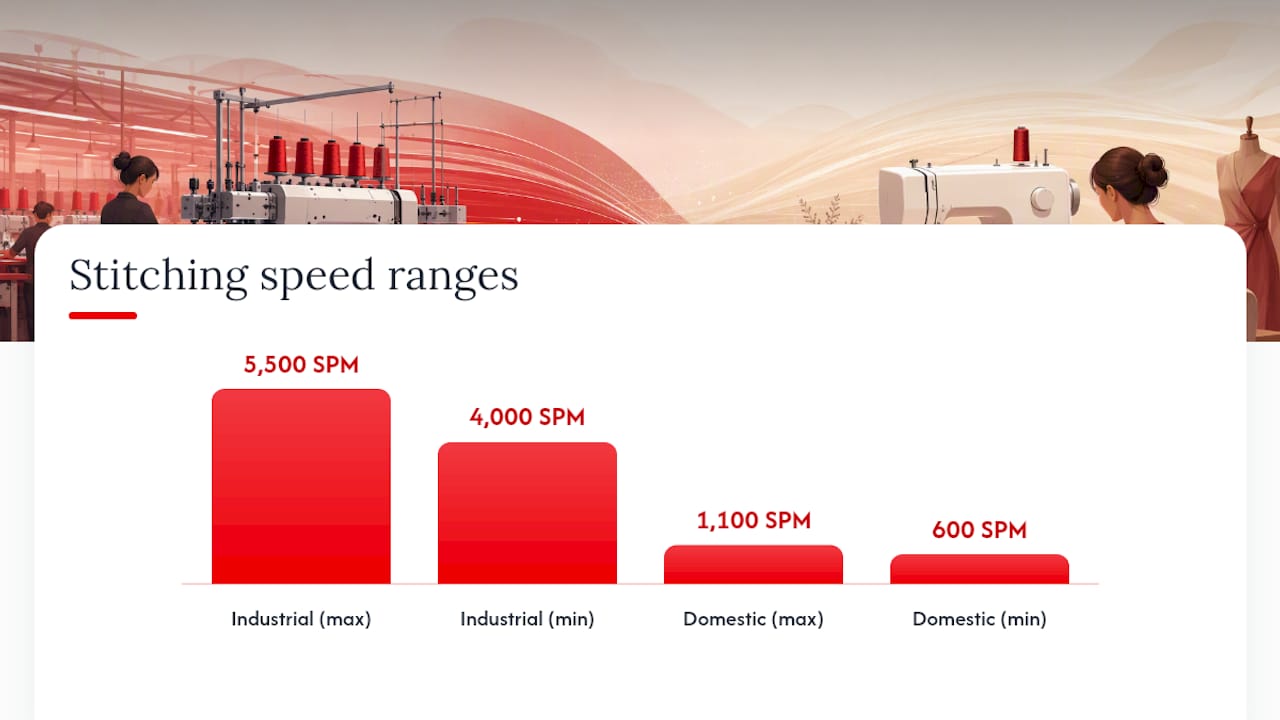
- Production volume: Filling orders for an Etsy shop or small batch production? Industrial throughput at 4,000–5,500 stitches per minute cuts labor time dramatically compared to domestic machines running 600–1,100 SPM.
Two models worth bookmarking right now: the Juki DDL-8700 for industrial straight-stitch production, and the Baby Lock BL6800 for a capable domestic crossover. Both are covered in detail below.
Key Takeaways
Industrial machines win on speed and durability for heavy-material production; domestic machines win on versatility, portability, and stitch variety for mixed projects and decorative work.
| Point | Details |
|---|---|
| Speed gap is the core ROI driver | Industrial machines run 4,000–5,500 SPM vs. 600–1,100 SPM for domestic, cutting labor time on straight-stitch production dramatically. |
| Servo motors change the energy equation | Servo motors typically use significantly less energy than clutch motors, offering a good payback period for high-volume operations. |
| Mixed fleet beats a single machine | Keeping one industrial head for production and one domestic for buttonholes and decorative stitches is the most practical setup for scaling makers. |
| Repairability varies by machine type | Industrial mechanical machines are easier and cheaper to service long-term; computerized domestics can carry high repair costs when electronics fail. |
| Sewingmachinesplus | Authorized dealer with 50+ years of experience, offering the Juki DDL-8700, Baby Lock BL6800, warranty support, and financing to reduce purchase risk. |
Table of Contents
- How industrial vs. domestic sewing machines compare across every key dimension
- Real machine examples that show the difference
- How to choose the right machine for your work
- Which machine type fits your actual projects?
- What does owning each type actually cost you?
- Space, power, and noise: what you need to set up each type
- Keeping your machine running: maintenance and repairs
- Your buying checklist before you commit
- A dealer’s honest perspective on mixing machine types
- Where to find the right machine for your setup
- Sources
- FAQ
How industrial vs. domestic sewing machines compare across every key dimension
The table below maps the most important decision factors side by side, using sourced ranges so you can compare on real numbers rather than marketing language.
| Dimension | Industrial Machine | Domestic Machine |
|---|---|---|
| Best for (use-case) | High-volume production, leather, canvas, upholstery, bags | Quilting, garments, embroidery, mixed home projects |
| Stitch types | Typically one specialized type (lockstitch, overlock, etc.) | 50–500 built-in stitches depending on model |
| Speed (SPM) | 4,000–5,500 SPM | 600–1,100 SPM |
| Motor / duty cycle | Clutch or servo motor; continuous-duty rated | Fractional motor; intermittent use rated |
| Purchase price | $700–$1,200+ (entry straight-stitch head) | $150–$1,200 depending on features |
| Running costs | Lower electricity with servo; higher needle/thread costs | Lower thread costs; electronics repair can be expensive |
| Space & noise | Requires dedicated table; clutch motors are loud | Portable; servo-equipped domestics are quieter |
| Ease of use | Steep learning curve; minimal controls | Beginner-friendly; computerized models guide you |
| Parts & service | Widely available mechanical parts; long service life | Varies; computerized models may need specialist repair |
Key trade-offs to keep in mind:
- Industrial machines are purpose-built. Speed and durability are the payoff; versatility is not part of the deal.
- Domestic machines can handle light leather and denim, but repeated heavy-material work wears them out faster than manufacturers intend.
- Servo motors on industrial heads use 60–70% less energy than older clutch motors, with payback periods often seen in 12–18 months for high-volume operations.
- A mixed approach (one industrial head for production, one domestic for buttonholes and embroidery) is often the most practical setup for a scaling home-based business.
Real machine examples that show the difference
Abstract specs only go so far. Here are two concrete models that represent each category well.
Juki DDL-8700: the industrial benchmark
The Juki DDL-8700 is a high-speed single-needle straight lockstitch machine that ships with a table and servo motor already assembled. It runs at up to 5,500 SPM, handles materials from lightweight shirting to medium-weight denim, and is built for continuous-duty operation. The servo motor keeps noise low and energy draw modest compared to clutch-motor alternatives. If you’re producing garments, bags, or canvas goods in volume, this is the kind of machine that pays for itself in labor savings within a single season of regular use.
| Spec | Juki DDL-8700 |
|---|---|
| Stitch type | Single-needle lockstitch |
| Max speed | Up to 5,500 SPM |
| Motor | Servo (included) |
| Table | Assembled and included |
| Best for | Garments, bags, medium-weight production |
Baby Lock BL6800: the domestic crossover
The Baby Lock BL6800 sits at the capable end of the domestic category. It offers a wide stitch selection, handles heavier home-dec fabrics better than entry-level machines, and stays portable enough to move between rooms or take to a class. For a hobbyist who occasionally works with denim or canvas but also needs buttonholes, decorative stitches, and quilting functions, it covers the full range without requiring a dedicated sewing room.
For leather work that goes beyond what any domestic machine can handle, the Techsew 5200 is worth knowing about. It penetrates leather up to roughly 7/8" thick using a SmartServo motor and triple-feed system, which keeps thick hides feeding evenly without skipped stitches or needle deflection.
Dealer trust matters as much as specs. Buying from an authorized dealer like Sewingmachinesplus gives you manufacturer warranty support, access to authorized service centers, financing options, and a price match guarantee. That combination shortens downtime and reduces the financial risk of a major machine purchase considerably.
How to choose the right machine for your work
Work through these filters in order. The first one that gives you a clear answer is usually the right stopping point.
- Identify your primary material. Leather, thick canvas, upholstery vinyl, or stacked denim consistently? You need an industrial machine with the right feed system (compound feed or walking foot). Wovens, knits, quilting cotton, and occasional denim? A quality domestic handles it.
- Estimate your weekly sewing hours. Under 10 hours a week on varied projects, domestic is the practical choice. Over 20 hours a week on production work, industrial throughput and duty-cycle ratings become necessary.
- List the stitch types you actually use. If your work is 95% straight stitch, an industrial head is a natural fit. If you regularly need zigzag, buttonholes, blind hem, or decorative stitches, a domestic machine (or a mixed setup) is the better call.
- Measure your space. Industrial machines need a dedicated table, floor space for the motor and pedal, and ideally a separate room or noise mitigation. If you sew in a shared living space, a portable domestic is far more practical.
- Set your total budget, not just the machine price. Industrial heads need a table, motor, and sometimes a stand. Factor in installation, a service contract, and consumables. Domestic machines have lower upfront costs but can carry higher repair costs if computerized components fail.
Questions to ask any dealer or seller before buying:
- What is the duty cycle rating, and what does it mean for my daily use pattern?
- Is warranty service handled through an authorized service center, or do I ship the machine back?
- Are replacement parts (feed dogs, presser feet, bobbins, timing belts) stocked locally or available within a week?
- Does the motor run on standard 110V, or does it need a dedicated circuit?
Red flags that should make you walk away:
- No duty-cycle specification listed anywhere in the product description
- Seller cannot name an authorized service center in your region
- Computerized domestic with sealed electronics and no published parts list
- Return policy shorter than 30 days on a machine over $500
Pro Tip: Ask specifically whether the machine uses a Class 15 or industrial-size bobbin. Singer Class 15 metal bobbins, for example, are widely available and inexpensive, which matters when you’re running through thread at production volume. Proprietary bobbin systems can become a supply-chain headache.
Which machine type fits your actual projects?
The right answer depends almost entirely on what you make and how often you make it.
Hobbyist and home crafter: A domestic machine is the better fit for most people in this category. You get stitch variety, portability, and the ability to handle everything from quilting cotton to light denim without reconfiguring your workspace. High-end domestic models with computerized controls also support embroidery and decorative work that no industrial straight-stitch head can replicate.
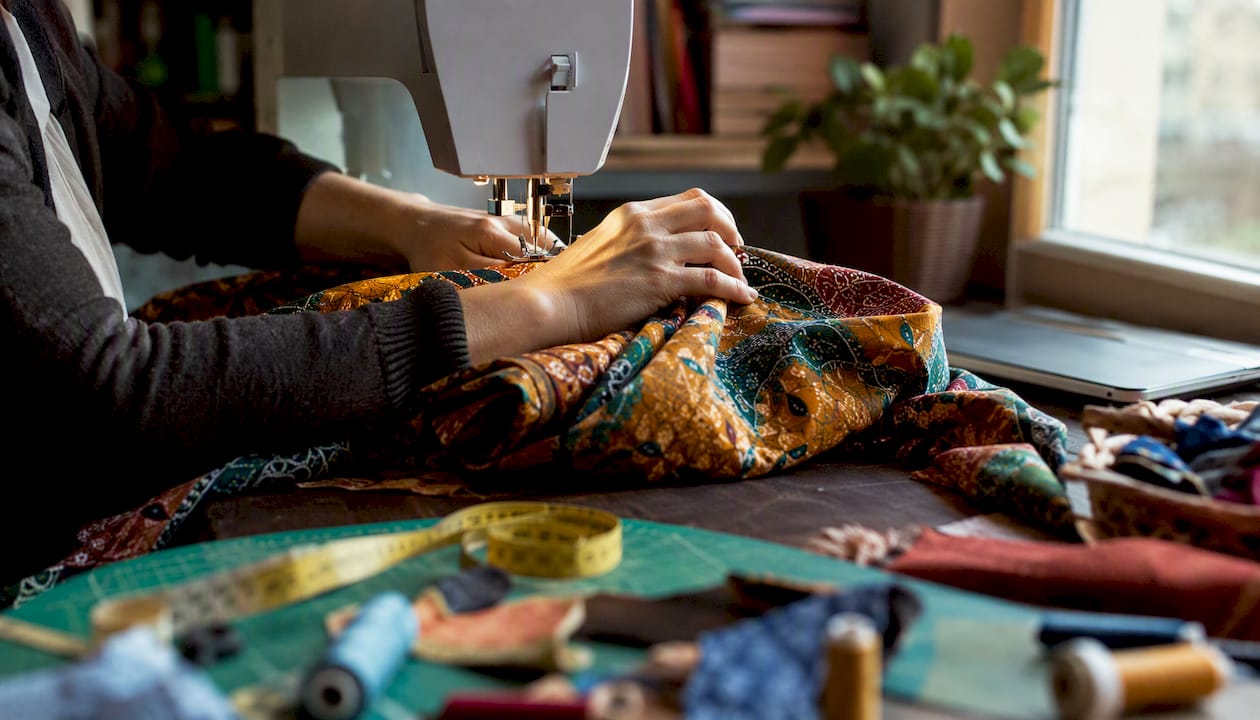
Small-batch seller or Etsy shop owner: This is where the decision gets interesting. If your products are all straight-stitch construction in medium-weight fabric, an industrial head pays off quickly in labor savings. If your line includes varied stitch types, finishing, and embellishment, a domestic machine (or a mixed setup) keeps you flexible. Community experience consistently points toward keeping a domestic machine for zigzag and buttonholes even after adding an industrial straight-stitch head.
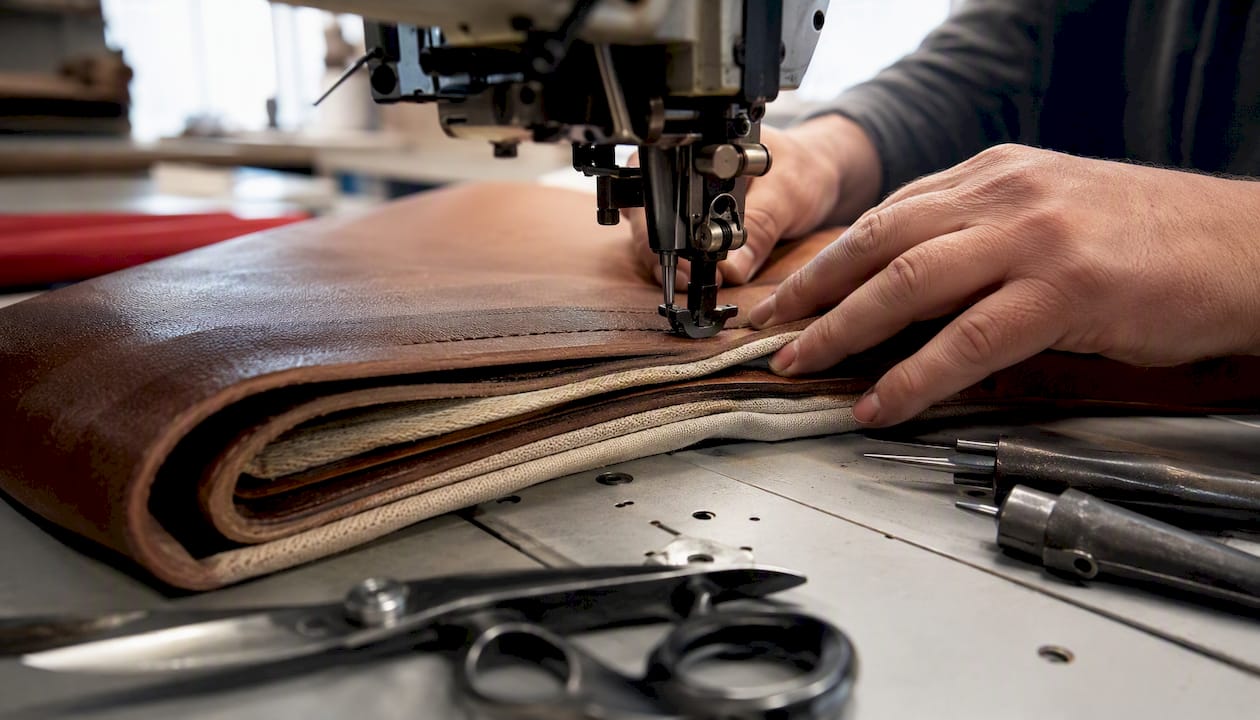
Upholstery, leather, and boat canvas work: Industrial machines with compound feed or walking foot mechanisms are the practical requirement here, not a luxury upgrade. Standard domestic feed dogs cannot grip and advance thick, uneven material stacks reliably. A cylinder-arm industrial machine (like the Techsew 4800 PRO) also makes tubular items like bags, belts, and curved leather pieces far easier to manipulate.
Quilting and precision decorative work: This is where domestic machines, especially computerized models with stitch regulation and embroidery modules, outperform industrial alternatives. The Singer Quantum Futura Auto CrossStitch Software is one example of the kind of decorative ecosystem that only exists on the domestic side.
What does owning each type actually cost you?
Purchase price is only the beginning. Total cost of ownership tells a more honest story.
Purchase price ranges:
- Entry-level industrial straight-stitch head: $700–$1,200 (head only; add table, motor, and stand)
- Mid-range domestic machine: $150–$1,200 depending on features and computerization level
Running costs to factor in:
- Industrial needles and thread are heavier gauge and cost more per unit, but you use them faster at production speeds
- Singer Class 15 metal bobbins and similar standard domestic consumables are inexpensive and widely stocked
- Servo motors on industrial machines use significantly less electricity than clutch motors, with payback periods often seen in 12–18 months for high-volume operations
- Computerized domestic machines can carry high repair costs when circuit boards or proprietary sensors fail
A simple ROI scenario: A maker producing 20 garments a week at 1,000 SPM on a domestic machine spends roughly four times as long on straight-stitch seams as the same maker on a 4,000 SPM industrial head. That time difference compounds quickly into real labor cost savings, which is the primary financial argument for upgrading.
Pro Tip: If you’re considering an industrial machine, prioritize a servo motor over a clutch motor from day one. The energy savings and quieter operation are meaningful, and retrofitting a clutch-motor machine later adds cost and complexity.
Space, power, and noise: what you need to set up each type
Before you buy, confirm your workspace can actually support the machine.
Industrial machine installation checklist:
- Minimum floor space: roughly 5 feet wide by 3 feet deep for the table, motor, and pedal clearance
- Standard industrial servo motors run on 110V and draw less current than older clutch motors, but verify the amperage rating before plugging in
- The machine head mounts into a cutout in the table; the motor hangs beneath or mounts to the side
- Thread stands are separate and need to be positioned above or behind the machine
- Clutch motors produce significant noise (comparable to a loud vacuum cleaner); servo motors are considerably quieter and more suitable for home workshops
- Working height should put the needle plate at elbow height when seated; most industrial tables are adjustable
Domestic machine setup:
- Portable units fit on any sturdy table or dedicated sewing cabinet
- Standard 110V household outlet; no special wiring needed
- Built-in lighting on most models; no separate lamp required
- Noise levels are generally low, though mechanical domestics are louder than computerized models
Safety note for home workshops: If you run an industrial machine in a shared living space, rubber anti-vibration pads under the table legs and acoustic foam panels on nearby walls make a real difference. The vibration from continuous high-speed operation can loosen furniture joints and transmit through floors in ways a domestic machine never does.
Keeping your machine running: maintenance and repairs
Routine care looks different depending on which type you own.
Industrial machine maintenance routine:
- Oil all designated points daily before starting a production session (hook race, needle bar, presser bar bushings).
- Check and clean the bobbin area and feed dogs after every 4–8 hours of use.
- Inspect the needle for burrs or bending after every project; replace at the first sign of skipped stitches.
- Check belt tension monthly; a loose timing belt causes skipped stitches and can damage the hook.
- Have a qualified technician check timing every 6–12 months under heavy use.
Domestic machine maintenance routine:
- Clean lint from the bobbin area and feed dogs after every project.
- Oil per the manufacturer’s schedule (some computerized models are self-lubricating; check the manual).
- Replace the needle every 8–10 hours of sewing time, or immediately after hitting a pin.
- Run a test seam on scrap fabric at the start of each session to catch tension issues early.
Repairability differences:
- Industrial machines are largely mechanical, with standardized parts that independent technicians can source and replace. A well-maintained industrial head can run for decades.
- Mechanical domestic machines (heavy-duty Janome or Singer Heavy Duty-style models) are similarly serviceable and repair-friendly.
- Computerized domestic machines trade serviceability for convenience. Proprietary circuit boards and sensors often require factory-authorized repair, which can cost nearly as much as a new machine.
Where to source parts: An authorized dealer shortens this process significantly. Sewingmachinesplus connects buyers to authorized service channels, which means warranty repairs go through the right technicians and replacement parts are sourced correctly the first time.
Refurbished industrial vs. new domestic: A professionally refurbished industrial machine from a reputable dealer often represents better long-term value than a new entry-level domestic for a maker who sews daily. The mechanical simplicity of an industrial head means a refurb carries less risk than a refurbished computerized domestic with aging electronics.
Your buying checklist before you commit
Use this before placing any order, whether you’re shopping online or in a store.
Must-haves to verify:
- Motor type (servo vs. clutch for industrial; fractional motor type for domestic) and duty-cycle rating
- Maximum SPM and whether that speed is sustained or peak
- Throat size (the clearance between needle and machine body) for your typical project width
- Presser foot clearance height for your thickest material
- Feed system type (drop feed, needle feed, compound feed, walking foot)
- Warranty terms and the name of the nearest authorized service center
- Parts availability: confirm feed dogs, presser feet, and bobbins are stocked
Nice-to-haves:
- Automatic thread trimmer (saves significant time in production)
- Adjustable stitch length and tension with clear markings
- LED lighting built in or included
- Knee lifter for the presser foot (keeps both hands on the fabric)
Red flags:
- Listing describes the machine as “industrial grade” without specifying motor type or SPM
- No authorized service center named for your region
- Sealed electronics with no published repair manual or parts diagram
- Return window under 30 days on any machine over $300
Pro Tip: Always ask for the model’s service manual before buying a used or refurbished machine. If the seller can’t produce it, that’s a reliable signal that parts and service will be difficult to find.
A dealer’s honest perspective on mixing machine types
What most buyers underestimate is how rarely the industrial-vs-domestic decision is actually binary. The conventional wisdom frames it as a choice between two camps, but the most practical setups for growing home-based businesses usually involve both.
An industrial straight-stitch head handles the bulk of production work faster and more reliably than any domestic machine. But the moment you need a buttonhole, a blind hem, or a decorative stitch, you’re back at the domestic machine anyway. Trying to do everything on one industrial head means buying specialized attachments for tasks a $400 domestic handles in 30 seconds.
The smarter framing is this: what is your primary production task, and what are your secondary finishing tasks? If production is the bottleneck, solve it with an industrial head. Keep a capable domestic for everything else. That mixed approach costs more upfront but pays back in speed, quality, and flexibility within a few months of consistent use.
Sewingmachinesplus has been an authorized dealer for over 50 years, and the pattern holds across buyer profiles: makers who upgrade to industrial without keeping a domestic machine almost always end up buying a domestic machine again within a year.
Where to find the right machine for your setup
Knowing which machine type fits your work is step one. Finding it from a source you can trust is step two.
Sewingmachinesplus carries both industrial and domestic machines, along with the accessories, consumables, and expert guidance to make the right call for your specific workflow. As a 50+ year authorized dealer, every purchase comes with manufacturer warranty support, access to authorized service centers, financing options, and free shipping on orders over $49. The price match guarantee means you’re not leaving money on the table by buying from a dealer who actually knows the product.
If you’re ready to move on an industrial straight-stitch setup, the Juki DDL-8700 is a strong starting point. For a capable domestic crossover, the Baby Lock BL6800 covers the full range of home and light-production work. Browse both at Sewingmachinesplus and use the live consultation service to confirm the right configuration before you buy.
Sources
- Sewing Machine Configuration Guide: Industrial vs Domestic, Automation Levels & Feed Systems - Alibaba.com Seller Blog
- Industrial vs. Domestic Sewing Machines: Key Differences - Sewingers
- Industrial or domestic sewing machine - Sewing Pattern Review
FAQ
What does “industrial sewing” mean?
Industrial sewing refers to machine-based production using purpose-built equipment designed for continuous, high-volume operation on specific materials or stitch types. Unlike domestic machines, industrial machines typically perform one specialized function (such as straight lockstitch or overlocking) at speeds of 4,000–5,500 SPM.
Can a domestic sewing machine sew canvas?
A heavy-duty domestic machine can handle light to medium canvas for occasional projects, but thick canvas, layered canvas, or canvas combined with batting or foam will strain most domestic motors and feed systems. For consistent results on heavy canvas, an industrial machine with a compound feed or walking foot is the reliable choice.
What are the four main types of sewing machines?
The four broad categories are domestic (home use, multi-stitch), industrial lockstitch (straight-stitch production), industrial overlock/serger (seam finishing at speed), and specialty industrial machines (cylinder-arm, post-bed, and feed-specific designs for leather, upholstery, and tubular items).
Which industrial sewing machine is best for home use?
The Juki DDL-8700 is one of the most widely recommended entry-level industrial straight-stitch machines for home-based production use. It ships with a servo motor and assembled table, runs on standard 110V, and handles garments through medium-weight materials reliably. Sewingmachinesplus carries it with full warranty and authorized-service support.
