

Use a bobbin thread weight lighter than the top thread, commonly a 60wt or similar prewound bobbin thread in white or black, for nearly all machine embroidery. This covers most designs on both combo and dedicated machines. However, some embroidery-only machines may call for a finer bobbin thread; check your manual before stocking specialty weights.
TL;DR:
- Use 60wt polyester bobbin thread for most embroidery projects to balance durability and minimize bulk, unless your machine manual specifies otherwise.
- Always test a small sample stitch on scrap fabric to ensure proper tension and even lockstitch before proceeding with the full design.
- Match the bobbin thread color to the fabric background—white under light fabrics and black under dark fabrics—for most standard projects.
- Check your machine’s manual for the exact bobbin class and style to avoid compatibility issues that can cause tension problems or thread breakage.
- Keep a stock of prewound 60wt bobbins in basic colors, along with a cone of 90wt for delicate work, to ensure quick, trouble-free embroidery sessions.
Table of Contents
- What Bobbin Thread Weight Should You Use for Embroidery?
- Polyester vs. Cotton Bobbin Thread: Which Fiber Should You Choose?
- Prewound or Self-Wound Bobbins: Which One Fits Your Project?
- How Do You Confirm Bobbin Size and Machine Compatibility?
- Should Bobbin Thread Color Match the Fabric or the Top Thread?
- Fast Bobbin Troubleshooting: What to Check When Stitches Go Wrong
- What Should You Keep on Hand for Embroidery Bobbin Thread?
- Who’s Behind This Guidance, and What Do Manufacturers Say?
- Why the “One Bobbin Thread Fits All” Advice Falls Short
- Get the Right Bobbin Thread Without the Guesswork
- Sources
- FAQ
What Bobbin Thread Weight Should You Use for Embroidery?
The rule that governs everything else here is simple: your bobbin thread needs to be thinner than your top thread. Most machine embroidery runs 40wt polyester on top, and pairing that with a bobbin thread of similar thickness creates a lockstitch that pulls too much bulk to the surface. The industry standard response is 60wt polyester in the bobbin, and for good reason. It’s fine enough to stay tucked on the underside of the fabric while still holding up to the speed and stitch density of a modern embroidery machine.
Here’s how some common weights are generally used in practice:
- Bobbin thread around 60wt typically handles many embroidery designs safely.
- A slightly heavier bobbin thread can work well for towels, terrycloth, and other thick or absorbent fabrics to balance stitch tension.
- Very fine, specialty bobbin thread weights are used for ultra-fine lettering, delicate sheer fabrics, and heirloom projects where lighter bobbin threads are preferred.
Never substitute regular 40wt all-purpose sewing thread in the bobbin for embroidery work. It can add excessive bulk, disrupt tension balance, and increase the risk of thread breakage on dense fill stitches.
That last point matters more than most beginners realize. A bobbin thread that is too thick affects more than appearance; it alters thread consumption per stitch, disrupting the balance between top and bottom tension. This imbalance can cause puckering, visible bobbin thread on the fabric front, and in severe cases, thread breakage during stitching.
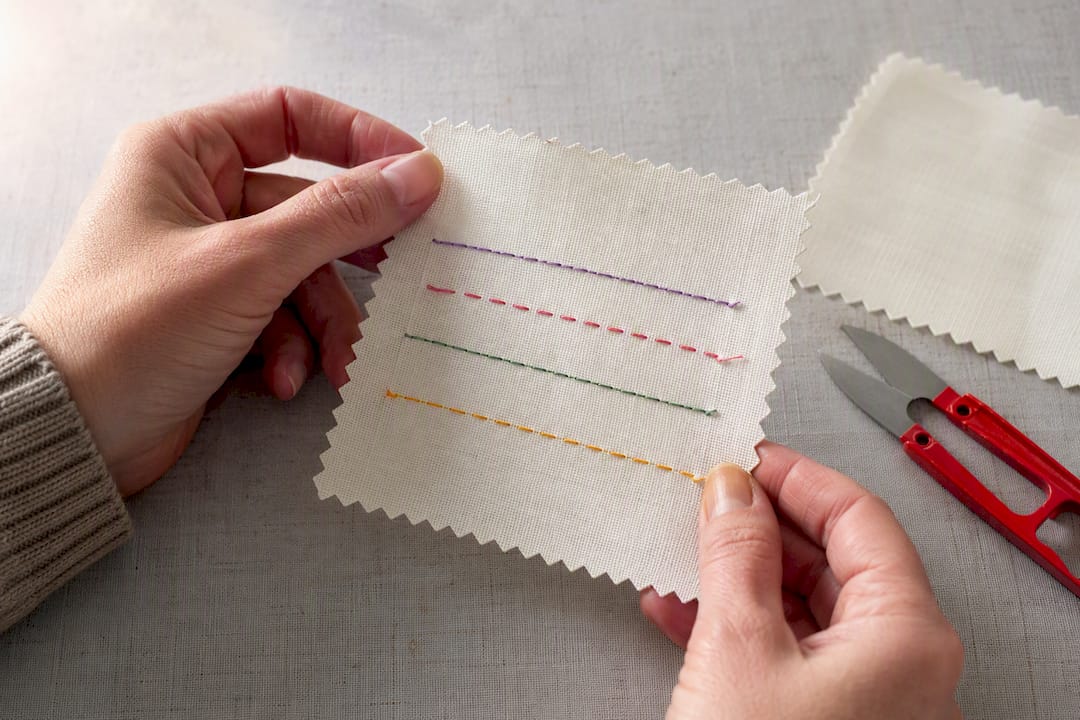
Before you commit a spool or a box of prewounds to your regular rotation, run a test. Stitch a small sample on scrap fabric that matches your actual project, then flip it over. You’re looking for a clean, even lockstitch with no loops, no visible bobbin thread poking through on the top side, and no fraying at the needle holes. If that sample looks right, you’re set for the full design. If it doesn’t, don’t keep adjusting tension blindly, work through the weight and fiber checks first.
Polyester vs. Cotton Bobbin Thread: Which Fiber Should You Choose?
Fiber choice matters almost as much as weight, and the decision usually comes down to what the finished piece will go through after it leaves your machine.
- Polyester (or spun polyester) is the default for most embroiderers because it resists breaking under tension and holds up through repeated washing. It’s the standard choice for apparel, bags, and anything that will see regular laundering or commercial production runs.
- Cotton has a softer hand and breaks down naturally over time, which makes it a reasonable pick for heirloom pieces, baby items, or projects where you want a gentler feel against skin. It also tolerates heat-exposed applications, like items that get pressed or ironed frequently, better than some polyester blends.
- Rayon belongs on top, not in the bobbin. It’s prized for its sheen as a decorative top thread, but its lower tensile strength and heavier typical weights make it a poor bobbin choice; it tends to shred or snap under the friction and speed the bobbin case demands.
Fiber choice also affects how you buy. Polyester bobbin thread is widely available on large cones for high-volume stitching and in prewound form for convenience, since it holds consistent quality across both formats. Cotton is more often found on cones for self-winding, since fewer manufacturers prewind it at scale. If you’re stitching heirloom christening gowns one week and production-run polos the next, keeping both fiber types on hand, rather than trying to make one do both jobs, saves you from compromised results on either end.
Prewound or Self-Wound Bobbins: Which One Fits Your Project?
Prewound bobbins are the practical default for most embroiderers, and the reasoning is straightforward. They’re wound by machine at consistent, factory-set tension, they typically hold more yardage than a bobbin you wind yourself, and they save the time you’d otherwise spend babysitting a bobbin winder between designs. For production runs, monogramming batches, or anyone stitching multiple pieces in a sitting, prewound is the clear time-saver.
Self-winding bobbins is preferred when:
- You require an exact bobbin color for reversible work or projects where the backside will be visible.
- You’re doing decorative bobbin work with visible bobbin thread.
- The volume of thread usage makes winding from cones more economical than purchasing prewound bobbins.
Pro Tip: If you self-wind, keep your tension consistent by winding at a steady speed and avoiding overfilled bobbins. A bobbin packed past its rim is one of the most common causes of erratic stitch tension, and it’s easy to fix once you know to watch for it. Our quick bobbin-winding guide walks through the steps if you’re building that habit for the first time.
The smartest workflow for most home studios: keep a stock of prewound bobbins in your two most-used colors for everyday designs, and keep a cone of poly bobbin thread and a winder on hand for the occasions that call for a specific color match.
How Do You Confirm Bobbin Size and Machine Compatibility?
Bobbins aren’t universal, and buying the wrong style is one of the most common (and avoidable) mistakes embroiderers make. Home machines commonly use Class 15/A bobbin, sometimes labeled SA156, or Style L and M bobbins depending on brand and model. Production and many prewound-format machines use magnetic or specifically sized prewound bobbins built for that machine class.
- Check your owner’s manual first. It will list the exact bobbin class or part number your machine requires.
- Look for the part number printed on your current bobbin or bobbin case, and match it before ordering in bulk.
- Buy a single prewound bobbin and test-fit it in your machine before committing to a full box.
- If a bobbin rattles in the case, won’t sit flush, or trips a thread sensor, stop. That’s a sign of a size or style mismatch, not a tension problem.
A transparent bobbin option is worth having around for exactly this kind of compatibility check, since you can see how much thread remains and confirm fit before you’re mid-design.
Should Bobbin Thread Color Match the Fabric or the Top Thread?
For the overwhelming majority of projects, match the bobbin to the fabric, not the top thread. White bobbin thread under light fabrics and black under dark fabrics will cover the majority of designs you’ll ever stitch, according to practical embroidery guidance, which is why stocking those two colors is efficient rather than a shortcut.
- Match the top thread color only when you’re doing decorative bobbin-work or a reversible piece where the underside will actually be seen.
- Stick with white or black for standard designs on garments, bags, and gifts where the back stays hidden.
- Exact color matching is rarely necessary. The bobbin thread’s job is structural, not decorative, in nearly every standard design.
If you do notice bobbin thread peeking through on the front of your work, called shadowing or bobbin show, check top tension first. That’s the more common culprit. Only after ruling out tension should you reconsider whether your bobbin color choice is the actual problem.
Fast Bobbin Troubleshooting: What to Check When Stitches Go Wrong
When a design starts throwing skipped stitches, thread breaks, or visible bobbin thread on top, work through this checklist in order rather than guessing at fixes:
- Confirm bobbin weight. Is it 60wt, 70wt, or 90wt, and does that match what your project and machine actually need?
- Confirm bobbin size and style. A mismatched Class 15/A vs. Style L bobbin can look like it fits while still causing tension problems.
- Inspect for lint. Lint buildup in the bobbin case is one of the most overlooked causes of tension irregularity, and a quick brush-out often solves what looks like a bigger problem.
- Run a stitch-out sample on scrap fabric before committing to the full design.
- Inspect the sample for thread breaks, loose loops, or bobbin thread showing on the front.
- Try prewound instead of self-wound (or vice versa) if the problem persists after the checks above.
Pro Tip: Resist the urge to make big changes to your bobbin-case tension screw. Small adjustments, a quarter-turn at most, followed by a re-test, keep you from overcorrecting into a worse problem. Our bobbin thread diagnostic guide breaks this down step by step if you want a deeper walkthrough.
Poor winding technique shows up as loose, uneven bobbins that unwind erratically mid-stitch. If a self-wound bobbin looks lumpy or inconsistent, rewind it rather than trying to stitch through it, or switch to a prewound for that project. If you’ve worked through every step here and the problem persists, that’s the point to contact your machine’s manufacturer support line or a local technician rather than keep swapping thread and hoping.
What Should You Keep on Hand for Embroidery Bobbin Thread?
A well-stocked bobbin drawer keeps you from stopping mid-project to place an order. Here’s what covers most home and small-studio needs:
- A box of 60wt prewound bobbins in white and one in black, since that combination alone handles most embroidery projects.
- One spool of 90wt for delicate lettering or sheer fabric projects that come up occasionally.
- A cone of polyester bobbin-fill thread for self-winding when you need an exact color match.
- A reliable bobbin winder if your machine doesn’t have a strong built-in one, along with a spare bobbin case for production runs or heavy prewound use.
Match your purchase to the project type: apparel and bags lean on standard 60wt polyester, towels and terrycloth benefit from 70wt, and delicate sheers or heirloom lettering call for 90wt. A multi-spool option like the Madeira Incredible Threadable box, which includes bobbin-fill spools alongside top thread colors, is worth a look if you want to build out a color range in one order.
Who’s Behind This Guidance, and What Do Manufacturers Say?
This guide draws on practical, hands-on troubleshooting experience with the exact problems embroiderers run into: tension imbalance, bobbin show, thread breakage, and compatibility mismatches between bobbin styles.
- Chris covers bobbin diagnostics and winding technique in detail across Sewingmachinesplus’s troubleshooting library, including step-by-step winding instructions for beginners.
- Sewingmachinesplus backs its embroidery supply selection with free shipping on orders over $49, a price match guarantee, and a track record of over 175,000 positive customer reviews.
- Manufacturer documentation matters here. Brother’s own guidance confirms that embroidery-only models commonly call for 90wt in the bobbin, while combo sewing-and-embroidery machines commonly use 60wt, which is exactly why checking your manual before buying in bulk isn’t optional.
- If you’re unsure which weight or style fits your specific machine, consider seeking personalized consultation to settle it before you order.
Why the “One Bobbin Thread Fits All” Advice Falls Short
Most bobbin thread advice online treats it as a solved problem: buy 60wt, buy it prewound, done. That’s right for most people, most of the time, but it skips the part that actually causes support calls and ruined projects, which is that machine class changes the answer. An embroidery-only machine and a combo sewing-and-embroidery machine can call for genuinely different bobbin weights straight from the manufacturer, and no amount of general embroidery wisdom substitutes for opening your own manual.
The bigger gap I see is that people treat bobbin problems as tension problems first. Tension adjustments are the last step, not the first. Weight mismatch, wrong bobbin style, and lint buildup cause more stitch-out failures than a bobbin case that needs recalibrating. Work the cheap, reversible checks before you touch the tension screw.
If you take one thing from this guide, let it be this: buy white and black 60wt prewounds as your baseline, keep a 90wt spool for the occasional delicate project, and check your manual the moment you buy a new machine. That’s the whole system.
— Chris
Get the Right Bobbin Thread Without the Guesswork
Sewingmachinesplus stocks the exact bobbin thread weights, fibers, and formats covered in this guide, so you’re not stuck ordering from a generic thread rack and hoping it fits your machine class. If you’re outfitting a home studio or a small production setup, the selection spans prewound bobbins in standard colors, cones for self-winding, and multi-color thread boxes that include bobbin-fill spools for readers who want a color range without ordering piecemeal.
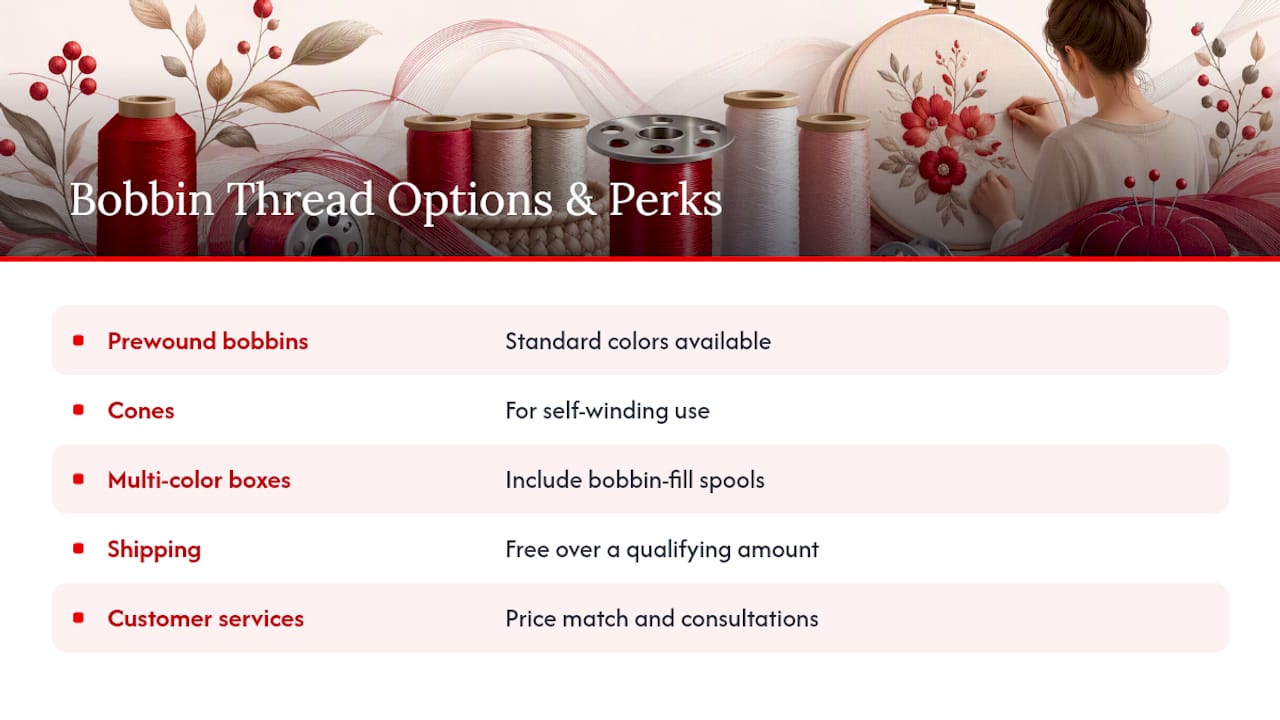
Beyond the thread itself, Orders may include free shipping over a certain amount, a price match guarantee, and personalized consultations if you’re unsure which bobbin style or weight your machine needs. That last part matters given how often manufacturer specs differ by model. Browse the full embroidery and sewing supply selection to find the weights and colors that match your current project, or reach out for a quick consultation before you buy in bulk.
Sources
- Thread weights to use for embroidery-only machines
- Choosing Bobbin Threads for Embroidery: Practical Guide
- Embroidery Thread Guide: Weight, Fiber, and What to Buy
FAQ
What thread should you use in a bobbin for embroidery?
Use 60wt polyester bobbin thread as your default, since it’s the standard weight for most machine embroidery paired with 40wt top thread. Switch to 70wt for thick fabrics like towels or 90wt for delicate lettering only if your project or machine manual calls for it.
Is bobbin thread the same as embroidery thread?
No. Top embroidery thread (commonly 40wt rayon or polyester) is chosen for its color and sheen, while bobbin thread is typically thinner, in the 60wt to 90wt range, and chosen for strength and low bulk rather than appearance.
What weight is embroidery bobbin thread?
Most embroidery bobbin thread runs 60wt as the standard choice, with 70wt used for thicker fabrics and 90wt reserved for fine lettering or machines that specifically require it, per Brother’s manufacturer guidance.
Does bobbin thread color matter for embroidery?
Rarely. Matching bobbin color to the fabric (white under light fabrics, black under dark) covers the vast majority of designs, and exact color matching only matters for decorative bobbin-work or reversible pieces where the underside shows.
Should you use prewound or self-wound bobbins for embroidery?
Prewound bobbins are the better default for most embroiderers because they offer consistent factory tension and more yardage than self-winding. Self-wind only when you need an exact color match for decorative or reversible work.
