

Choose a jelly roll when your pattern uses long, uniform strips. Choose fat quarters when the pattern calls for fussy cuts, appliqué, or a mix of block sizes. The rule that settles almost every case: measure the largest piece your pattern requires. If it fits inside 18 inches, a fat quarter works; if your project runs on strips, the jelly roll saves you hours at the cutting table.
TL;DR:
- Jelly rolls provide approximately two yards of fabric with 40 pre-cut strips, ideal for quick, strip-based quilts but limited in motif placement.
- Fat quarters measure about 18 by 22 inches, offering more flexibility for appliqué and larger blocks, but are less suitable for long borders or sashing.
- Patterns with large or directional motifs are better suited to fat quarters, while strip patterns benefit from the consistent width of jelly rolls.
- Avoid prewashing jelly roll strips to prevent fraying and tangling, but prewashing fat quarters may be necessary for bleeding fabrics.
- Typically, one jelly roll suffices for a lap quilt, while larger projects like queen-size quilts require multiple bundles or additional yardage.
Table of Contents
- Jelly Rolls: Sizes, Bundle Counts, and Best Uses
- Fat Quarters: Definition, Dimensions, and Ideal Projects
- How to Choose Between Jelly Rolls and Fat Quarters
- How Many Bundles Do You Need for Your Quilt Size
- Prewashing and Care: What Precuts Need Differently
- Quick Picks by Project Type
- The Sewing Machines Plus Take on Precut Shopping
- Where to Find Precuts and Quilting Supplies
- Sources
- FAQ
Jelly Rolls: Sizes, Bundle Counts, and Best Uses
A jelly roll is a coiled bundle of 2.5-inch strips cut across the width of the fabric, typically holding around 40 strips per roll. Moda popularized the name and the format, though you’ll see the same concept sold under names like Rolie Polie or Roll-Up at other fabric houses. Each strip runs the width of the fabric, usually 42 to 44 inches, which gives you real yardage once you add it all up.
One roll often delivers close to two yards of usable fabric, and pattern designers have built entire quilt styles around that math. Some estimate a single roll can produce a 45-inch by 60-inch quilt top when the strips are used efficiently, though larger projects almost always call for a second roll or a mix of formats. Log cabin blocks, bargello runs, rail fence patterns, and the aptly named jelly roll race were all designed around this exact strip width, which is why beginners gravitate toward them.
The strips also come pre-coordinated, and that curated palette does real work for quilters who haven’t built up color theory instincts yet. Picking twenty coordinating prints yourself takes time and confidence; a jelly roll hands you a finished palette and lets you start sewing.
Advantages:
- Minimal cutting: strips arrive pre-cut and ready to sew
- Pre-coordinated color palette removes the guesswork
- Enough fabric per roll to bind most lap-sized quilts
Trade-offs:
- Print placement is fixed; you can’t fussy-cut a motif from a 2.5-inch strip
- Strips fray and tangle easily if handled roughly before piecing
- Directional prints can end up running the wrong way once sewn
Pro Tip: Chain-piece your strips in matched pairs before subcutting into segments. It keeps the bundle organized and prevents the classic jelly roll problem: forty strips turning into forty tangled ribbons on your cutting table.
Fat Quarters: Definition, Dimensions, and Ideal Projects
A fat quarter measures roughly 18 inches by 22 inches, cut by halving a half-yard of fabric lengthwise rather than cutting a quarter-yard the standard long, narrow way. That squarer shape is the entire point. A quarter-yard cut the traditional way gives you a skinny 9 by 42-inch strip; a fat quarter gives you a workable square perfect for cutting larger pieces without piecing them together.
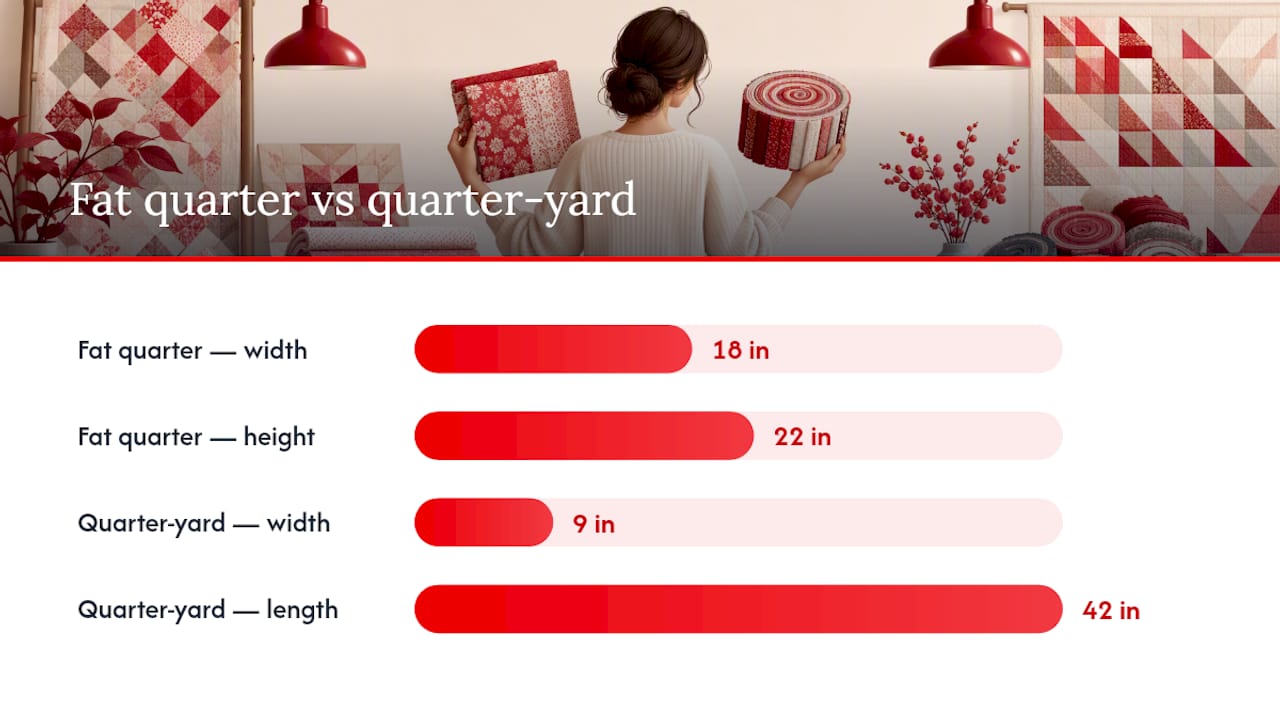
That shape makes fat quarters the natural choice for sampler quilts, appliqué work, and any pattern with blocks bigger than a strip can handle. Fussy cutting, where you center a specific motif inside a block, is nearly impossible with jelly roll strips but straightforward with a fat quarter’s extra width and height.
The limitation is size. Fat quarters aren’t suited to long borders, sashing, or quilt backing, since most projects need continuous yardage well beyond 22 inches for those pieces. If your pattern’s cutting list calls for anything longer than 18 inches, plan to supplement with straight yardage.
Best uses:
- Sampler quilts with varied block sizes
- Appliqué shapes and fussy-cut motifs
- Small-scale projects like table runners, bags, and pillow covers
Buying considerations:
- Bundles (often 5 to 25 fat quarters) offer coordinated collections; singles let you hand-pick prints
- Large-scale prints need more fat quarters to capture full motifs
- Check the fabric line’s print repeat before committing to a bundle size
Pro Tip: If a pattern’s fabric line has a large-scale focal print, buy a few extra fat quarters of that specific print. Fussy cutting wastes fabric fast, and running out mid-project means hunting for a dye-lot match later.
How to Choose Between Jelly Rolls and Fat Quarters
Every pattern tells you which precut to buy if you know where to look. Work through this order before you check out:
- Find the largest cut on the pattern’s cutting list. If it exceeds roughly 18 inches on any side, buy yardage instead of either precut.
- Check whether the design relies on uniform strips. Rail fence, log cabin, and strip-piecing patterns are built for 2.5-inch cuts, which makes a jelly roll the faster route.
- Check whether the design uses varied block sizes or appliqué. Sampler quilts and pieces with fussy-cut motifs need the flexibility fat quarters provide.
- Look at the print scale and direction. Large motifs or directional prints often survive better in a fat quarter’s larger canvas than in a narrow strip.
- Weigh time against flexibility. Jelly rolls save prep time; fat quarters cost more cutting time but give you far more control over placement.
Quick reference: A standard jelly roll holds about 40 strips at 2.5 inches by width of fabric. A single fat quarter covers roughly 396 square inches of usable fabric. Those two numbers are the backbone of nearly every quantity calculation you’ll make.
The general guidance from quilting educators boils down to one line: let the pattern decide. Cost per yard tends to favor precuts over cutting your own yardage from bolts in the same collection, but that savings only matters if the format actually fits your cutting list. Buying a jelly roll for a pattern that needs 20-inch blocks wastes both the roll and your afternoon.
How Many Bundles Do You Need for Your Quilt Size
Bundle math depends entirely on the pattern, but rough benchmarks help you shop with confidence before you’ve read every line of the cutting list.
- A baby quilt or table runner often needs just one fat quarter bundle of 8 to 10 pieces, or a single jelly roll if the design uses strips.
- A lap or throw quilt commonly uses one full jelly roll for the pieced top, sometimes with a second roll for larger designs.
- A twin-size quilt built from strips often needs two jelly rolls, since one roll’s roughly two yards rarely stretches across a full twin top.
- A sampler quilt in queen size may call for 20 to 40 fat quarters depending on block count and size, plus separate yardage for borders and backing.
Mixing formats is common practice among experienced quilters, and it usually makes financial and practical sense. A pieced top might use a full jelly roll while the borders, sashing, and backing come from matching yardage bought separately, since precuts alone rarely cover a large project end to end. Always cross-check your bundle count against the pattern’s actual cutting list before you check out. Estimates get you close, but the pattern author’s math is the one that matters.
Prewashing and Care: What Precuts Need Differently
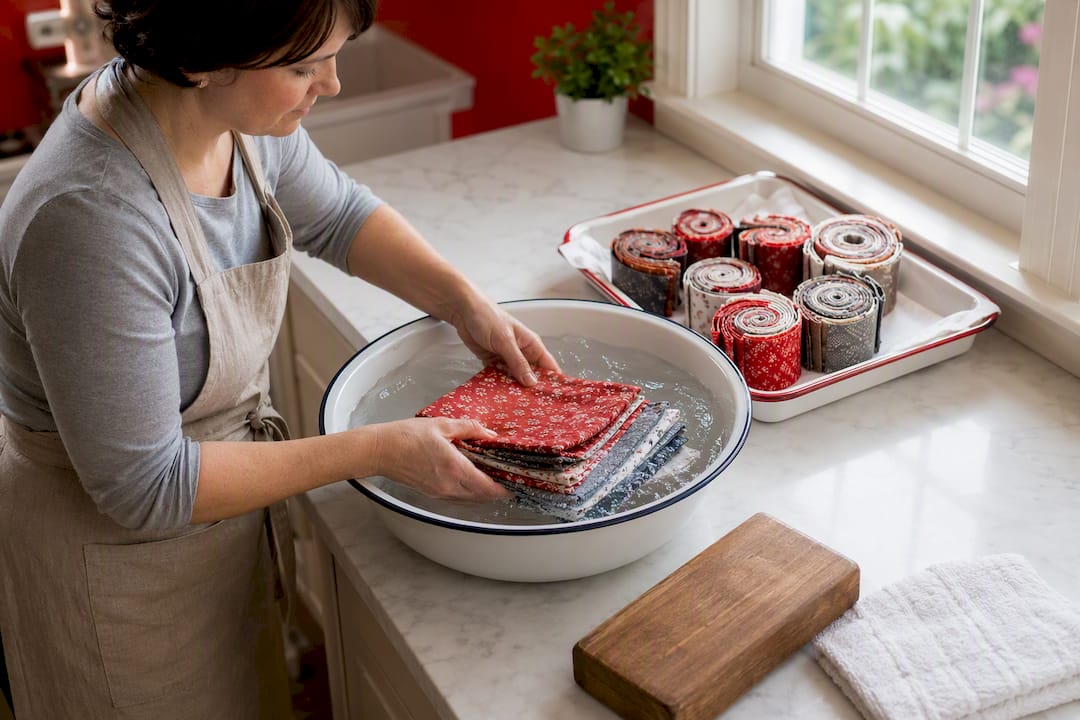
Jelly roll strips generally should not be prewashed. The narrow 2.5-inch strips fray badly in a washing machine and can tangle into a knotted mess that’s nearly impossible to sort back into order. The standard advice from quilting experts is to piece the top, quilt it, bind it, then wash the finished quilt as one piece.
Fat quarters give you more flexibility since their larger size handles a gentle prewash without falling apart. If your fabric line has strong colors or a history of bleeding, prewashing fat quarters before cutting protects your blocks from color transfer later. Either way, press everything flat and trim away selvedges before you start cutting.
Pro Tip: Starch or a fabric stabilizer spray on jelly roll strips before subcutting keeps those narrow pieces from stretching out of shape under your rotary cutter.
Quick Picks by Project Type
Strip quilts, log cabin blocks, and binding: reach for a jelly roll. Sampler quilts, appliqué, and fussy-cut motifs: reach for fat quarters. Long borders, sashing, or backing: buy yardage regardless of which precut you started with. Whatever the project, confirm the pattern’s cutting list and print scale before you buy. That two-minute check prevents the most common precut mistake: buying the wrong shape for the cut you actually need.
The Sewing Machines Plus Take on Precut Shopping
Most quilters overbuy precuts because they guess instead of measuring. Sewingmachinesplus built its quilting guidance around that one habit, since a personalized consultation catches a mismatched precut before it becomes a wasted purchase. Pairing the right quilting ruler to your precut shape also matters more than most beginners realize, and it’s a common question our team fields directly from shoppers.
— Chris
Where to Find Precuts and Quilting Supplies
Sewingmachinesplus stocks precut bundles, matching yardage, and the cutting tools that make either format easier to work with, all in one checkout instead of three separate vendors. Free shipping on orders over $49 and a price match guarantee mean you’re not stuck accepting a worse deal just because a bundle looked convenient. If you’re piecing heavier quilt tops or working through a stack of jelly rolls regularly, browsing our sewing and quilting machines lineup is worth doing before your next project, not after you’ve hit a wall with underpowered equipment.
Sources
- What is Jelly Roll Fabric? — The Quilt Show
- What is a fat quarter of fabric? — Martha Stewart
- Fat Quarter Quilting Guide: What to Check Before You Buy | Sewing Made Clear
- Jelly Roll Quilting explained — QuiltingDaily
- Quilting Precuts Explained — QuiltKeeper
FAQ
Which has more fabric, a jelly roll or a layer cake?
A jelly roll typically holds more total fabric since its 40 strips at 2.5 inches by width of fabric add up to roughly two yards, while a layer cake’s 10-inch squares cover less linear yardage overall despite their larger individual size.
Are fat quarters or jelly rolls better for beginners?
Jelly rolls tend to suit beginners better for strip-based patterns since the pre-coordinated palette and pre-cut strips remove two of the hardest early decisions: color matching and cutting accuracy.
Can I substitute fat quarters for a jelly roll pattern?
Generally no, since jelly roll patterns are built around continuous 2.5-inch strips, and cutting those strips from fat quarters wastes fabric and adds far more cutting time than the pattern intended.
Do I need to prewash jelly roll strips before piecing?
Most quilting experts recommend against it, since the narrow strips fray and tangle in the wash; piece, quilt, and bind first, then wash the finished quilt as a single piece.
How many fat quarters do I need for a throw-size quilt?
It depends entirely on the pattern’s block count and size, but sampler quilts may call for 20 to 40 fat quarters depending on block count and size, so always confirm against the specific cutting list.
