

Precut quilting fabric is fabric that’s already been cut into standard shapes and sizes, such as squares or strips, and packaged in coordinated bundles pulled from a single fabric collection. You get ready-to-sew pieces like charm packs, jelly rolls, layer cakes, and fat quarters that skip the cutting step and guarantee your prints work together. The trade-off is real: precuts usually cost more per square inch than yardage, and most arrive without prewashing.
TL;DR:
- Precut fabric bundles typically contain 40 to 42 pieces, such as charm packs with 5-inch squares or layer cakes with 10-inch squares, suited for specific project types.
- Matching the precut size to your quilt pattern is essential, with jelly rolls ideal for strip quilts and charm packs best for scrappy, postage-stamp, or small block projects.
- Always measure and square up precuts before sewing, as manufacturer accuracy varies and pinked edges may need trimming for precise seams.
- Precuts are more expensive per square inch than yardage and are best used for speed, coordination, or testing a fabric collection before buying yardage.
- Store precuts flat or loosely rolled, label by collection, and keep leftovers for smaller projects or as fillers in scrap quilts.
Table of Contents
- What Are the Common Precut Quilting Fabric Types and Sizes?
- Which Precut Should You Choose for Your Project?
- How Do You Measure and Handle Precuts Correctly?
- Where Should You Buy Precut Quilting Fabric?
- How Should You Store Precuts and Use Leftover Pieces?
- What Are Some Popular Precut Fabric Collections and Designers?
- What Are the Best Quilt Projects for Each Precut Type?
- Do Precuts Make Sense, or Should You Just Buy Yardage?
- How Sewingmachinesplus Supports Your Precut Projects
- Sources
- FAQ
What Are the Common Precut Quilting Fabric Types and Sizes?
Every precut has a name that hints at its shape, but the sizing details trip up plenty of new quilters. Here’s what you’re actually buying when you see these terms on a shop shelf or in a bundle listing.
A fat quarter measures roughly 18 by 22 inches, cut from a half yard sliced in a different direction than a standard quarter yard. This gives you a wider, more usable rectangle for fussy cutting motifs. A fat eighth is half of that, around 9 by 22 inches, and works well for small appliqué pieces or bindings.
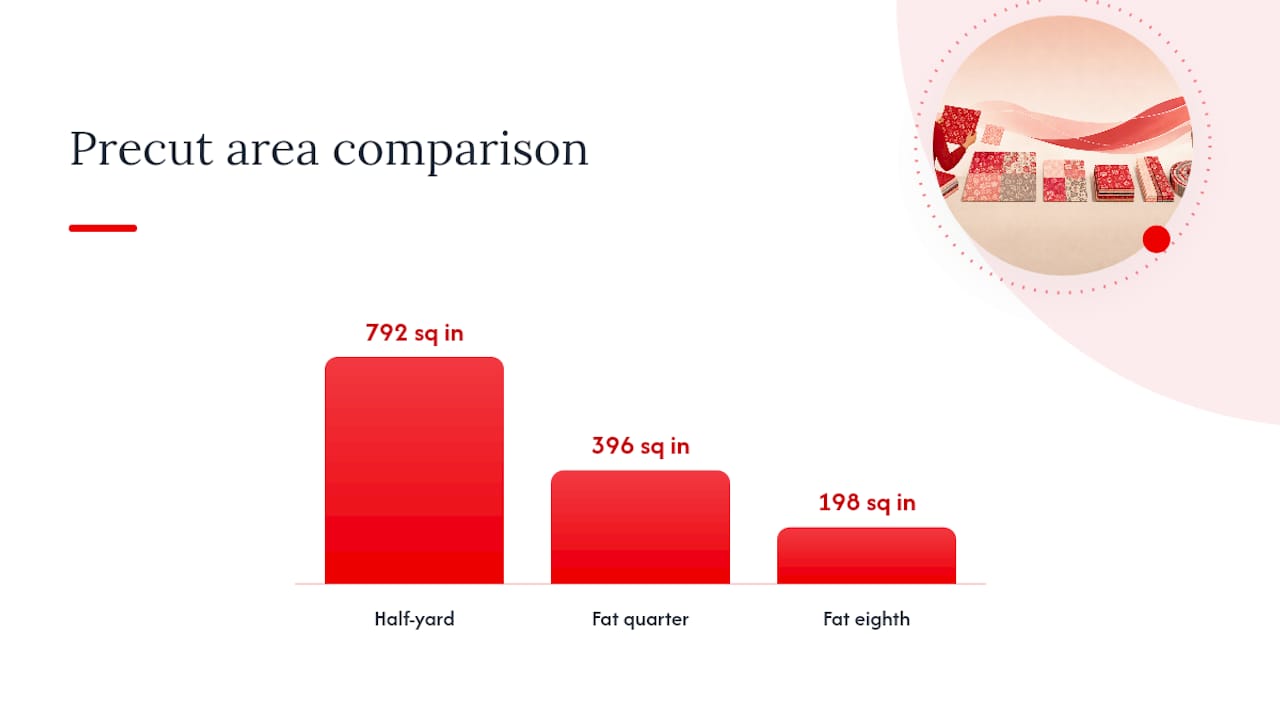
Charm packs are 5-inch squares, typically bundled 40 to 42 pieces per pack, one square from each print in a fabric line. Mini charms shrink that down to 2.5-inch squares, ideal for miniature quilts or postage stamp style piecing. Jelly rolls contain 2.5-inch strips, usually 40 strips folded in that familiar swirl, while honey buns offer the same 1.5-inch strip format in a smaller footprint. A layer cake gives you 10-inch squares, often 42 per bundle. It is the workhorse choice for quilters who want to sub cut into smaller units without buying separate yardage.
You’ll also see dessert rolls and turnovers from some manufacturers. A dessert roll typically holds 2.5 by 42 inch strips similar to a jelly roll but shorter in count, while turnovers deliver triangle shaped cuts for half square triangle projects.
| Precut Type | Typical Dimensions | Typical Piece Count | Best For |
|---|---|---|---|
| Fat Quarter | 18" x 22" | Sold individually or in bundles | Fussy cutting, mixed projects |
| Fat Eighth | 9" x 22" | Sold individually or in bundles | Small appliqué, bindings |
| Mini Charm | 2.5" squares | 40–42 pieces | Miniature quilts, doll quilts |
| Charm Pack | 5" squares | 40–42 pieces | Scrappy quilts, samplers |
| Honey Bun | 1.5" strips | 40 strips | Skinny strip piecing |
| Jelly Roll | 2.5" strips | 40 strips | Strip quilts, bindings |
| Layer Cake | 10" squares | 42 pieces | Large blocks, sub-cutting |
Piece counts vary by manufacturer, and most standard packs land around 40 to 42 pieces, so treat that number as a close estimate rather than a fixed rule when you’re planning yardage for the rest of a quilt.
Which Precut Should You Choose for Your Project?
Match the precut to what you’re actually building, not just what looks appealing on the shelf.
- Jelly rolls work best for strip quilts, quick-piece binding, and any pattern built around consistent 2.5 inch widths.
- Charm packs shine in scrappy quilts, sampler blocks, and postage-stamp layouts where variety matters more than scale.
- Layer cakes suit larger-block quilts, and you can sub-cut a single 10 inch square into four smaller units without buying additional yardage.
- Fat quarters give you the most flexibility for fussy cutting, appliqué motifs, and projects that mix multiple shapes from one piece of fabric.
Before you commit to a bundle, check the print scale against your block size. A large-scale print chopped into 2.5 inch strips can lose its personality fast, while a small print might read as too busy in a 10 inch layer cake square. Many quilt patterns are written specifically to use an entire jelly roll, charm pack, or layer cake, so matching your pattern to your precut format first can save you a second trip to the shop.
Most patterns still call for yardage on borders, backing, and sometimes binding, even when the quilt top comes entirely from a precut bundle. Plan on buying background or border yardage separately unless the pattern explicitly states it’s precut-only.
Pro Tip: If you’re new to piecing, start with a charm pack or jelly roll and a simple pattern designed around that exact format. You’ll finish faster and build confidence before tackling a project that mixes precuts with cut-to-order yardage.
How Do You Measure and Handle Precuts Correctly?
Precut accuracy varies by manufacturer, so the first rule is simple: measure before you cut anything else. Pull a sample piece from the pack, check it against a ruler, and adjust your yardage cuts to match the actual measurement rather than forcing the precut to match your pattern’s stated size.
Pinked, or zigzag, edges show up on many charm packs and layer cakes to reduce fraying in the package. When you measure a pinked piece, measure from the outermost points of the zigzag, not the inner notches. If your pattern tolerates a millimeter or two of variance, leave the pinked edge alone and sew right through it. If your block requires exact seams, trim the pinked edge off before piecing.
Follow this quick checklist before you start sewing:
- Measure two or three sample pieces from the pack against your ruler.
- Compare that measurement to any yardage you’re cutting to match.
- Decide whether pinked edges need trimming for this particular block.
- Press each piece flat before squaring it up.
- Square up any piece that’s noticeably off from the rest of the stack.
Pro Tip: Keep a rotary cutter and a reliable quilting ruler nearby specifically for squaring up precuts. A five-minute check now prevents a mismatched block later.
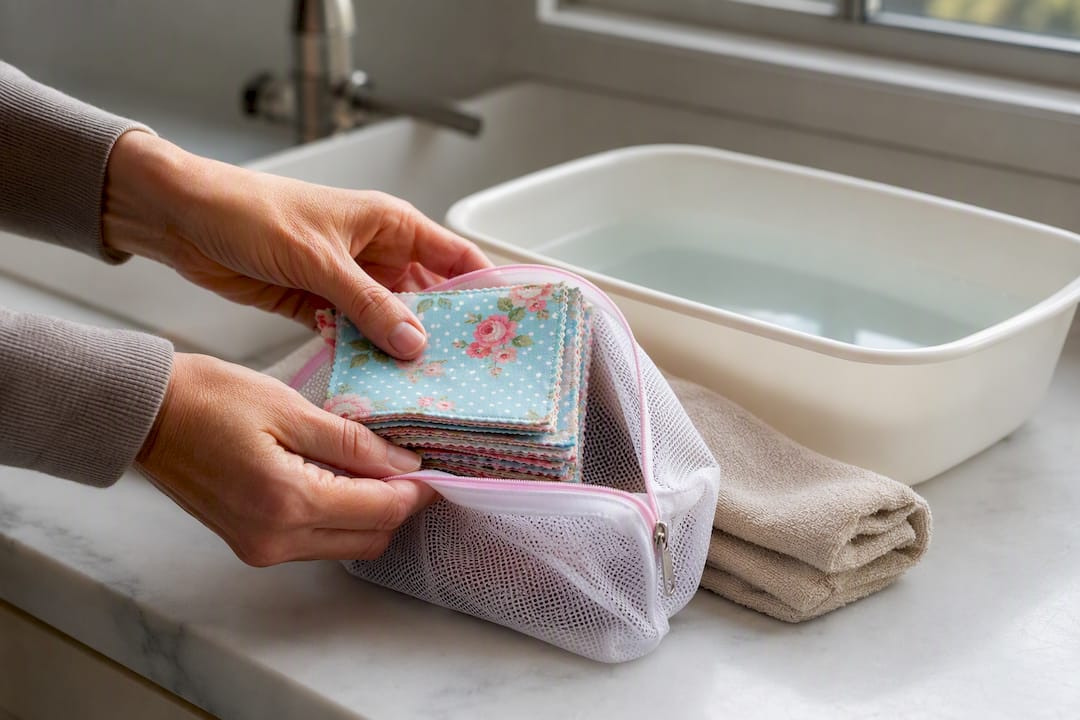
On prewashing, most quilting educators recommend skipping it for small precuts. Washing charm squares or mini charms in a machine cycle causes fraying and noticeable shrinkage that throws off your measurements. If you must prewash for allergy or dye-bleed reasons, use a mesh lingerie bag on a gentle cycle, or hand wash and lay flat to dry.
Where Should You Buy Precut Quilting Fabric?
You’ll find precuts through three main channels. Independent quilt shops often stock smaller runs of designer collections and can special-order specific bundles, though selection depends heavily on the shop’s buying decisions. Larger online retailers carry broader inventory and frequently restock popular lines. Manufacturer bundle releases, tied to a designer’s new collection launch, tend to sell out fastest and rarely get reprinted once gone.
Price scales with the collection’s designer status: licensed prints and name-brand designer lines cost more per pack than house-brand basics, even at identical piece counts. Expect precuts generally to run higher per square inch than equivalent yardage, since you’re paying for the coordination and precision cutting, not just the fabric.
Before buying, run through this checklist:
- Confirm the piece count and dimensions match what’s advertised for that precut type.
- Note the collection name so you can match backing or border yardage later.
- Check the seller’s return policy, especially for cut goods.
- Ask about restock timing if the collection is popular. It may not come back.
How Should You Store Precuts and Use Leftover Pieces?
Precuts distort easily if they’re crammed into a drawer or left folded for months. Store them flat or loosely rolled in labeled bins, sorted by collection name and precut type, so you’re not accidentally buying a duplicate charm pack six months later.
- Keep precuts out of direct sunlight to prevent fading along the folded edges.
- Label bins by collection and type rather than color, since prints often span several colors.
- Stack squares and strips loosely rather than compressing them under heavier fabric.
- Save leftover pieces in a dedicated scrap bin sorted by size for quick access.
Leftover charm squares and jelly roll strips make excellent binding, small placemats, or filler blocks in a scrappy quilt. A stack of unused layer cake squares is often enough for a table runner or a set of coasters.
Pro Tip: Before starting a new project, check your leftover bin first. You might already own enough scraps from a past layer cake or jelly roll to skip a fabric purchase entirely.
What Are Some Popular Precut Fabric Collections and Designers?
Fabric manufacturers release precuts in tandem with new collections, and certain designer names have become shorthand for specific aesthetics among quilters. Collections built around low-volume prints, reproduction florals, or modern geometric designs each attract a different kind of quilter, and recognizing collection names helps you shop smarter.
Designer collections typically get released as a full range: yardage, fat quarter bundles, charm packs, jelly rolls, and layer cakes all cut from the same line simultaneously. That means if you fall in love with a charm pack, you can usually find matching yardage from the same collection for borders or backing without hunting for a coordinating print elsewhere.
Seasonal and holiday-themed collections tend to sell out fastest since they’re time-limited, while blender and basics collections, solids, low-contrast prints, tone-on-tones, get reprinted more consistently because quilters use them across multiple projects year-round. Reproduction collections, designed to mimic vintage prints from specific decades, appeal to quilters working on heritage-style patterns.
When a collection catches your eye, check whether the designer has a consistent body of work. Many designers work in themed series, so if you like one collection’s color palette, an earlier or later release from the same designer may pair well as a secondary fabric line in a larger quilt. This is also where sampling with a fat quarter bundle pays off. You get a feel for how a designer’s prints behave in a block before committing to a full quilt’s worth of yardage.
What Are the Best Quilt Projects for Each Precut Type?
Jelly rolls practically beg to become strip quilts, the classic “jelly roll race” pattern that sews long strips into rows, or a rail fence quilt that highlights the strip format directly. Honey buns work for the same styles at a smaller scale, good for baby quilts or table runners.
Charm packs turn into postage stamp quilts, disappearing nine patch blocks, or simple patchwork throws where the scrappy mix of prints does the visual work. Mini charms suit doll quilts, pincushions, or mini quilt swaps where a full-size charm pack would be overkill.
Layer cakes handle bigger ambitions well: a simple four patch or disappearing four patch quilt, a charm square style quilt scaled up, or a quick lap quilt where each 10 inch square becomes its own block. Because you can sub-cut layer cake squares into smaller units, one bundle often stretches across multiple block sizes in the same quilt top.
Fat quarter bundles are the most versatile of the bunch. They handle appliqué, fussy-cut focal points, bag and pouch projects, and any pattern that calls for varied-size pieces from the same coordinated palette. If you’re piecing a sampler quilt with a dozen different block patterns, a fat quarter bundle usually gives you enough fabric variety without forcing you to buy full yards of a dozen prints.
Do Precuts Make Sense, or Should You Just Buy Yardage?
Precuts win on speed and guaranteed coordination, but they lose ground fast on large-scale quilts or fussy-cutting projects that need more fabric than a bundle provides. If you’re new to quilting, start with a charm pack and a fat quarter bundle. They’re forgiving, inexpensive enough to experiment with, and teach you scale and color relationships fast.
Experienced quilters tend to use precuts differently: as a sampling tool to test a collection before buying yardage, and as a shortcut on projects where cutting time matters more than cost per square inch. Either way, precuts work best as one tool in a broader stash strategy, not a total replacement for yardage.
— Chris
How Sewingmachinesplus Supports Your Precut Projects
Once you’ve settled on a precut format, the right tools make the difference between frustrating seams and clean, accurate piecing. Sewingmachinesplus stocks precision accessories built for exactly this kind of work, including a quarter-inch quilting and patchwork foot that keeps your seam allowances consistent across charm squares, jelly roll strips, and layer cake blocks alike. Every order over $49 ships free, and the price match guarantee means you’re not overpaying for the accessories your precut projects need. If you want help planning how many packs a pattern actually requires, Electric Quilt 6 design software lets you map out block layouts before you cut a single piece. Browse the full accessory selection at Sewingmachinesplus, or check the blog for more pattern-matching guidance before your next project.
Sources
- A Pre-Cut Primer: Charm Squares, Layer Cakes & Jelly Rolls | Craftsy
- The benefits of using precut fabrics | AllPeopleQuilt
- Working with Pre-Cut Fabrics | American Sewing Guild
- Using fabric precuts: tips for beginners | A Quilting Life
- Quilting Pre-Cut Fabric Guide | QuiltLab
FAQ
Where Can I Buy Precut Fabrics?
You can buy precuts through independent quilt shops, larger online fabric retailers, and directly from manufacturer bundle releases tied to new collection launches.
What Is “Dirty Quilting”?
This isn’t a standard industry term with a fixed definition; if you’ve seen it used online, it likely refers informally to imprecise cutting or piecing habits rather than any recognized technique.
Does Hobby Lobby Sell Precut Fabric?
Craft retailers commonly carry charm packs, fat quarter bundles, and other precut formats in-store, though exact stock varies by location and season, so check with your local store or its website for current availability.
