

Seven fiber families make up nearly every batting you’ll find on the shelf: cotton, polyester, 80/20 cotton-poly blends, wool, bamboo, silk, and recycled polyester. The quick rule of thumb: grab 80/20 if you’re new to quilting, cotton for that classic crinkled antique look, polyester when you want maximum loft with almost no shrinkage, wool for serious warmth, and bamboo or silk when drape matters more than anything else.
TL;DR:
- Polyester batting provides the highest loft and minimal shrinkage, making it ideal for puffy comforters and tied quilts.
- Cotton batting shrinks 3 to 5 percent after washing and requires closer quilting lines, suited for vintage or heirloom-style quilts.
- An 80/20 cotton-poly blend with scrim offers low shrinkage, wide quilting intervals, and is the most reliable all-purpose choice for beginners.
- Wool batting delivers exceptional warmth-to-weight performance but needs gentle, cold-water care due to sensitivities and higher cost.
- Quilting distance varies by fiber, with cotton batting tolerating 2 to 4 inches between stitches, while polyester can be quilted up to 8 to 12 inches apart.
Table of Contents
- What Are the Main Quilt Batting Types?
- How Do Loft and Drape Affect Quilting Distance?
- Which Batting Should You Use for Each Project?
- How Do You Wash and Care for Batting Without Ruining Your Quilt?
- Can You Layer or Modify Batting for Special Projects?
- Why Trust Sewingmachinesplus for Batting and Quilting Supplies?
- What the Research Actually Tells You to Prioritize
- Where to Buy Quilt Batting and Quilting Supplies
- Sources
- FAQ
What Are the Main Quilt Batting Types?
Every batting fiber behaves differently under your needle, and knowing the tradeoffs before you buy saves you from ripping out a quilting job because the loft was wrong or the fabric puckered where you didn’t expect it.
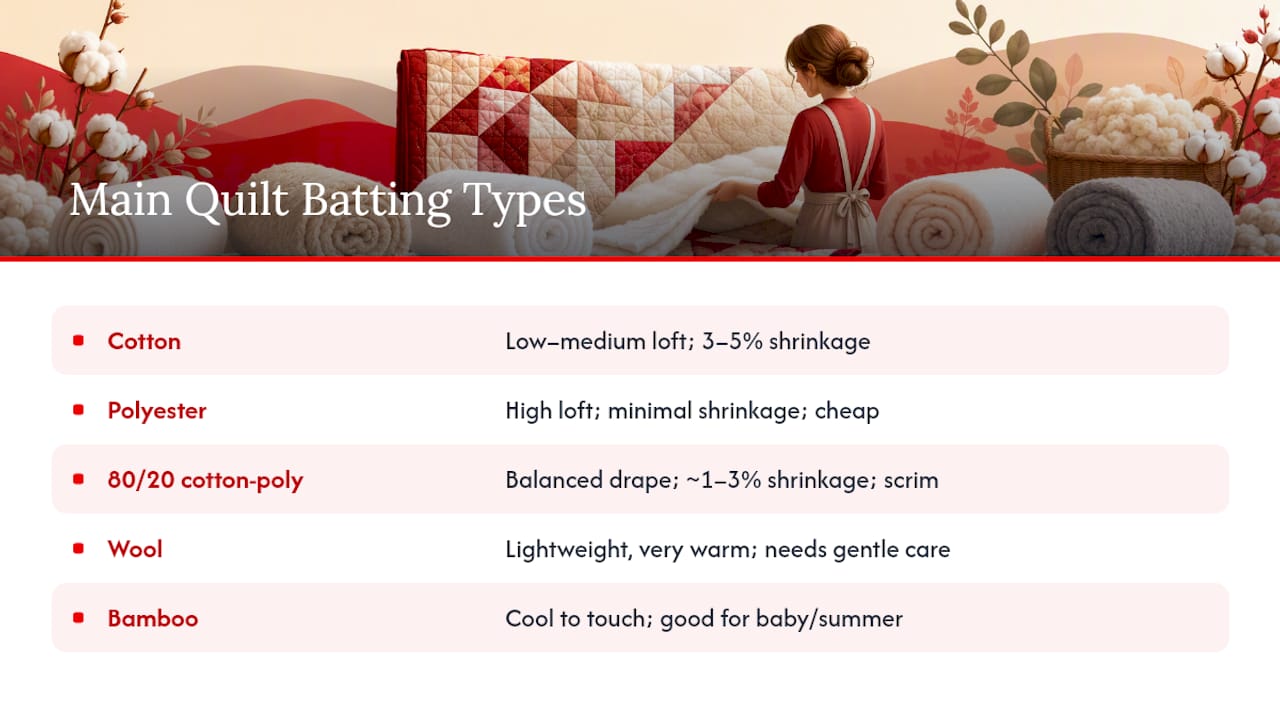
Cotton batting gives you the soft, slightly flat hand that quilters associate with heirloom-style quilts. Loft typically runs low to medium, and cotton breathes well, which makes it a favorite for bed quilts in warmer climates. The tradeoff is shrinkage: expect 3 to 5 percent shrinkage when the finished quilt is washed, which is exactly why so many traditional quilts have that soft, crinkled texture after their first trip through the wash. Cotton without scrim also needs closer quilting lines to keep the fibers from migrating or bearding through the fabric. Good projects: bed quilts meant to look “lived in” from day one, and reproduction or vintage-style quilts.
Polyester batting is the loft king. It holds its puff without much attention, resists mildew, and shrinks minimally, so it’s a reliable pick when you want a quilt that stays puffy wash after wash. High-loft polyester works well in comforters and tied quilts, where the goal is visual poof rather than a flat, quilted texture. It’s also budget-friendly, often the cheapest option per yard. The downside: it can beard through loosely woven fabrics, and it doesn’t have the breathability of natural fibers, which matters for anyone quilting bedding for hot sleepers.
80/20 cotton-poly blends split the difference. It’s the batting that most experienced quilters keep on hand for general-purpose projects. You get cotton’s breathability and drape with polyester’s shrink resistance, landing shrinkage around 1 to 3 percent. Most 80/20 battings come with scrim, a lightweight mesh that stabilizes the fibers so you can quilt at wider intervals without worrying about the batting shifting or tearing during handling.
Wool batting is the warmth champion among natural fibers, offering a warmth-to-weight ratio that cotton and polyester simply can’t match. It’s lightweight yet insulating, and it drapes beautifully for hand quilting. Wool is pricier, and it needs gentle, cold-water care, since aggressive washing can felt the fibers. It’s worth flagging for anyone with wool sensitivities or allergies before gifting a wool-batted quilt.
Bamboo batting (usually a bamboo-rayon blend) is prized for being cool to the touch with a soft hand and excellent drape, which makes it a natural fit for baby quilts and summer bedding. It’s considered a more environmentally friendly option since bamboo grows quickly without heavy pesticide use.
Silk batting delivers the most luxurious drape of any batting on this list, but it’s a specialty, premium-priced choice best reserved for wall hangings or garment quilting where drape outranks durability.
Recycled polyester batting, made from reclaimed plastic fibers, performs similarly to standard polyester in loft and shrinkage while appealing to quilters who want a lower-impact option without sacrificing performance.
How Do Loft and Drape Affect Quilting Distance?
Loft is simply how thick and puffy the batting is. Low loft lies flat and shows off intricate stitching, medium loft adds noticeable dimension, and high loft creates the deep, pillowy look you see in comforters. Drape describes how the finished quilt hangs or folds. Battings with more drape (bamboo, silk, thin cotton) flow softly over a bed or shoulder, while stiffer, high-loft polyester tends to stand up and hold its shape.
Quilting distance, sometimes called stitch spacing, is the maximum gap you can leave between lines of quilting before the batting shifts or bunches inside the quilt. This number depends heavily on fiber and construction.
| Batting Type | Recommended Quilting Distance |
|---|---|
| Cotton (no scrim) | 2 to 4 inches |
| Cotton with scrim / 80/20 blend | 6 to 10 inches |
| Polyester | Up to 8 to 12 inches |
| Wool | Up to about 4 inches |
Pro Tip: Scrim is the reason two cotton battings can behave so differently. A scrim-stabilized cotton or 80/20 blend lets you quilt at wider intervals without the fibers separating, which is a real time-saver on large bed quilts.
Needle-punched battings, where fibers are mechanically interlocked rather than glued, tend to hold together well without scrim but can still need closer stitching than a scrim-reinforced version. Bonded battings use a light adhesive coating on the surface, which reduces bearding but can slightly stiffen the hand.
Which Batting Should You Use for Each Project?
Matching batting to project is where all this fiber knowledge actually pays off. Here’s how to think through the most common quilting projects:
- Baby quilts: Bamboo or a soft, low-loft cotton works well since both are gentle against skin and machine-washable. Quilt at 4 to 6 inches, and skip wool here given the higher risk of allergy reactions with infants.
- Bed quilts (warm climates or summer): Cotton or bamboo, low to medium loft, quilted every 2 to 6 inches depending on scrim, keeps the quilt breathable without trapping heat.
- Bed quilts (cold climates or winter): Wool or a high-loft polyester delivers the warmth-to-weight performance you want, with wool quilted every 4 inches and polyester stretching to 8 to 12 inches.
- Wall hangings: Low-loft cotton or silk shows off detailed quilting and keeps the piece light enough to hang flat against a wall.
- Table runners: Low-loft cotton or 80/20 blend keeps the runner flat enough to sit under place settings without bulk.
- Tied quilts: High-loft polyester is the classic choice, since tied quilts skip dense quilting entirely and rely on the batting’s loft to carry the look.
- Garment quilting: Silk or a thin cotton-poly blend gives you drape without adding bulk to wearable pieces.
If you only remember one thing, make it this: 80/20 cotton-poly blend with scrim is the most forgiving all-purpose choice for beginners because its shrinkage stays low, its quilting distance is wide, and it behaves predictably on both domestic machines and longarms.
How Do You Wash and Care for Batting Without Ruining Your Quilt?
Most quilters prewash the finished quilt, not the raw batting, since prewashing loose batting can create a tangled mess that’s nearly impossible to work with. The exception is 100% cotton batting when you specifically want extra pre-shrinkage before quilting begins.
Expect these shrinkage ranges after the first wash:
- Cotton: 3 to 5 percent
- 80/20 cotton-poly blend: 1 to 3 percent
- Polyester: minimal, often under 1 percent
Bearding, the term for fibers poking through the quilt’s surface, happens most with polyester and loosely constructed cotton battings. Reduce it by choosing tightly woven fabrics for both the top and backing, and avoid thin batiks or loosely woven muslin as backing fabric.
Pro Tip: If bearding already happened, don’t panic. A fabric shaver or a gentle once-over with tape can pull loose fibers off the surface without damaging the stitching underneath.
Store finished quilts folded loosely in breathable cotton fabric, never plastic, and refold periodically to avoid permanent creases along the fold lines.
Can You Layer or Modify Batting for Special Projects?
Some quilters layer two thin battings, often cotton with wool or two layers of cotton, to boost warmth or body beyond what a single layer provides. It works, but it adds real weight and makes quilting noticeably harder, since your machine or hands have to push through double the material.
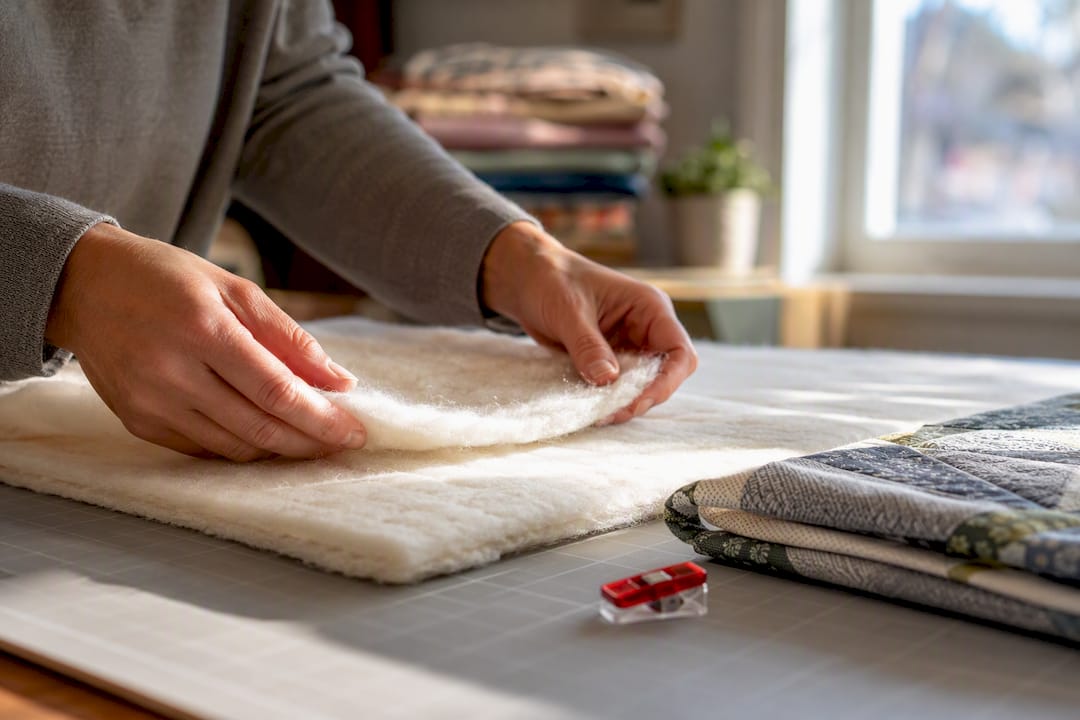
Fusible batting, which has a light adhesive coating, helps hold quilt sandwiches together during basting and works well for smaller projects like table runners. Heat-resistant batting, often made with cotton or specialty fibers, is designed for potholders and hot pads where standard polyester would melt against a hot dish. Recycled polyester battings perform comparably to virgin polyester in loft and shrinkage, so switching for environmental reasons rarely means sacrificing results.
Why Trust Sewingmachinesplus for Batting and Quilting Supplies?
Sewingmachinesplus has spent decades helping quilters, from first-timers to longarm professionals, find the right materials for the job, backed by more than 175,000 positive customer reviews. That kind of track record comes from getting the details right, including the ones printed in small type on a batting label.
Before you check out, read the label for:
- Fiber content percentage (cotton, polyester, or blend ratio)
- Loft measurement (low, medium, or high)
- Whether scrim is included
- Whether the batting is prewashed or preshrunk
If a label leaves you guessing, a specialist consultation can clear it up before you commit yardage to a project. For deeper reading, cotton versus polyester performance is worth a look, along with matching fabric weight to your batting choice.
What the Research Actually Tells You to Prioritize
The advice floating around most quilting forums treats batting choice like a personality test, cotton people versus polyester people, as if it’s a permanent identity rather than a decision that should change with every project. That’s backwards. The data on shrinkage and quilting distance is specific enough that you should be picking fiber by project, not by loyalty.
Here’s what gets underestimated: quilting distance matters more than most beginners realize when they’re choosing batting. A quilter who picks polyester for its low shrinkage but then quilts it at cotton-appropriate intervals is doing unnecessary work. Read the batting’s actual quilting distance range before you plan your stitching pattern, not after.
If you take one thing from this, it’s that 80/20 blends earned their reputation as the default for a reason. They’re not the most exciting choice, but they’re the one that fails you the least often, which counts for a lot when you’ve got real time and fabric on the line.
— Chris
Where to Buy Quilt Batting and Quilting Supplies
Between cotton, polyester, wool, and everything in between, sourcing consistent, well-labeled batting matters as much as picking the right fiber. Sewingmachinesplus stocks batting alongside the notions, tools, and machines you need to actually put it to work, all backed by free shipping on orders over $49 and a price match guarantee so you’re not overpaying for the same roll you’d find elsewhere. Whether you’re outfitting a first baby quilt or stocking up on 80/20 blend for a season of bed quilts, browse the full range of quilting machines and supplies to get everything in one order. If you’re unsure which loft or fiber fits your next project, a quick consultation with the team can save you from a costly mismatch before you cut a single piece of fabric.
Sources
- Quilt Batting Guide: Materials & Uses | QuiltLab
- Quilt Batting Guide: Fibres, Loft And Quilting Distance — SewingWithEase
- How to choose quilt batting: A beginner’s guide — StitchNest
- Quilt wadding and batting guide — Simply Quilting
FAQ
What Are the Different Types of Batting?
The main types are cotton, polyester, cotton-poly blends like 80/20, wool, bamboo, silk, and recycled polyester, each varying in loft, shrinkage, and warmth.
What’s the Difference Between Cotton and 80/20 Batting?
Cotton shrinks more (3 to 5 percent) and typically needs quilting every 2 to 4 inches, while 80/20 blends shrink less (1 to 3 percent) and allow wider quilting distances of 6 to 10 inches.
What Is the Warmest Batting for a Quilt?
Wool offers the best warmth-to-weight ratio of any common batting fiber, making it the top choice for cold-weather bed quilts.
What Is the Coolest Batting for a Quilt?
Bamboo batting stays cool to the touch and breathes well, which is why it’s a common pick for baby quilts and summer bedding.
Which Batting Is Best for Beginners?
An 80/20 cotton-poly blend with scrim is the most forgiving choice, since it balances shrinkage, drape, and quilting distance without demanding advanced technique.
