

For most beginner-to-intermediate sewists, a 3- or 4-thread serger with clear, color-coded threading and differential feed is the smartest first purchase. It handles the vast majority of home sewing tasks, from knit hems to finished seam edges, without the added complexity of a coverstitch combo unit. Set a budget, but insist on a dealer demo before you buy. Testing the lower looper threading yourself is the fastest way to avoid a machine that ends up in the closet.
TL;DR:
- A beginner serger should ideally have easy lay-in threading, color-coded guides, and adjustable differential feed to simplify setup and handle a variety of fabrics.
- A 3- or 4-thread model covers most home sewing needs, especially for knit and stretch garments, while more threads are mainly for heavy-duty or professional use.
- Testing threading, tension, and stitch conversion in-store, especially by threading the lower looper yourself, ensures the machine is manageable and suits your projects.
- Buying from a specialty dealer provides better support, demos, and assistance with setup and maintenance, reducing the risk of regret or frustration.
- Budget ranges from around $200 for entry-level models to over $1,200 for high-end machines, with mid-range machines offering the best balance of features for most beginners.
Table of Contents
- What Does a Serger Do (and When Do You Actually Need One)?
- Serger Stitch Types: 2, 3, 4, or 5 Threads, and Which One to Buy
- What Serger Features Actually Matter for Beginners?
- Which Serger Fits Your Projects and Skill Level?
- How Much Should You Budget, and Where Should You Buy?
- Maintenance and Setup: What Beginners Get Wrong
- Why Buy From a Specialty Dealer?
- Does Thread Brand Matter for Your Serger?
- How Loud Is a Serger, and Does Speed Matter?
- How Do Serger Brands Compare on Support?
- Author Perspective: Practical Buying Advice and Mistakes to Avoid
- Ready to Choose Your Serger? Here’s How Sewingmachinesplus Helps
- Sources
- FAQ
What Does a Serger Do (and When Do You Actually Need One)?
A serger trims the fabric edge, wraps it in thread, and sews a seam in a single pass. That combination is what makes it so fast on knits, activewear, and any project with edges that fray. A conventional sewing machine can approximate a finished edge with a zigzag stitch, but it can’t trim and overcast in the same motion, and it won’t give you the stretch a serger seam provides on stretchy fabric.
Where sergers fall short is precision work. They don’t sew zippers, buttonholes, or topstitching, and they’re a poor tool for anything that needs exact placement, like a collar point or a pocket edge. Modern home sergers have closed much of the gap with older commercial equipment, adding differential feed and easier threading that used to be reserved for industrial units, but the division of labor between a serger and a sewing machine hasn’t changed.
Here’s a quick way to sort your project list:
- Knit garments, athletic wear, T-shirts: a serger is close to essential for clean, stretchy seams.
- Woven garments with fitted details: you’ll still need a sewing machine for zippers and finish work.
- Quilting and home decor: a serger speeds up raw-edge finishing but isn’t required.
- Heavy fabrics like denim or canvas: check machine specs before assuming a standard serger can handle the bulk.
If your sewing is mostly quilting or home decor, a sewing machine may already do the job you need without adding a second machine to your bench.
Serger Stitch Types: 2, 3, 4, or 5 Threads, and Which One to Buy
Sergers are built around thread count, and that number determines what stitches the machine can produce. Threads Magazine breaks the category down into machines that run 2 to 5 threads, each suited to a different kind of seam work.
- 2-thread: Produces a light overcast or rolled hem, mostly used for decorative edge finishing on lightweight fabric. Rarely the main stitch on a beginner machine.
- 3-thread: Creates a stretchy, narrow overcast seam that’s ideal for knits and edge finishing. This is the workhorse stitch for most home projects.
- 4-thread: Adds a second needle thread for a stronger, more secure seam that holds up on wovens and structured garments, while still handling knits well.
- 5-thread: Combines an overlock stitch with a separate chainstitch for extra seam strength, common on activewear and heavier-duty construction. This is a specialist feature, not a starter requirement.
A machine that switches between 3-thread and 4-thread stitching covers nearly everything a home sewist encounters, and it’s the baseline Seamwork recommends beginners focus on rather than paying extra for combo capability they may not use for months. A 5-thread or coverstitch-capable machine earns its higher price only if you’re sewing a lot of activewear, doing your own hemming on knit garments, or running a small sewing business where seam strength and finish quality matter on every piece. For a first machine, that’s usually a feature to grow into, not one to buy on day one.
What Serger Features Actually Matter for Beginners?
Stitch-count marketing gets the attention, but the features that determine whether you’ll actually enjoy using your serger are far less flashy. Threading, feed control, and access to the blade are what separate a machine you’ll use weekly from one that sits under a dust cover.
Threading ease is the single biggest usability factor on any serger. Color-coded thread paths, lay-in threading systems that let you drop thread into a slot instead of guiding it through tiny loops, and clear access to the lower looper all cut setup time dramatically. Threading is consistently the most common complaint from new serger users, and it’s worth testing before you commit to a machine.
Differential feed controls how fabric moves through the front and back feed dogs at different rates, which prevents wavy or stretched-out seams on knits. Ask to test it on a stretchy scrap. If the setting is a small dial with clear numbers rather than a menu buried in settings, that’s a good sign for daily use.
Other features worth checking before you buy:
- Knife access and disengage: can you flip the blade out of the way for decorative stitching, and how hard is it to replace when it dulls?
- Tension controls: are they clearly labeled dials, and does the machine hold tension settings between projects?
- Rolled hem conversion: how many steps does it take to switch from a standard seam to a rolled hem?
- Included accessories: does the machine come with a blind hem foot, elastic foot, or other attachments you’d otherwise buy separately?
- Task lighting and cone accommodation: is the work area lit well, and does the thread stand hold standard cones without tipping?
Pro Tip: Ask the dealer to let you thread the lower looper yourself, not just watch them do it. If you can get thread through it in under two minutes on your first try, that machine will still feel manageable after a long week of sewing.
Which Serger Fits Your Projects and Skill Level?
Matching the machine to what you actually sew prevents two common mistakes: buying more machine than you need, or buying one that can’t keep up once your projects get more ambitious.
| Project type | Recommended feature set | Skill considerations |
|---|---|---|
| Knit garments, T-shirts | 3/4-thread, differential feed, rolled hem conversion | Master differential feed adjustment early; it’s the main learning curve |
| Wovens with finished seams | 4-thread overlock, adjustable tension | Focus on tension balance before adding decorative stitches |
| Activewear, athletic knits | 5-thread or coverstitch-capable | Add this only after you’re comfortable with standard overlock seams |
| Heavy fabrics, denim, canvas | Higher-torque motor, check fabric-weight specs | Consider whether a heavier-duty machine suits your workload better |
Most experts advise mastering a standard 4-thread overlocker before adding coverstitch capability, since combo units introduce more settings and more ways to get a stitch wrong while you’re still learning tension basics.
Bench space matters more than most buying guides admit. A serger that stays threaded and set up on a dedicated table gets used far more than one that lives in a closet and has to be rethreaded every time. If you don’t have room for a permanent setup, factor that into your feature priorities. A simpler machine you’ll actually keep threaded beats a feature-loaded one you avoid because setup feels like a chore.
How Much Should You Budget, and Where Should You Buy?
Serger prices fall into three rough bands, and each one delivers a genuinely different ownership experience.
- Entry-level (roughly $200 to $500): Covers basic 3/4-thread overlock functionality with manual tension and simpler threading. Entry-level home sergers can start around the $200 mark, making this the range where most first-time buyers land.
- Mid-range (roughly $500 to $1,200): Adds features like easier lay-in threading, better differential feed control, and sometimes a coverstitch conversion option.
- Premium (above $1,200): Aimed at sewists running high volume or professional work, with faster speeds, sturdier motors, and expanded stitch libraries.
Buying through a specialty dealer instead of a general online retailer often comes with classes, demos, and a local repair network, which matters more on a machine with moving parts and adjustable tension than it does on most other sewing equipment. If you’re weighing a used machine, check the blade condition, ask when it was last serviced, and confirm whether any warranty transfers to a new owner.
Before you commit to any specific machine, run this checklist in-store:
- Thread the lower looper yourself and time it.
- Adjust the differential feed and sew a stretchy scrap to see how it responds.
- Convert the stitch to a rolled hem and back.
- Open the lint cover and blade access to see how easy cleaning really is.
A short test run on scrap fabric will surface most of the issues that matter: puckering from feed settings, skipped stitches, and a noisy, dull blade.
Maintenance and Setup: What Beginners Get Wrong
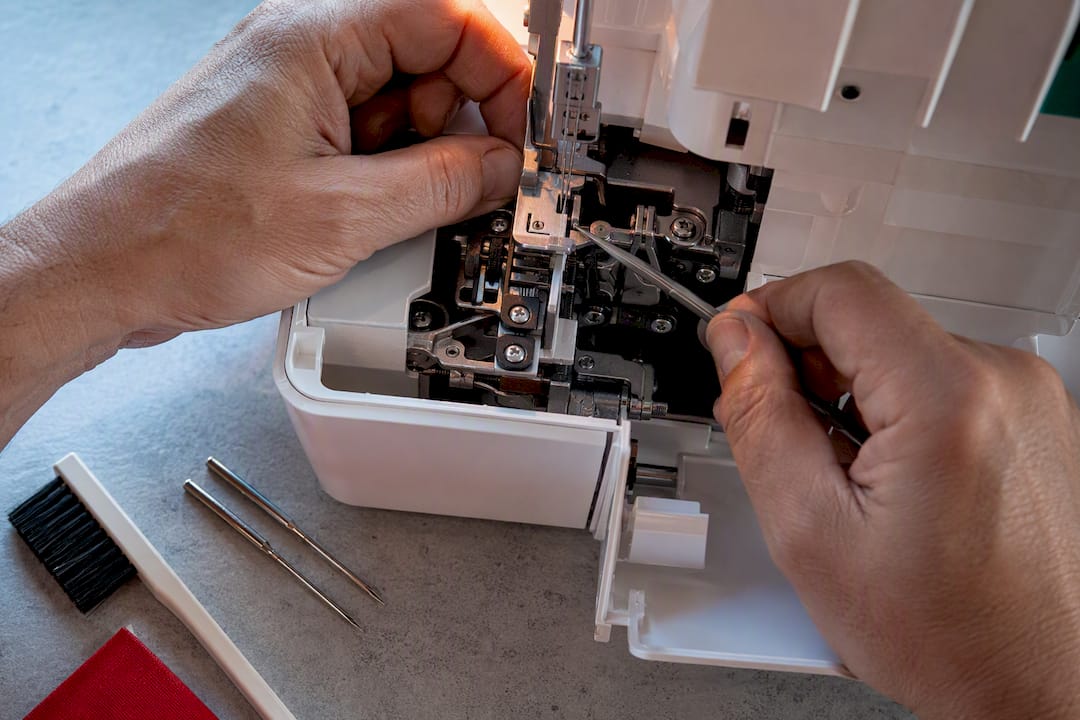
A serger needs more regular attention than a standard sewing machine, mostly because of the trimming blade and the volume of lint it generates. Weekly lint cleaning around the loopers and feed dogs prevents buildup that causes skipped stitches and uneven tension.
The stationary lower blade is the part that dulls fastest and needs the most frequent attention, so check how easily it’s accessed and replaced before you buy, not after it’s already dull. Machines that secure each needle with its own screw reduce the risk of a needle slipping into the machine interior during a change, a small design detail that saves a repair visit down the road.
Cheap thread is a frequent cause of tension trouble and breakage on sergers, since loopers pull thread at higher speed and volume than a sewing machine does. Pairing a quality cone thread with consistent tension habits solves more beginner problems than any settings adjustment.
Quick troubleshooting checks:
- Wavy or stretched seam edges: adjust differential feed before assuming it’s a tension issue.
- Skipped stitches: check needle insertion and try a fresh needle first.
- Frequent thread breakage: inspect for a dull blade or low-quality thread before touching tension dials.
Regular lint removal and blade checks are the two habits that keep stitch quality consistent over years of use, not just the first few months.
Why Buy From a Specialty Dealer?
A dealer demo lets you test threading, differential feed, and blade access before you spend a dollar, which is exactly the kind of hands-on check that prevents an expensive return. Some specialty dealers back that experience with personalized consultations, a price match guarantee, financing options, and free shipping on orders over a certain amount, supported by many customer reviews.
For a beginner, the real value isn’t just the machine. It’s having someone walk you through threading the lower looper, setting differential feed, and choosing the right feet for your first projects, so your learning curve looks like weeks instead of months. A quick consultation before you buy can save you from picking a machine that’s wrong for your fabric mix.
Does Thread Brand Matter for Your Serger?
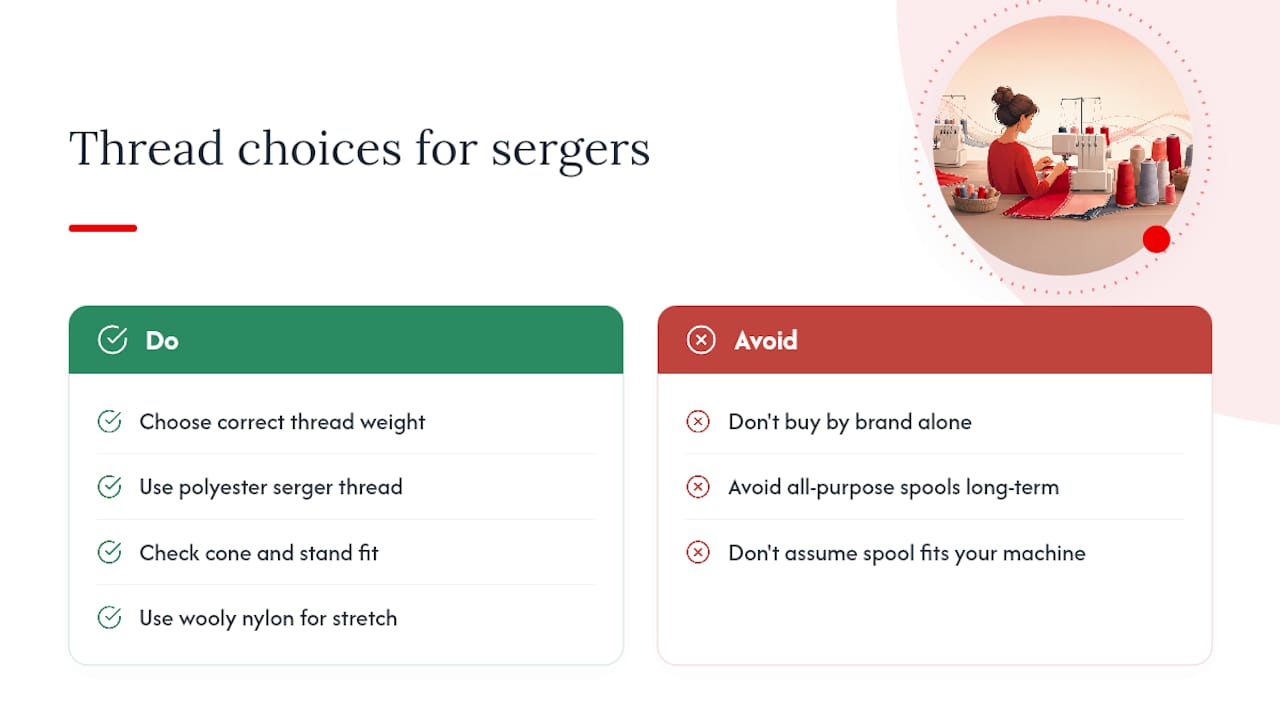
Thread compatibility is less about brand loyalty and more about weight, consistency, and cone size. Most home sergers accept standard cones and spools designed for overlock machines, but the thread quality itself affects tension performance far more than the label on it.
Polyester serger thread is the standard choice for most home projects because it has enough stretch to move through loopers cleanly without snapping under tension. All-purpose sewing thread designed for a conventional sewing machine can work in a pinch, but it’s typically wound tighter and in smaller quantities, which means you’ll burn through it fast and may see more tension inconsistency, since serger loopers pull thread at a different rate than a single sewing machine needle.
Cone size and thread stand compatibility matter more than most buyers expect. Some machines accommodate only small spools without an added thread stand, which limits your options if you want to buy thread in bulk for edge finishing. Check whether the machine’s thread stand adjusts for both cones and standard spools before you buy, especially if you already own thread from past sewing machine projects and want to keep using it.
If you’re serging a lot of stretch or activewear fabric, look for a wooly nylon or textured thread option for the looper positions. It adds coverage and softness to the seam finish that standard polyester thread doesn’t provide on its own.
How Loud Is a Serger, and Does Speed Matter?
Sergers run louder than most sewing machines because the blade is cutting fabric continuously while the loopers move at high speed. That combination of trimming and stitching creates more mechanical noise than a straight stitch machine, especially on entry-level models with simpler motors.
Speed varies by machine and matters more than most beginners expect. A high top speed sounds appealing, but for a first serger, consistent stitch quality at a moderate speed is more valuable than raw stitches per minute. Faster machines can outrun a beginner’s ability to guide fabric evenly, leading to more mistakes, not fewer.
If noise is a concern, test the machine in-store with the same kind of fabric you’ll sew at home. Heavier fabric and multiple fabric layers increase both noise and vibration. Ask whether the model has a speed control slider, since the ability to slow down for tricky corners or thick seams is more useful for a beginner than top-end speed. A stable, weighted base also reduces vibration noise, which matters if your sewing space is a shared room or an apartment.
How Do Serger Brands Compare on Support?
Brand reputation in the serger world tracks closely with dealer network strength, not just machine specs on paper. A well-regarded brand with a thin local support network can leave you stranded if you need a repair, a replacement part, or basic troubleshooting help.
What separates brands in practice is the depth of customer support: availability of classes, whether manuals and video guides are easy to find, and how quickly a dealer network can source parts like feet, needles, or blades. Hands-on classes and dealer demos shorten the learning curve and reduce the odds you’ll return a machine out of frustration rather than a genuine mismatch with your needs.
Warranty terms differ meaningfully between brands and even between models from the same manufacturer, so read the fine print on parts versus labor coverage. A brand with a strong reputation for build quality still needs a local or responsive support channel to be a good choice for a beginner. Ask any dealer directly what happens if your machine needs service in year two, and whether that support is local or requires shipping the machine away for weeks at a time.
Author Perspective: Practical Buying Advice and Mistakes to Avoid
The biggest regret beginners report isn’t buying the wrong brand. It’s overbuying: a 5-thread combo machine bought for features they never touch, or a machine bought online sight unseen that turns out to have a threading path so fiddly it gets used twice and shelved. The fix is simple and almost nobody does it: thread the lower looper yourself in the store, and sew a scrap of your actual fabric before you pay. Two minutes of hands-on testing tells you more than any spec sheet, and it’s the habit that separates buyers who love their machine from buyers who quietly regret it six months later.
— Chris
Ready to Choose Your Serger? Here’s How Sewingmachinesplus Helps
Unlike buying blind through a general online marketplace, some specialty dealers pair you with a real consultation before you spend a dollar, so you thread and test a machine’s usability the way this guide recommends, not the way a spec sheet describes it. They may offer a price match guarantee, free shipping on orders over a certain amount, and financing options that make it easier to buy the right machine the first time instead of settling for whatever’s cheapest online.
Start by browsing the full lineup of sewing, quilting, and embroidery machines, or reach out for a personalized consultation to match a serger to your specific projects and skill level. If you already know you need heavier-duty capability, the industrial and long-arm options are worth a look before you commit to a standard home serger.
Sources
- What Kind of Serger is Right for You?
- 5 Tips for Buying the Best Serger
- Sewing
- Must-have features for your first serger
FAQ
What Is the Best Serger for a Beginner?
A 3- or 4-thread serger with color-coded threading, lay-in threading paths, and adjustable differential feed is the best starting point, since it covers knit hems, edge finishing, and most seam construction without the added complexity of coverstitch combo features.
Is a Serger Worth It for Beginners?
Yes, if you regularly sew knits, activewear, or garments that need clean, stretchy seam finishing. If your projects are mostly quilting or home decor, a sewing machine may cover your needs without adding a second machine.
Is There a Difference Between a Serger and an Overlock Machine?
No, “serger” and “overlock machine” describe the same type of machine. The term “serger” is more common in North America, while “overlocker” is the standard term in the UK and elsewhere.
How Do I Know if a Serger’s Threading Is Beginner-Friendly?
Test it yourself before buying: thread the lower looper in the store and time yourself. Machines with color-coded paths and lay-in threading typically take under two minutes, while harder-to-thread models can take considerably longer and cause more frustration at home.
Should I Buy a Serger New or Used?
A new machine from a specialty dealer typically comes with a warranty, demo access, and classes that shorten the learning curve. A used machine can be a good value if you inspect the blade condition and confirm recent servicing, but you’ll likely lose those support benefits.
